








Blue Wood Console Table
These blue wood console table pieces bring painted character and architectural form to a hallway, with Swedish folk art and Italian neoclassical examples.
Blue Wood Console Table
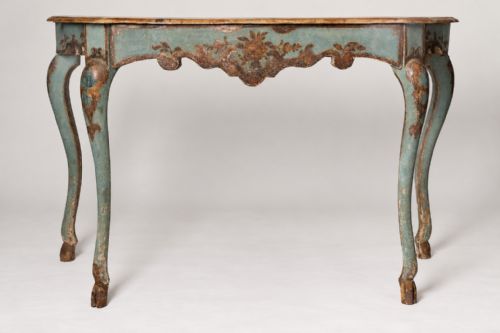
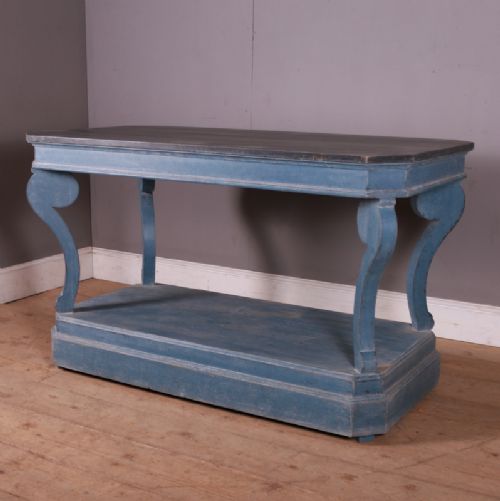
A blue wood console table is typically a narrow surface designed to stand against a wall in a hallway, drawing on English country, French, and Italian traditions. The inventory on this page ranges from 18th-century English potboard dresser bases to 19th-century Italian carved console tables and French serpentine forms.
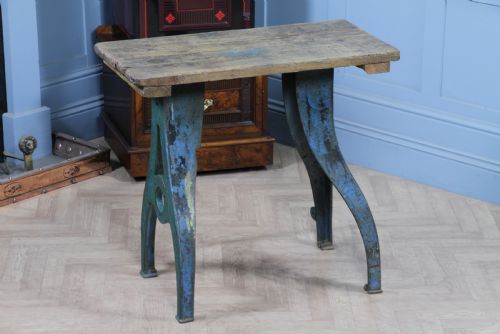
Buyers will encounter various stylistic interpretations, including Swedish folk made console tables, Spanish painted examples, and industrial vintage pieces utilising cast iron machine bases with reclaimed pine. Forms include demi lune hall tables, serving tables, and side tables dating from the Regency period through to 1920.
How they were made
Construction relies on timber, pine, and painted wood, often shaped into serpentine or demi lune forms with carved details. Master craftsmen utilised traditional joinery alongside applied paint finishes.
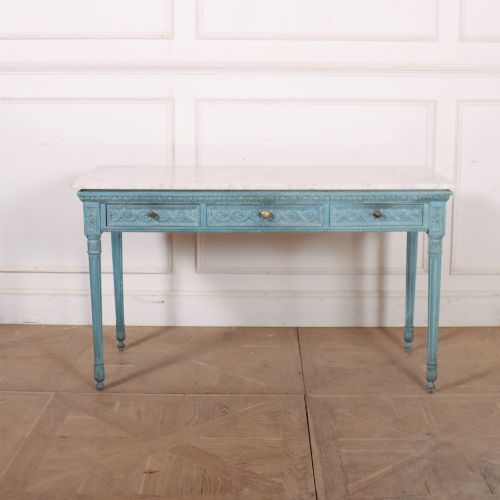
Decorative elements incorporate brass hardware and occasionally marble tops, while industrial variants combine cast iron machine bases with reclaimed timber tops.
Blue Wood Console Table Retail Price Guide 2026
Typical asking prices for blue wood console table among the pieces listed under this phrase on Sellingantiques today, from the lower quarter to the upper quarter. They describe what is for sale here now, not the wider market.
The listings on this page span the 18th century, the Regency period, and the 19th century, up to 1920.
What varies in quality
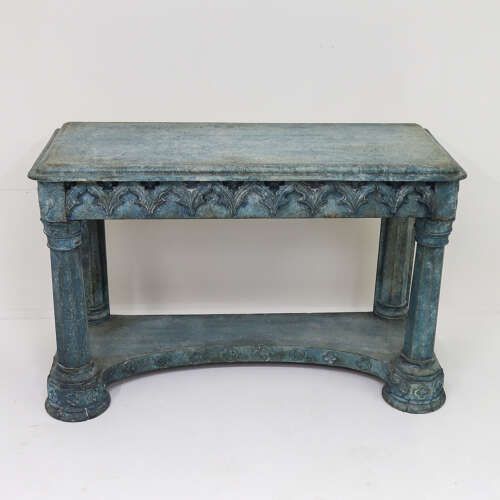
Quality rests in the depth and execution of the painted surface, the integrity of the timber, and the subtlety of the carving. Pieces executed in the Gothic taste or Italian neoclassical style demonstrate sculptural confidence in their proportions.
The distinction between a standard country workshop piece and a high-status design lies in the precision of the joinery and the harmonious integration of brass and marble elements.
The Blue Wood Console Table Glossary
- Demi lune
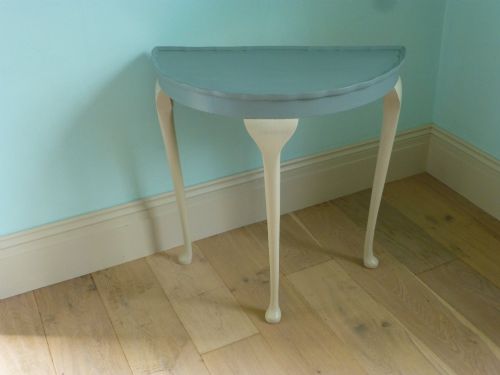
- A half-moon shape characteristic of tables designed to sit flush against a wall. This profile saves floor space in narrower hallways.
- Potboard dresser base
- A heavy wooden base featuring an open lower shelf traditionally used for storing earthenware. These utilitarian items now serve as substantial console tables.
- Serpentine
- A gently undulating line forming a concave curve flanked by two convex curves. It adds fluidity and visual movement to wooden furniture edges.
- Gothic Revival
- A 19th-century style drawing on medieval architectural motifs such as pointed arches and heavy mouldings. It imbues console tables with a distinct vertical emphasis.
Blue Wood Console Table: Frequently Asked Questions
Where should I place a console table?
These narrow tables suit hallways, entrance passages, and reception rooms where floor space is limited. Their shallow depth allows them to sit against walls without obstructing walkways.
They also function effectively beneath mirrors or artwork in living spaces, providing a stable surface for lamps and decorative objects.
How do I identify a Regency period table?
Regency pieces reflect the classical revival styles popular in Britain during the early 19th century. Look for architectural restraint, balanced proportions, and specific design lineage.
Items associated with makers like Gillows often display refined painted finishes and precise woodwork typical of the era.
What is a potboard base?
A potboard base originates from traditional English country house furniture where the lowest tier held heavy kitchen pots. These sturdy surfaces provide practical lower storage.
Today they offer useful display space for baskets or larger decorative items beneath the main tabletop.
How do I care for painted wood?
Painted wooden furniture requires gentle dusting with a dry or slightly damp cloth to protect the surface pigment. Avoid harsh chemical cleaners that can lift historic paint layers.
Keep pieces away from direct heat sources and strong sunlight to prevent the timber beneath from warping and the paint from fading.