
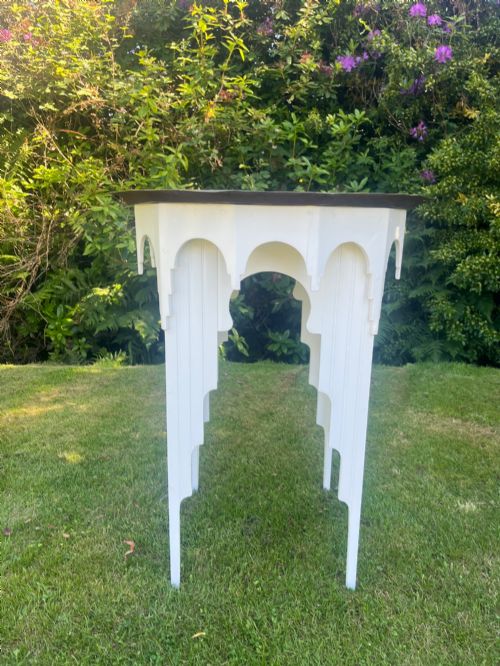
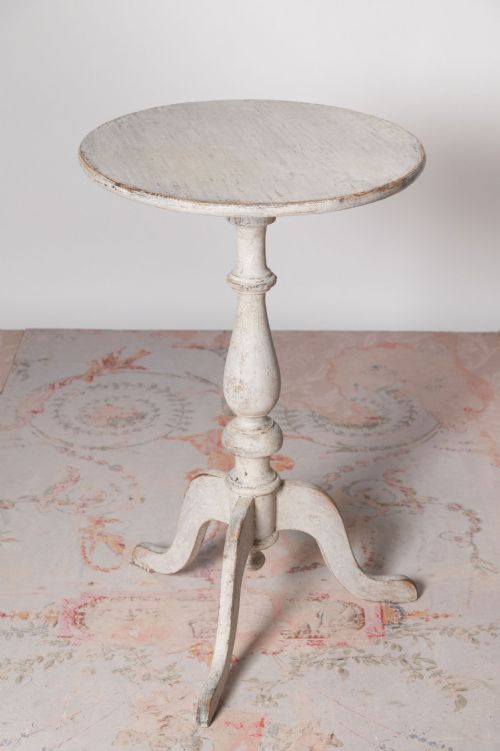
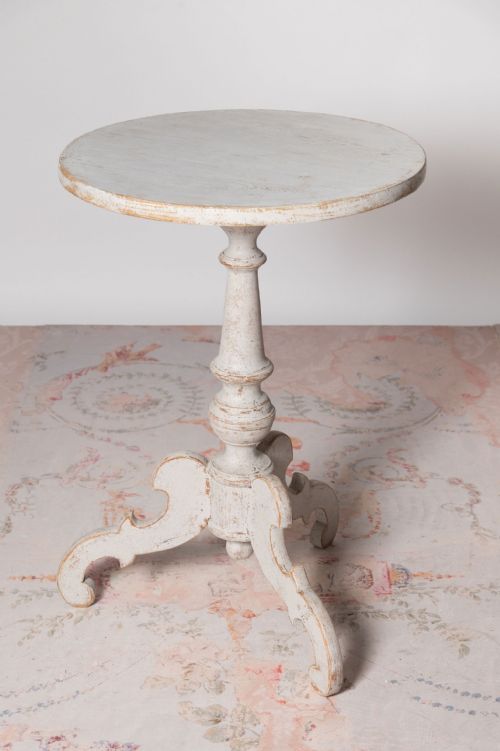
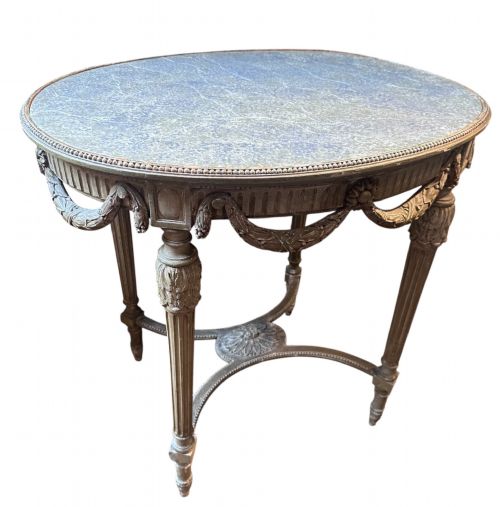
Painted Wood Accent Tables
These painted wood accent tables bring decorative surfaces into a room, offering functional charm from periods spanning the eighteenth to the twentieth centuries.
Painted Wood Accent Tables
When buyers search for painted wood accent tables, they encounter a diverse selection of occasional tables, side tables, and lamp tables designed for versatile placement. These pieces emerge from periods such as the nineteenth century, the Edwardian era, and the nineteen-thirties, reflecting regional aesthetics from English country and French provincial to Swedish country and Italian interiors.
Originating across Europe and beyond, these tables showcase varied decorative traditions, from Chinoiserie lacquer and parcel gilt details to floral motifs. Buyers find pieces ranging from compact occasional stands to larger console and centre tables.
Materials and construction methods
The construction of these pieces relies on timber frameworks, including satinwood, oak, and general wood substrates, prepared as a base for decorative finishes. Artisans applied layers of paint, gesso, and sometimes gold leaf or lacquer to achieve the desired aesthetic.
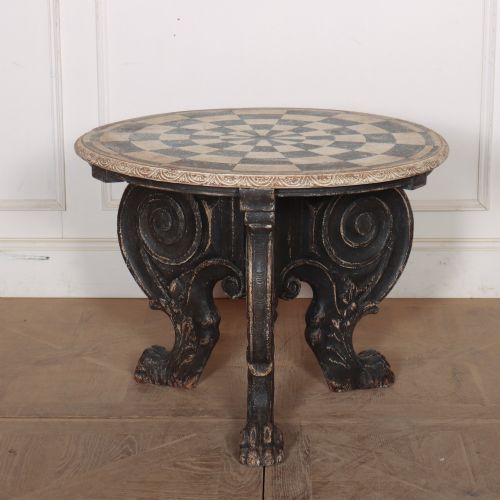
Surface ornamentation defines much of the construction, incorporating hand-painted floral or petal decorations and carved elements. Some examples integrate contrasting materials, pairing timber with marble tops or brass fittings to enhance the visual weight of the table.
Several tables feature carved dolphins, proving that eighteenth and nineteenth-century craftsmen occasionally let marine life dictate home decor.
Distinctions in craftsmanship and finish
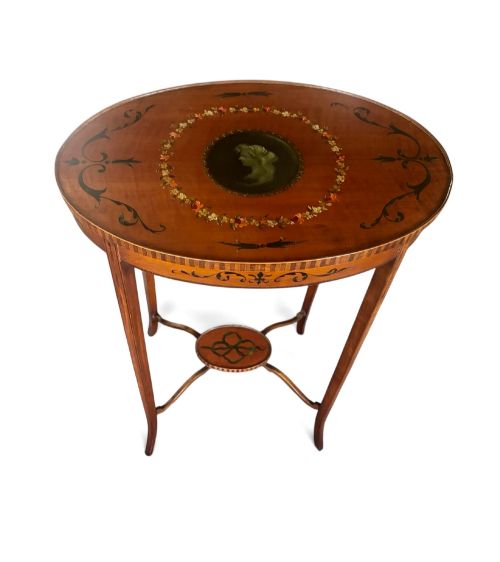
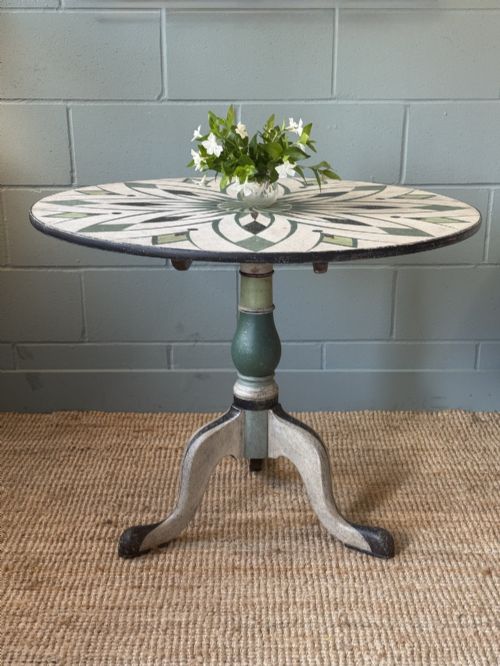
Quality in these tables is determined by the execution of the surface decoration and the integrity of the underlying woodwork. Finer examples display meticulous hand-painted details, such as intricate floral or Chinoiserie motifs, applied directly to prepared timber like satinwood.
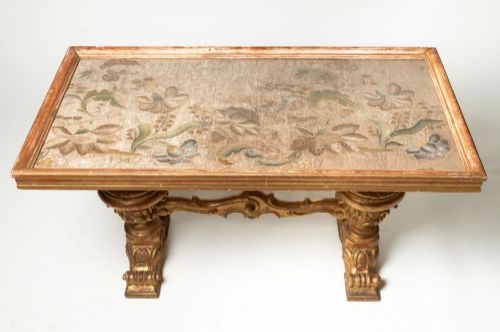
The integration of secondary materials also influences the piece, where the inclusion of carved details, parcel gilt accents, or fitted marble tops demonstrates a higher level of workshop skill. The coherence between the structural form and the painted or lacquered finish separates standard utility tables from exceptional decorative works.
The Painted Wood Accent Tables Glossary
- Occasional table
- A small, movable table designed for minor, specific uses within a room. These versatile pieces function easily as lamp stands or side supports.
- Étagère
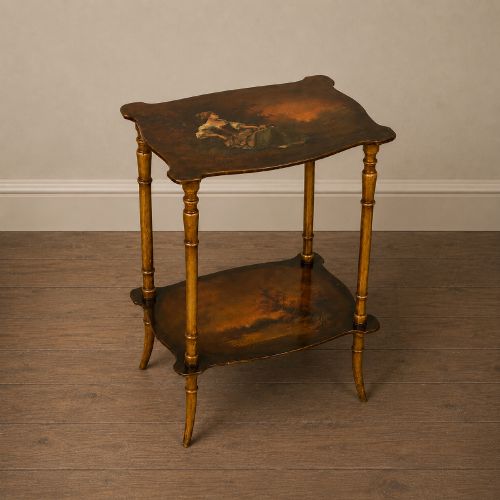
- A set of open shelves or tiers for displaying small objects. Two-tier variations appear frequently among side and occasional tables.
- Demi-lune
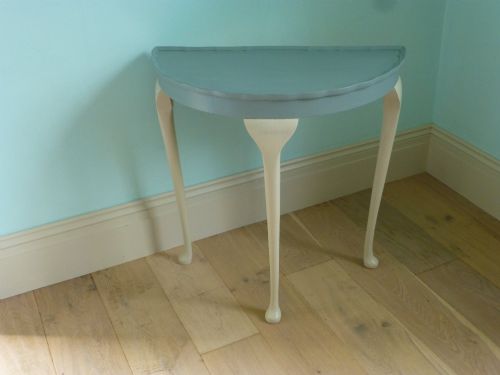
- A half-moon shape, typically describing console tables designed to sit flat against a wall. This profile saves floor space while providing a functional surface.
- Gueridon
- A small French round table, often supported by a central pillar or figures. Examples frequently incorporate marble tops and painted finishes.
- Chinoiserie
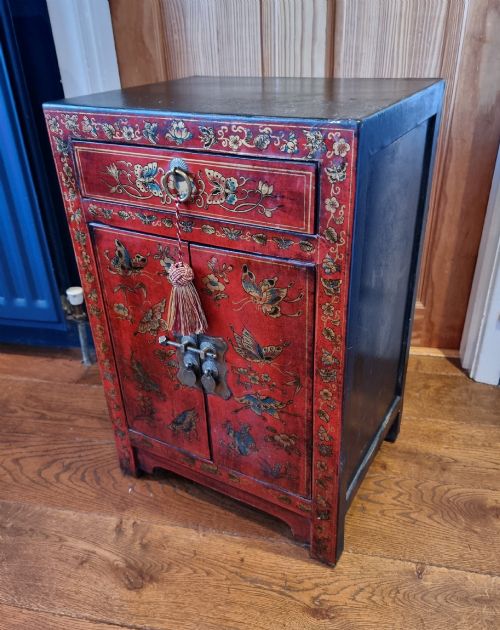
- European decorative style inspired by Chinese art and design. This technique often employs lacquer, ochre backgrounds, and intricate pictorial motifs.
Painted Wood Accent Tables: Frequently Asked Questions
What is an accent table used for?
These tables provide convenient surface area for lamps, books, or decorative objects within living spaces. Their compact nature allows them to fit easily beside seating or against hallways walls.
They serve both functional support roles and aesthetic purposes, bridging utility with decorative regional styles from various historic periods.
How do I identify a Swedish painted table?
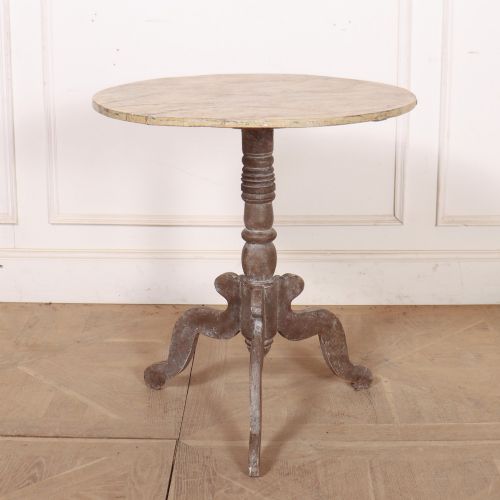
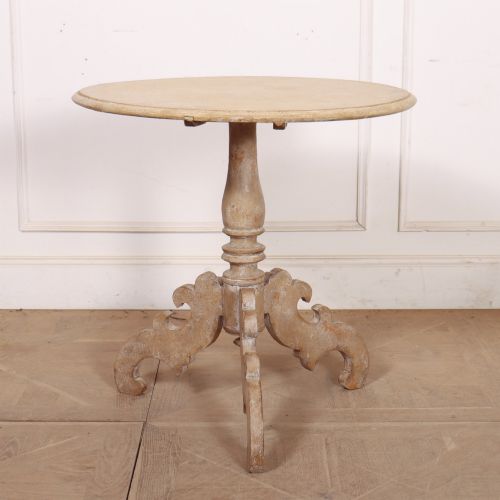
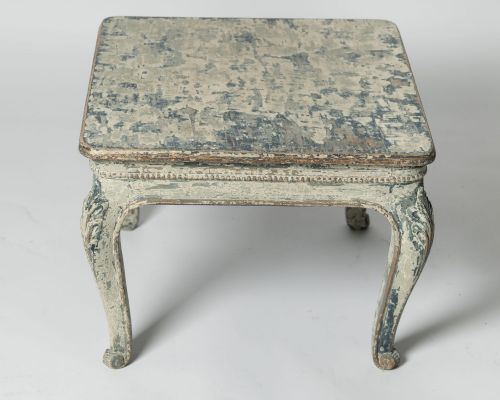
Swedish painted tables often feature lighter palettes, reflecting Scandinavian interior traditions from the nineteenth century. They typically present straightforward forms with muted paint finishes.
Such pieces rely on restrained decoration rather than heavy gilding, prioritizing functional elegance and simple timber construction.
What distinguishes an Edwardian painted table?
Edwardian examples frequently utilise satinwood as a fine timber base for delicate floral ornamentation. The craftsmanship leans towards refined, lighter proportions suited to drawing rooms.
These pieces often incorporate classical revival influences alongside bright, painted surface details characteristic of the early twentieth century.
How do I care for painted wood furniture?
Maintaining these surfaces requires avoiding excessive moisture and direct sunlight to protect the painted finish and underlying wood. Gentle dusting with a soft cloth preserves the integrity of the decoration.
Harsh chemical cleaners should be strictly avoided, as they can damage delicate gesso, lacquer, or hand-painted floral motifs.