

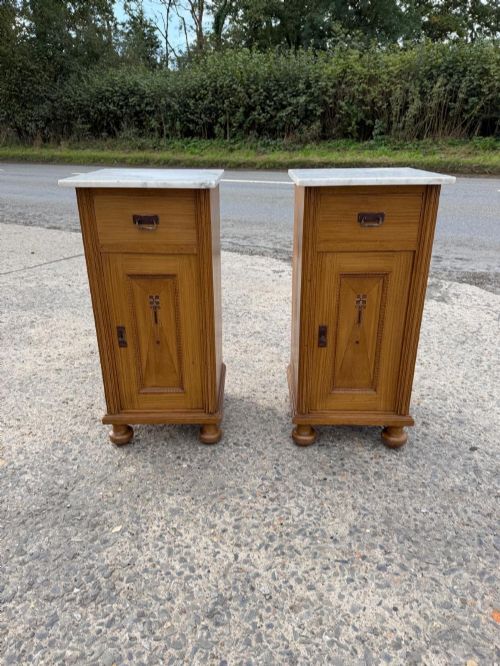
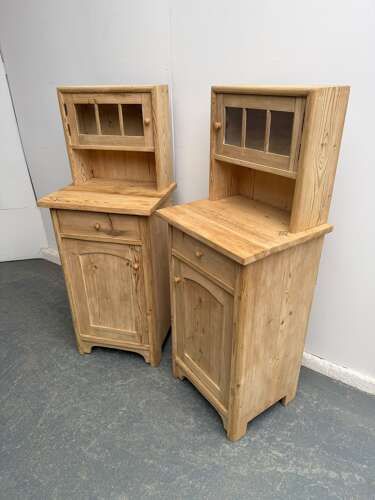


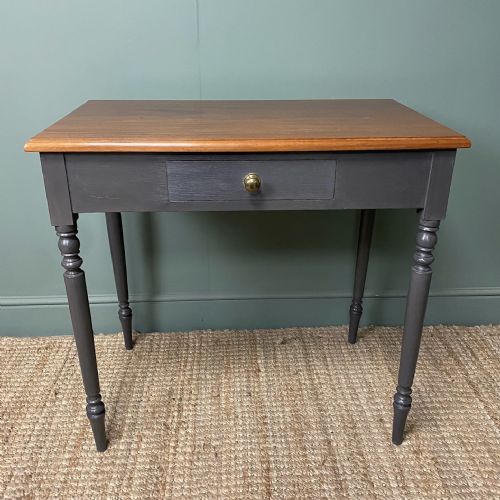


Pine Top Bedside Tables
Pine top bedside tables bring practical charm and solid timber grain to a bedroom, offering sturdy surfaces beside a bed.
Pine Top Bedside Tables
When you search for pine top bedside tables, you encounter practical furniture designed to sit beside a bed for storage and lamps. The pieces meeting this description span the Victorian era, nineteen-hundred, and the nineteenth century, reflecting various country traditions.
Most examples on this page take the form of bedside cabinets, side tables, or occasional lecterns rather than simple open stands. Their origins range across English, Scandinavian, and Hungarian workshops, showing painted finishes alongside natural timber.
The materials paired with pine include oak, marble, ceramic, brass, iron, and glass, creating varied visual textures. Buyers select these items to anchor a room with antique character while maintaining everyday utility.
How they were made
These tables rely on solid timber construction, combining pine for tops and general bodies with harder woods like oak where structural strength is required. Cabinet makers utilised traditional joinery methods to build durable frames that withstand decades of daily use.
Many surfaces feature applied paint finishes, ranging from traditional black treatments to Scandinavian painted schemes, while other examples incorporate heavy marble slabs inset into the timber frame. Details such as ceramic, brass, or iron hardware complete the construction of the opening doors and drawers.
Pine Top Bedside Tables Retail Price Guide 2026
Typical asking prices for pine top bedside tables among the pieces listed under this phrase on Sellingantiques today, from the lower quarter to the upper quarter. They describe what is for sale here now, not the wider market.
Listings feature items from the Victorian period, nineteenth century, and nineteen-hundred, incorporating materials such as pine, marble, oak, ceramic, brass, iron, and glass.
What varies in quality
The standard of these pieces depends upon the selection of timber and the crispness of any carved or turned details. Cabinets featuring integrated marble tops or secondary hardwoods like oak demonstrate a higher grade of manufacture than simpler utility pieces.
Proportion and finish integrity separate standard examples from finer works, particularly where painted surfaces or faux bamboo turnings are executed with precision. The integration of quality hardware, such as brass or ceramic handles, further indicates the original maker's investment in the piece.
The Pine Top Bedside Tables Glossary
- Bedside cabinet
- A small enclosed piece of furniture with a door or drawer, designed to hold personal items next to a bed. These often feature an upstand at the rear to prevent objects from falling behind the unit.
- Upstand
- A vertical raised timber lip running along the back edge of a table or cabinet top. It protects bedroom walls from marks and keeps items secure.
- Faux bamboo
- Timber turned and carved to imitate the segmented stalks of natural bamboo. This decorative technique enjoyed popularity during the nineteenth century.
- Lectern
- A slanted reading stand designed to hold books or papers at a comfortable angle. Adjustable examples allow the height or slope to be altered.
Pine Top Bedside Tables: Frequently Asked Questions
What periods do these tables come from?
The pieces span the Victorian era, the nineteenth century, and around nineteen-hundred. This encompasses both English country workshops and continental makers.
Craftsmen during these periods utilised local softwoods alongside imported marble and durable hardware to build functional bedroom furniture.
How were these cabinets originally used?
These units served beside beds to hold chamber pots, candles, or personal items within enclosed cupboards and drawers. Their flat surfaces also supported lighting before electricity became common.
In modern rooms, they function well as side tables or bedside storage for lamps and books.
Are marble tops original to pine tables?
Many nineteenth-century cabinets paired pine structures with heavy marble slabs to provide a durable, wipe-clean surface for washing accessories and water jugs. Hungarian and English workshops frequently utilised this combination.
Examining the rebate and surrounding timber construction helps confirm how the stone integrates with the frame.
How do I care for a painted pine finish?
Painted surfaces require gentle cleaning with a soft, dry cloth to remove dust without harming historic paint layers. Avoid harsh chemical cleaners that can strip aged finishes.
Unpainted timber sections benefit from occasional waxing to nourish the grain and protect the wood from excessive dryness.