
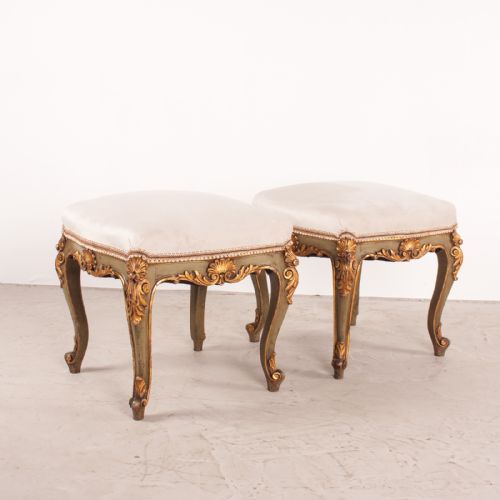
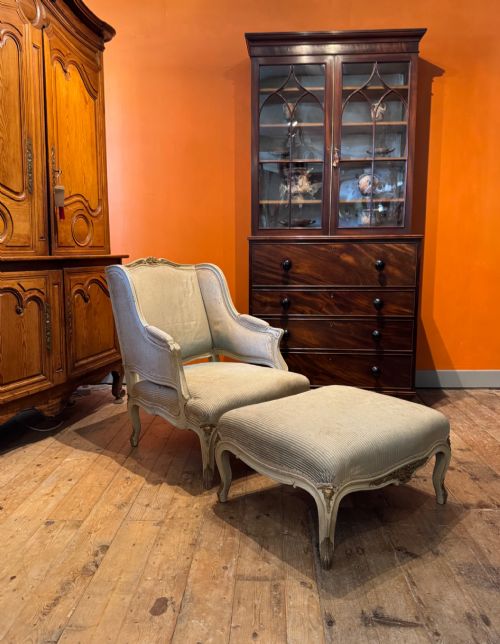
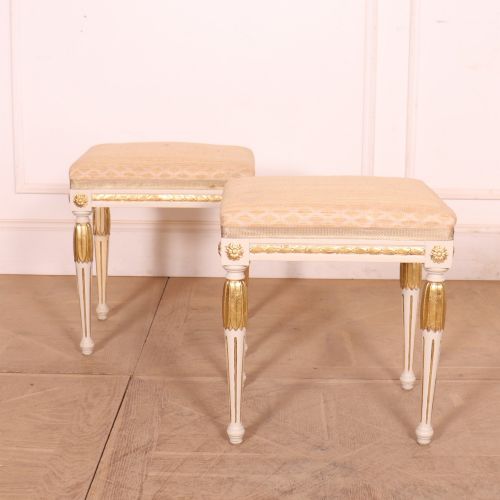


Painted Upholstered Footstool
A painted upholstered footstool brings practical comfort and period character to a room, offering low seating or a place to rest tired feet.
Painted Upholstered Footstool
When you search for a painted upholstered footstool, you encounter a variety of low seating forms, including benches, window seats, and boudoir stools, alongside traditional footstools. These pieces originate from distinct periods, stretching from the eighteenth century through the nineteenth century and into the early twentieth century.
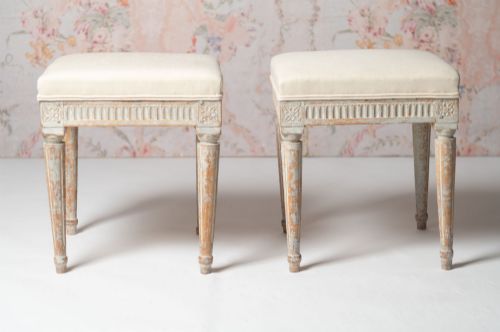
The inventory on this page shows a strong presence of continental European design, particularly Swedish Gustavian pieces and French styles such as Louis XV and Rococo Revival. English examples also appear, spanning Regency and Victorian eras alongside painted pine window seats and items from the nineteen-thirties.
You are most likely to meet pieces constructed from wood that has received a painted finish, paired with textile upholstery such as linen or velvet. Many items survive in pairs, offering symmetrical options for placement at the foot of a bed or beneath a window.
How they were made
The frames rely on timber construction, utilising hardwoods like beech alongside pine and general wood for structural support. Carved detailing frequently decorates the wooden elements, sometimes highlighted with gold leaf or shaped into architectural curves and X-frames.
Surfaces receive a coat of paint, often applied in historical hues or retained in original paint finishes that show the wear of time. Upholstery techniques combine fabric, linen, and velvet coverings over padded foundations, occasionally finished with needlework.
The listings here span the eighteenth, nineteenth, and twentieth centuries, incorporating materials such as beech, linen, velvet, and gold leaf.
What varies in quality
Quality rests upon the integrity of the wooden frame, the crispness of any hand-carved ornamentation, and the preservation of original painted surfaces. Pieces retaining their initial paint finish hold greater distinction than those subject to later refinishing.
The caliber of the upholstery work and the selection of covering textiles also separate standard examples from finer items. Maker attribution, such as work originating from recorded cabinet makers, elevates the standing of a piece within its period.
Miles and Edwards·Whytock and Reid
The Painted Upholstered Footstool Glossary
- Gustavian
- The Swedish interpretation of neoclassical style, characterised by restrained carving, light painted finishes, and functional elegance.
- Curule
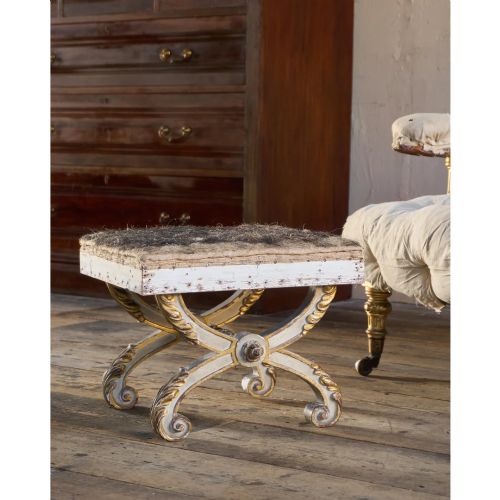
- An X-shaped form of stool or chair derived from ancient Roman magistrate seats, featuring crossed frame members.
- Duchesse Brisée
- A multi-part French chaise longue comprising a chair and a matching footstool or ottoman that lock together to form a daybed.
- Needlework
- Hand-stitched textile work utilised for upholstery, frequently seen in floral or geometric patterns on nineteenth-century seats.
- Chinoiserie
- European decorative style employing Chinese motifs and imagery, applied to furniture through painted decoration.
Painted Upholstered Footstool: Frequently Asked Questions
What is a painted upholstered footstool?
A painted upholstered footstool is a low seat featuring a wooden frame finished with paint and a padded, fabric-covered top. These items function as footrests, window seats, or compact occasional seating.
They appear in various historical styles, ranging from Swedish Gustavian forms to French Rococo Revival pieces and English nineteenth-century designs.
How do I identify a Gustavian footstool?
Gustavian footstools typically originate from Sweden and display neoclassical restraint with pale painted finishes, fluted legs, and minimal carving. They reflect eighteenth-century Swedish interpretations of French royal styles.
Look for light, chalky paintwork and simple, elegant proportions that distinguish them from more ornate continental designs.
Where should I place a long stool?
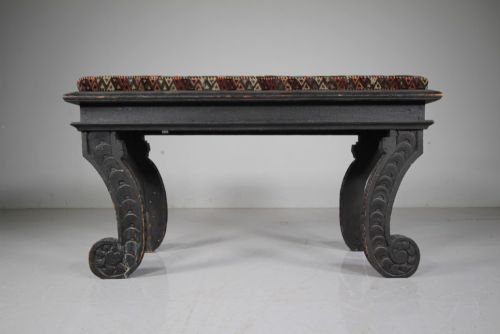
Long stools and window seats suit placement at the foot of a bed, beneath a window, or alongside a living room wall. Their extended proportions provide substantial surface area for seating or resting objects.
Pair them with complementary furniture to anchor an empty space or to create a designated seating nook.
What is an X-frame stool?
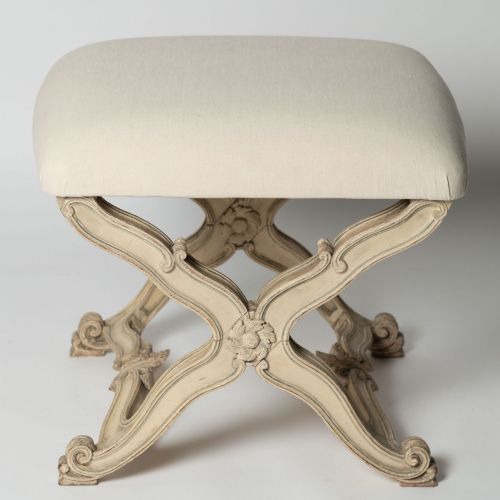
An X-frame stool utilises intersecting diagonal wooden members to form the support structure, echoing ancient curule seat designs. This architectural form offers both stability and visual interest.
These pieces often feature carved details at the crossing points and sophisticated painted or gilded finishes.
How do I care for original paint?
Preserving original paint requires gentle dusting with a dry cloth and protection from direct sunlight and excessive moisture. Avoid harsh cleaning products that might strip historical pigment or compromise the surface.
Maintain stable indoor humidity levels to prevent the underlying wood from expanding and cracking the painted finish.