



Painted Tier Table
These painted tier table pieces bring stacked surfaces and decorative pigment into a room, offering distinct tiers for display and daily utility.
Painted Tier Table
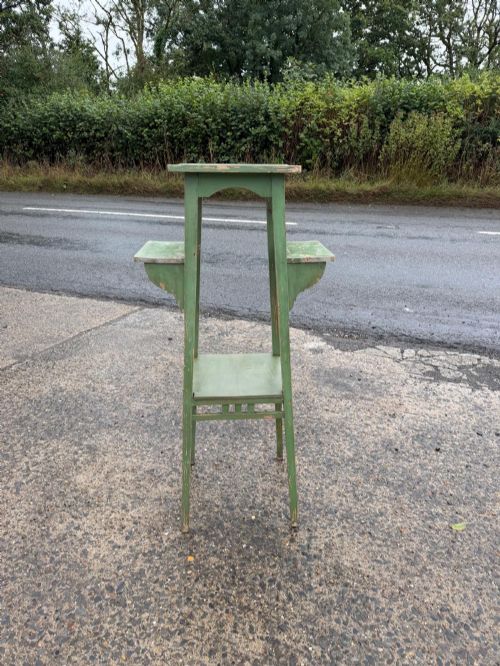
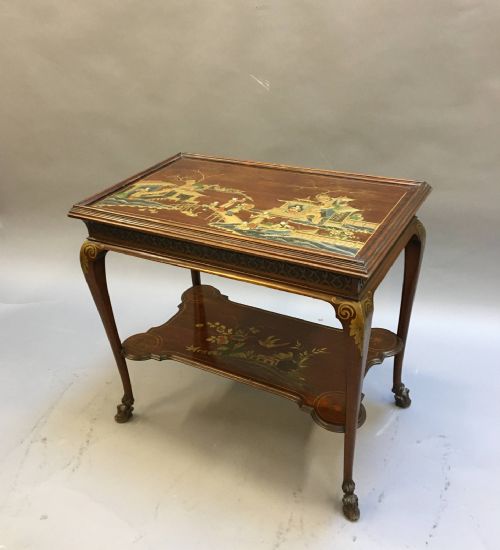
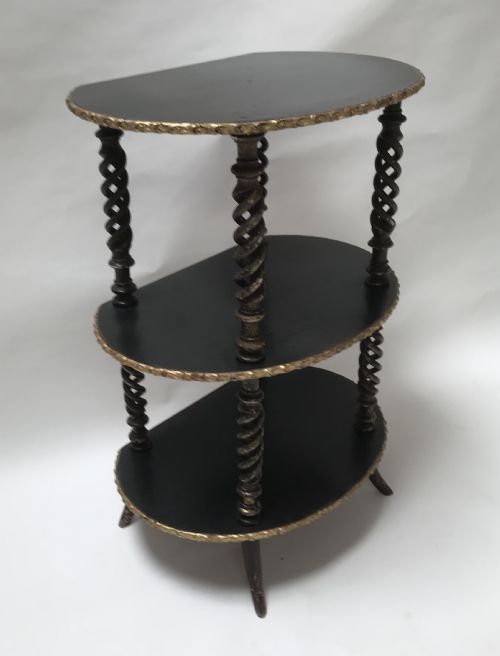
A painted tier table provides multiple stacked surfaces supported by uprights, designed for display and utility in a room. When you examine a painted tier table on this page, you encounter forms ranging from plant stands and occasional tables to larger etageres and whatnots.
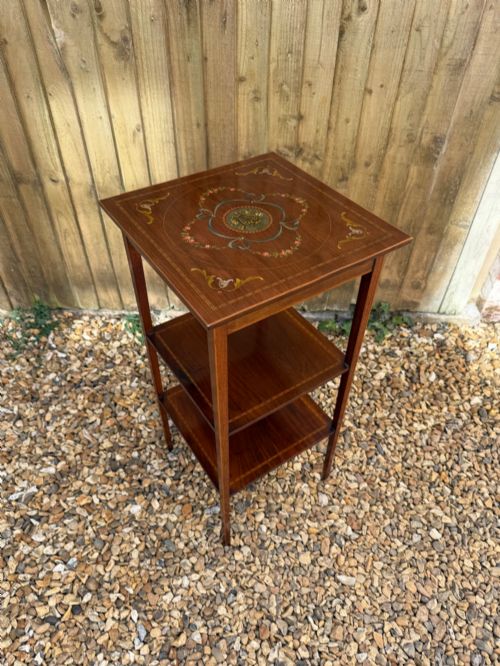
The periods represented stretch across the nineteenth and twentieth centuries, including Victorian, Edwardian, and later examples. These pieces often take the shape of side tables or lamp tables with two or three distinct levels for holding objects.
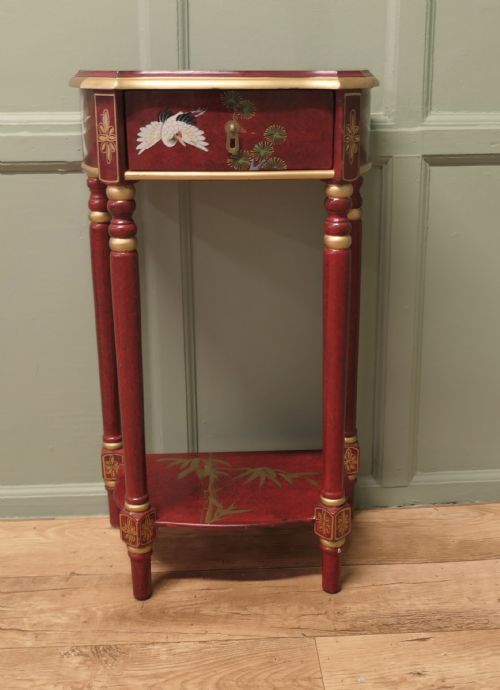
Origins and styles vary widely, encompassing French Chateau, Venetian Rococo, Chinoiserie, and Sheraton Revival influences. Many items arrive with original painted surfaces or later decorative schemes applied to timber foundations.
How they were made
Makers utilised woods such as mahogany, pine, satinwood, and bamboo to construct the foundational carcases. These timber frames were then prepared to receive decorative painted finishes, lacquer, or gold leaf applications.
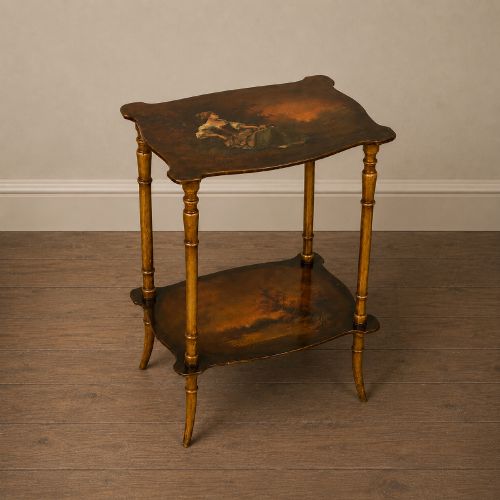
Surface decoration involved hand painting, ebonising, or applying Vernis Martin styles to achieve varied aesthetic effects. Carpenters and decorators built these tiered forms using traditional joinery before applying pigmented layers.
One recorded piece combines bamboo, black lacquer, and multiple tiers into a singular antique frame.
What varies in quality
The distinction between tiers rests upon the execution of the decorative painting and the integrity of the timber beneath. Original surface treatments hold greater interest than later decorative additions applied long after manufacture.
Proportion and stability across multiple levels separate standard utility items from finer decorative examples. Subtle details in hand carving and the application of gold leaf or lacquer define the upper tier of craftsmanship.
Pauly et Cie·Morris and Co
The Painted Tier Table Glossary
- Étagère
- A set of open shelves or tiers for displaying small objects. This French form provides multiple levels of surface area.
- Whatnot
- A piece of furniture consisting of shelves for books or ornaments. These tiered stands date predominantly from the Victorian and Edwardian eras.
- Vernis Martin
- A type of simulated Japanese lacquer developed in eighteenth-century France. The technique involves successive layers of varnish and paint.
- Chinoiserie
- European decorative art inspired by Chinese design motifs. This style often appears on painted occasional tables and cabinets.
- Satinwood
- A durable timber with a golden sheen frequently used in fine cabinet making. It provides a smooth base for painted decorative details.
Painted Tier Table: Frequently Asked Questions
What is a painted tier table used for?
These pieces serve as occasional tables, lamp tables, or plant stands within a room. The multiple levels provide practical space for placing books, lighting, or decorative objects.
Their compact footprints allow them to fit beside seating or in corners where surface area is needed. The stacked design maximises display capacity without taking up excessive floor space.
How do I identify the period of a painted tier table?
Dating relies on examining the underlying timber construction, joinery methods, and the style of the painted decoration. Victorian and Edwardian examples often display specific revival motifs or characteristic wood choices like mahogany and pine.
Later pieces from the 1920s and 1930s introduce bolder Chinoiserie or ebonised finishes. Comparing the wear patterns on the painted surfaces also helps determine whether the finish is original or applied at a later date.
Are painted tier tables sturdy enough for daily use?
Construction quality determines stability, particularly on pieces with three or more elevated levels. Solid timber frames and tight joints ensure the tiers support everyday items like lamps and cups safely.
Lighter structures, such as bamboo or slender pedestal forms, require careful placement to avoid tipping. Inspecting how the uprights connect to the shelves reveals the overall structural soundness.
What is the difference between original paint and later decoration?
Original paint finishes were applied during the initial manufacture of the furniture, reflecting the stylistic norms of that period. Later decoration often involves a secondary layer of paint applied by subsequent owners to update the appearance of an older piece.
Examining the interface between the paint and the wood reveals age-related craquelure or wear consistent with the stated date. Original surfaces usually show integrated ageing across both the structure and the pigment.