


Painted Satinwood Chair
A painted satinwood chair brings lightness and refined classical proportion to a room, combining warm timber with delicate brushwork.
Painted Satinwood Chair
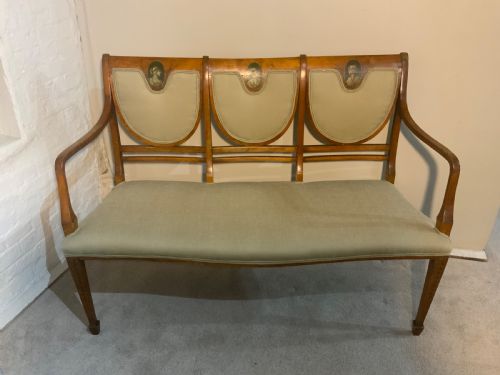
A painted satinwood chair represents a tradition of decorative seating spanning from the Georgian and Regency periods through the Edwardian Sheraton Revival and into the early twentieth century. Buyers seeking this phrase encounter diverse forms, ranging from single side chairs and bedroom chairs to library armchairs, bergères, music chairs, and settees.
The aesthetic draws heavily on eighteenth-century neoclassicism and Chinoiserie tastes, reappearing with enthusiasm during the late Victorian and Edwardian decades. These pieces function as decorative accents in drawing rooms and boudoirs rather than heavy utilitarian seating.
Materials and construction
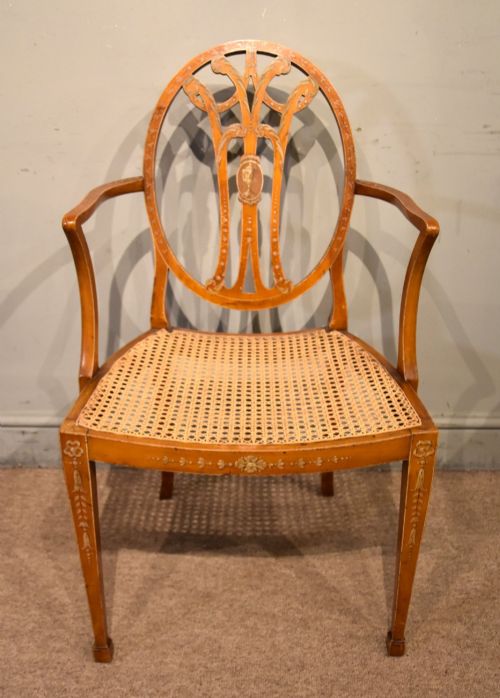
Craftsmen utilised dense satinwood, sometimes supplemented by walnut, shaping frames to receive detailed hand-painted ornament, gilding, and simulated wood finishes. Caned panels, woven cane seats, and upholstered pads in fabrics such as green velvet provide functional comfort within the rigid timber structures.
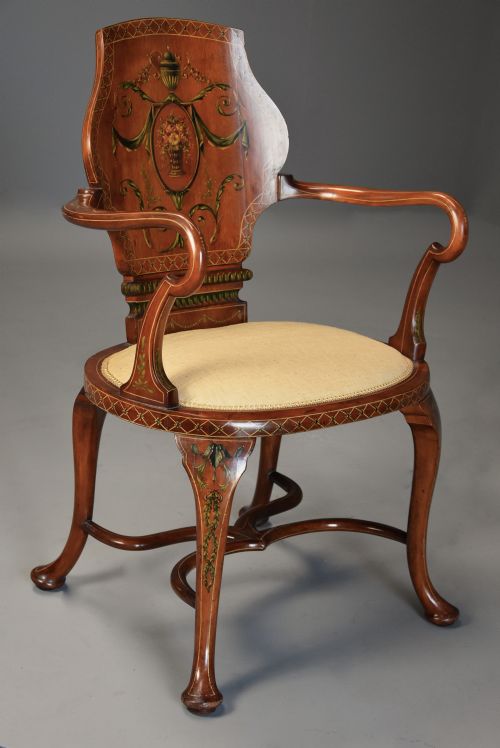
Surface decoration relies on precise brushwork applied directly to the pale wood or over a prepared ground, often depicting floral motifs, classical medallions, or Chinoiserie scenes in the manner of revival styles.
The documented forms span armchairs, side chairs, bergères, music chairs, and settees executed in Sheraton Revival and Chinoiserie styles.
Assessing quality
Quality distinguishes itself through the crispness of the painted detail and the fidelity of the revival style to its Georgian or Regency origins. Finer examples display confident, articulate brushwork on the satinwood rather than mechanical transfer printing or heavy-handed retouching.
The integrity of the structural joinery, the quality of the canework or upholstery execution, and the preservation of the original painted surface separate exceptional workshop output from standard commercial production.
S and H Jewell·Jas Shoolbred
The Painted Satinwood Chair Glossary
- Satinwood
- A durable, light yellow timber with a natural sheen that takes fine detail and paint exceptionally well. It became a favoured medium for polite furniture from the late eighteenth century onward.
- Bergere
- An enclosed upholstered armchair with exposed wooden framing and typically a cane back and sides. This form appears frequently in Edwardian interpretations.
- Chinoiserie
- European artistic style reflecting Chinese motifs and landscapes, frequently rendered in hand-painted details on satinwood furniture.
- Sheraton Revival
- A late nineteenth and early twentieth century design movement that reinterpreted the lighter classical forms popularized by Thomas Sheraton.
- Carver chair
- An armchair designed in a matching style to a set of dining or side chairs, usually positioned at the head of a table.
Painted Satinwood Chair: Frequently Asked Questions
Where should I place a painted satinwood chair?
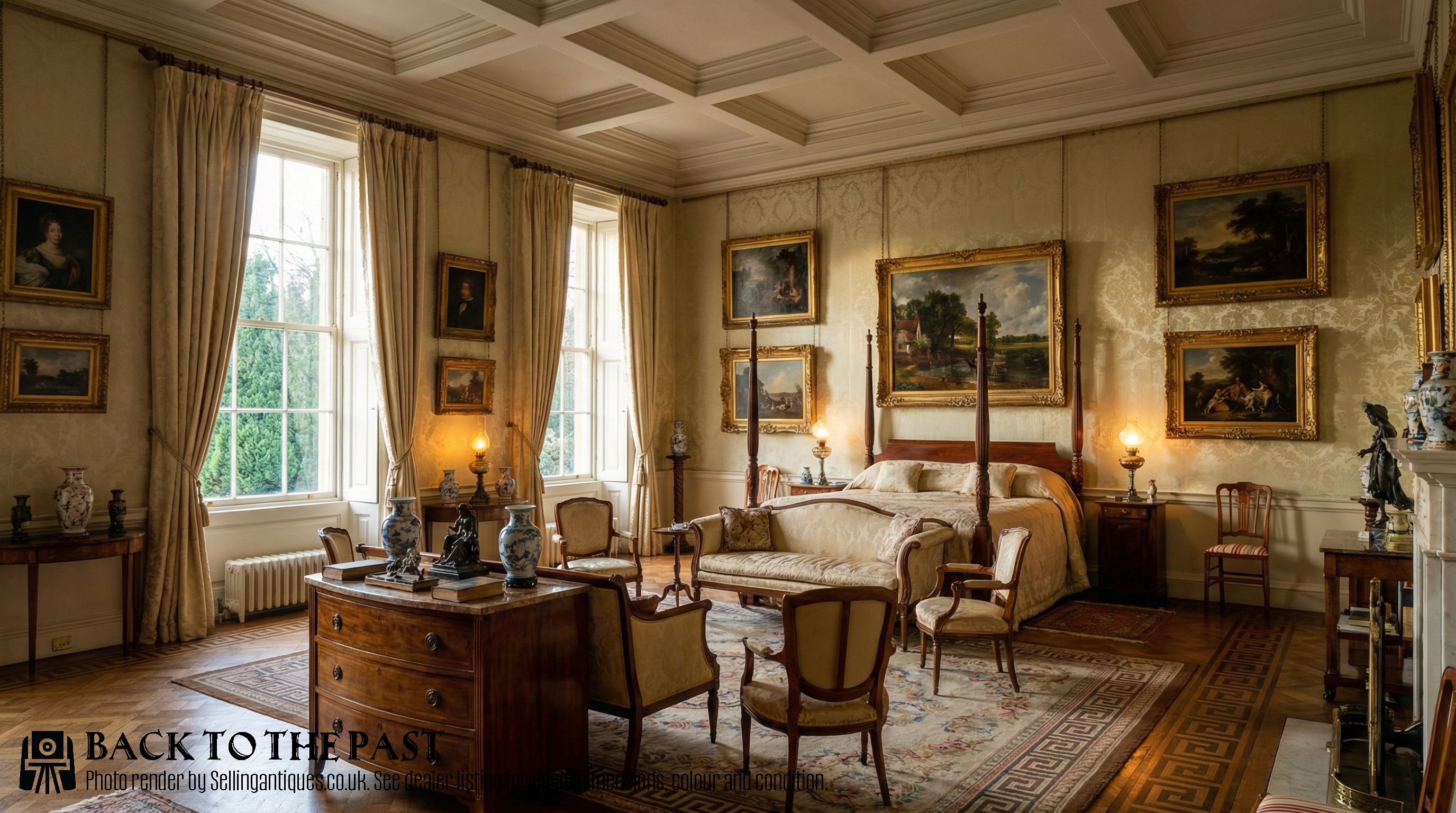
These chairs suit low-traffic areas like bedrooms, reading corners, or drawing rooms where their delicate painted surfaces remain protected from heavy daily wear.
Because of their decorative nature, they function effectively as standalone accent pieces rather than primary dining seating.
How do I clean a painted satinwood surface?
Dust gently with a dry, soft cloth, avoiding commercial polishes, water, or chemical solvents that can soften or lift the historic paint layer.
Preserving the original decorative brushwork requires minimal intervention and stable indoor humidity away from direct sunlight.
Are these chairs comfortable for daily sitting?
Most pieces are upright and supportive, designed for formal sitting, writing desks, or music rooms rather than lounging.
Versions featuring upholstered pads, cane seats, or library armrests offer varying degrees of physical ease depending on the specific model.
How do I distinguish Edwardian revival from Georgian originals?
Edwardian and Sheraton Revival pieces often exhibit standardised manufacturing techniques, specific secondary woods, and decorative conventions characteristic of the early twentieth century.
Georgian and Regency pieces display construction methods, wear patterns, and timber selections consistent with the late eighteenth and early nineteenth centuries.