
Georgian Library Seat
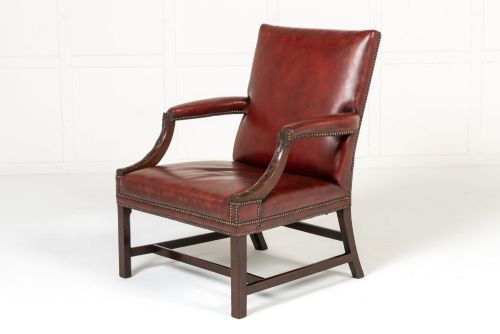
A georgian library seat brings solid mahogany frames, leather upholstery, and quiet dignity to a room.
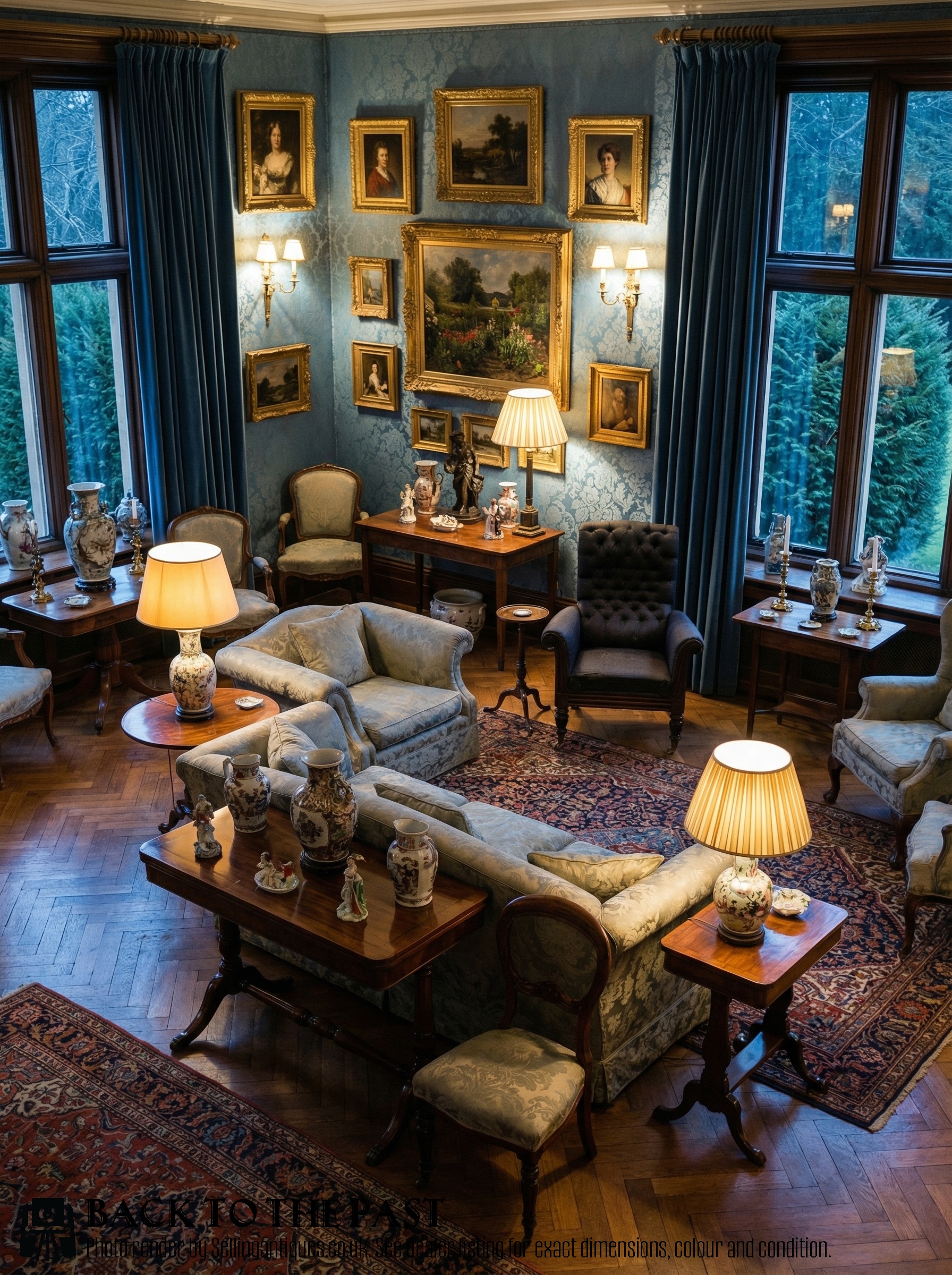
Georgian Library Seat
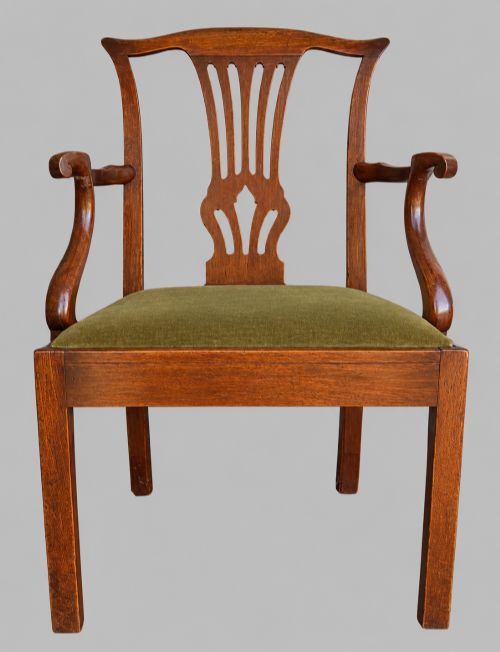
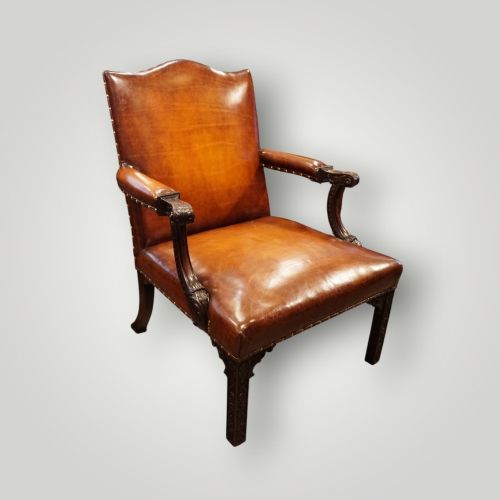
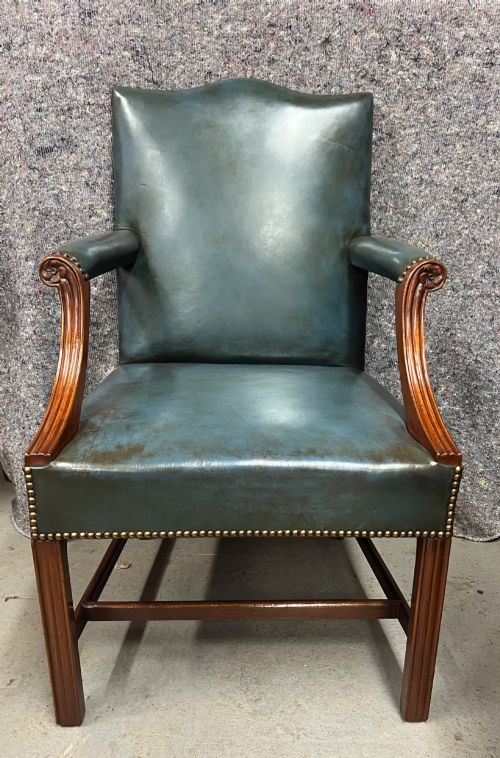
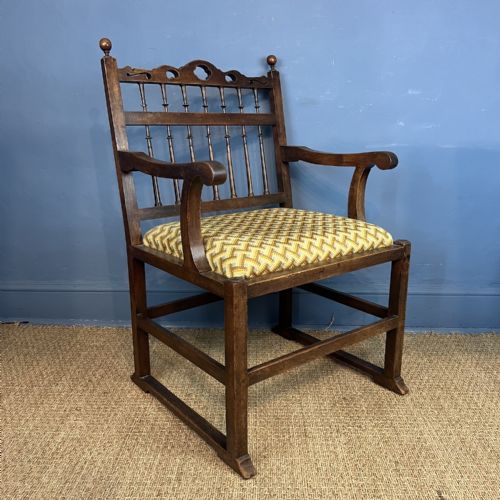
A georgian library seat refers to sturdy seating designed for reading rooms, studies, and writing spaces. These pieces emerge chiefly from the eighteenth and nineteenth centuries, spanning Georgian, Regency, and William IV periods.
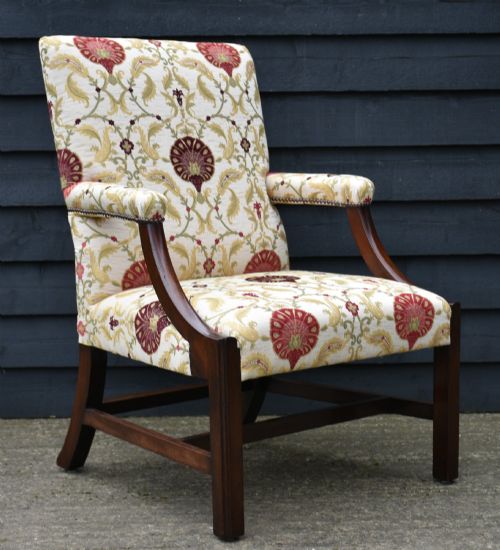
The selections on this page appear predominantly as armchairs, Gainsborough chairs, wing chairs, and desk chairs. Makers often shaped these forms to provide comfort during long hours of reading or correspondence.
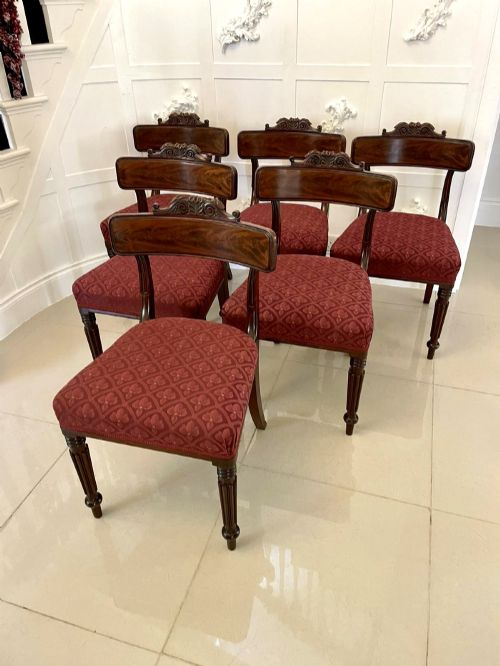
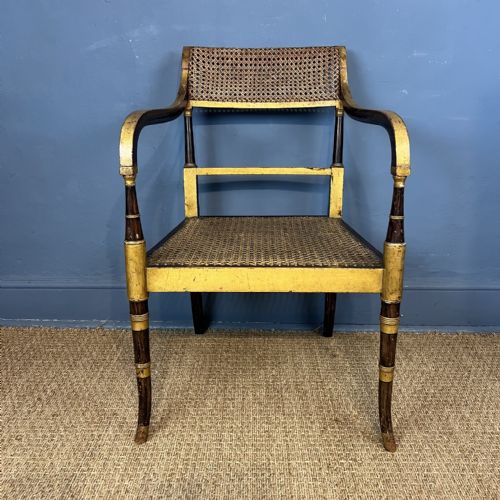
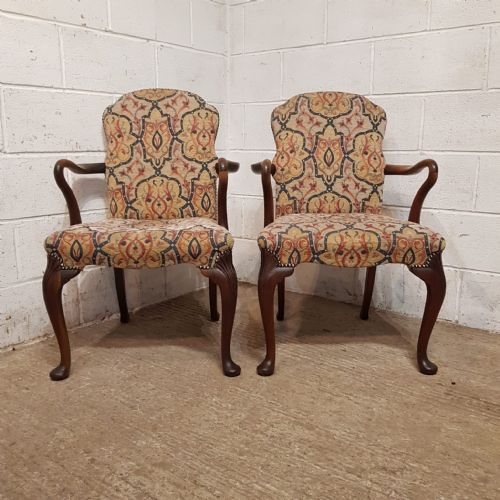
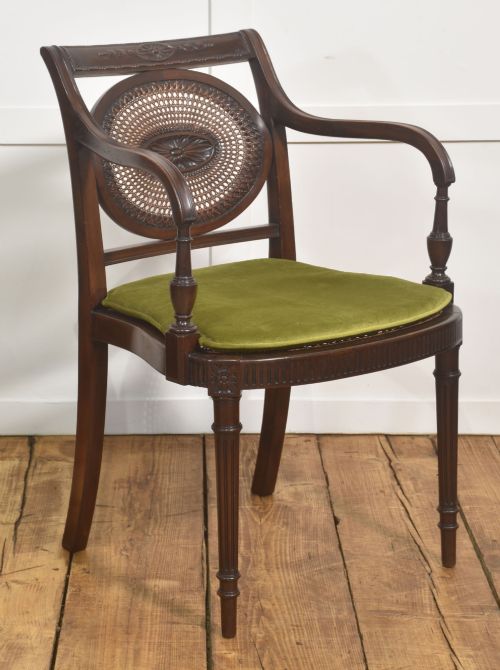
Buyers encounter solid mahogany frameworks, alongside walnut, rosewood, and yew wood. Many examples incorporate upholstered panels in leather, velvet, fabric, or cane work.
How They Were Made
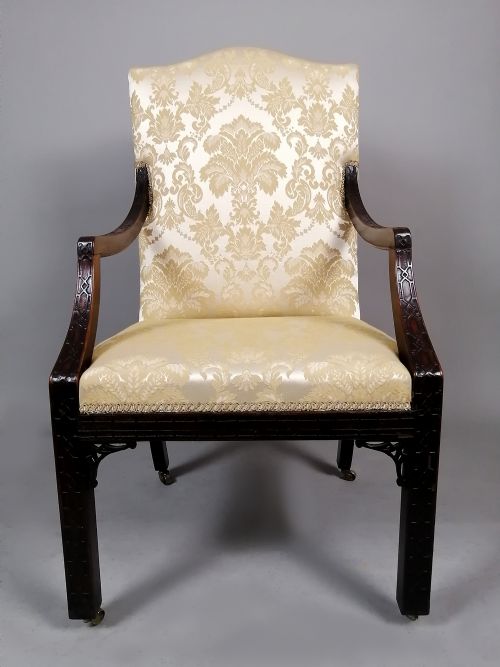
Craftsmen built these frames using dense timbers like mahogany, walnut, and rosewood, often carving details directly into the wood. Blind fretwork, cabriole legs, and parcel gilt highlights appear across the surviving pieces.
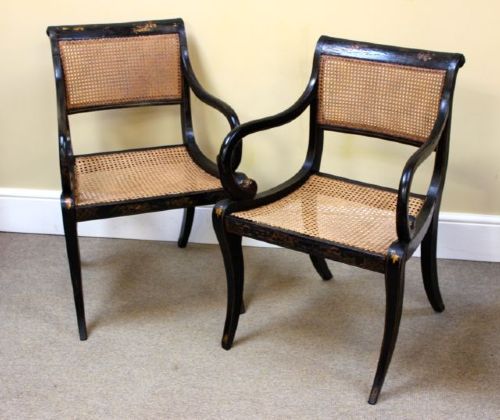
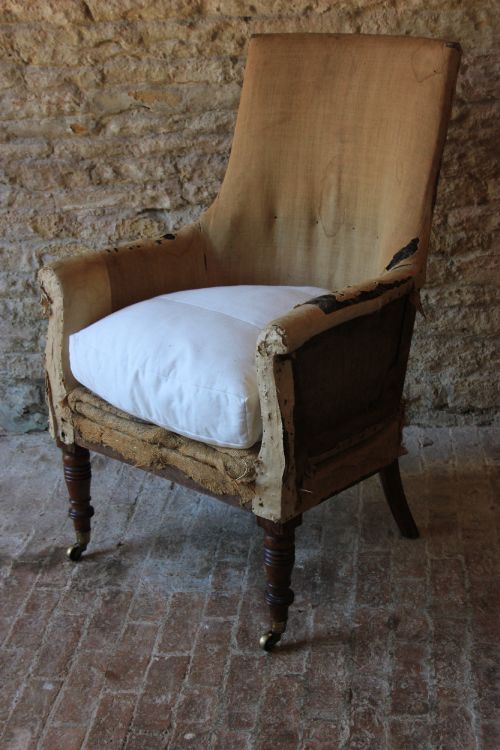
Upholstery methods utilised traditional stuffing materials encased in leather, velvet, hessian, or fabric. Caned panels were woven tightly into chair frames to offer flexible support.
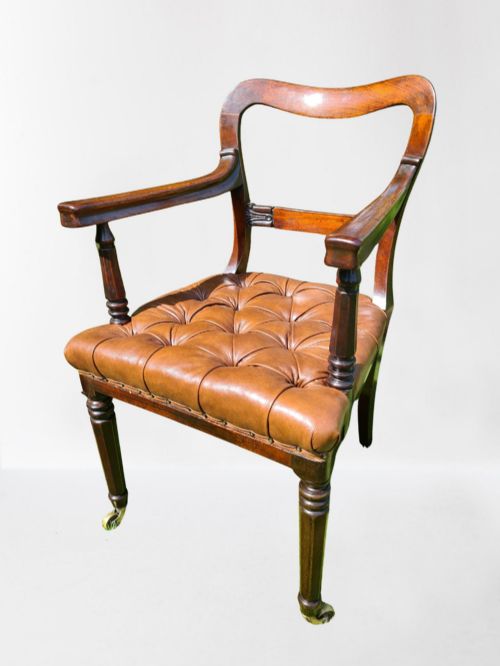
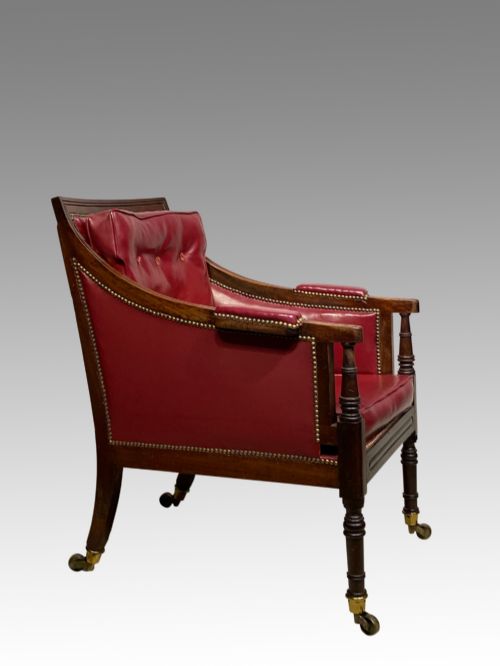
Some nineteenth-century makers evidently decided that reading required extra cushioning, adding deep buttoned leather to sturdy mahogany frames.
What Varies in Quality
The refinement of the carved details and the weight of the timber set examples apart. Crisp moulding on the arms and legs indicates skilled joinery from the period.
Original upholstery materials and the retention of period hardware influence the character of each piece. Intact caning and well-preserved hand-dyed hide distinguish superior specimens.
Gillows·George Bullock
The Georgian Library Seat Glossary
- Gainsborough chair
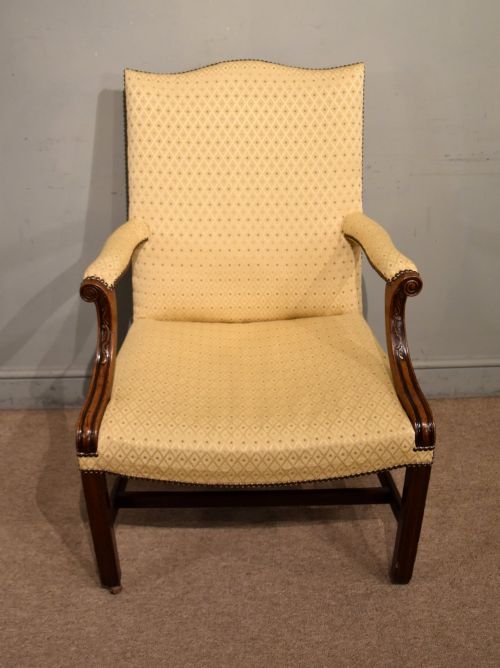
- An upholstered armchair with an open frame, short padded arms, and a wide seat designed for eighteenth-century domestic spaces. This form typically stands on four legs rather than a solid enclosed base.
- Bergère
- An enclosed armchair featuring cane panels on the back and sides, often paired with loose seat cushions. Makers frequently built these with mahogany or rosewood frames during the Regency era.
- Wing chair
- A high-backed seat featuring protective side panels designed to shield the occupant from drafts. Eighteenth-century versions often display deep buttoning and generous proportions.
- Cabriole leg
- A furniture leg that curves outward at the knee and tapers inward at the ankle, finishing in a foot shape such as a ball and claw. This design derives from classical Chinese forms popularised in British furniture during the eighteenth century.
- Blind carving
- Low-relief ornamentation carved directly onto a flat wooden surface without piercing the material. Cabinet makers utilised this technique on chair rails and stiles during the Georgian period.
Georgian Library Seat: Frequently Asked Questions
How do I identify a Regency library chair?
Regency library chairs date from the early nineteenth century and often display classical motifs, lyre-shaped arm supports, or brass inlays. Woods like mahogany and rosewood dominate this style.
Many examples incorporate caned seats and backs or parcel gilt details that reflect classical Greek and Roman influences.
Were these chairs used only in libraries?
While originally commissioned for grand estate libraries and studies, these seats served multiple domestic functions. People utilised them at writing desks, in drawing rooms, and beside fireplaces.
Their sturdy construction made them suitable for daily use across various private rooms in the house.
How do wing chairs differ from standard armchairs?
Wing chairs feature extended side panels on the upper back designed originally to trap heat and block cold draughts. They offer a more enclosed seating position than standard open armchairs.
These pieces frequently appear with deep leather upholstery and substantial wooden frames.