

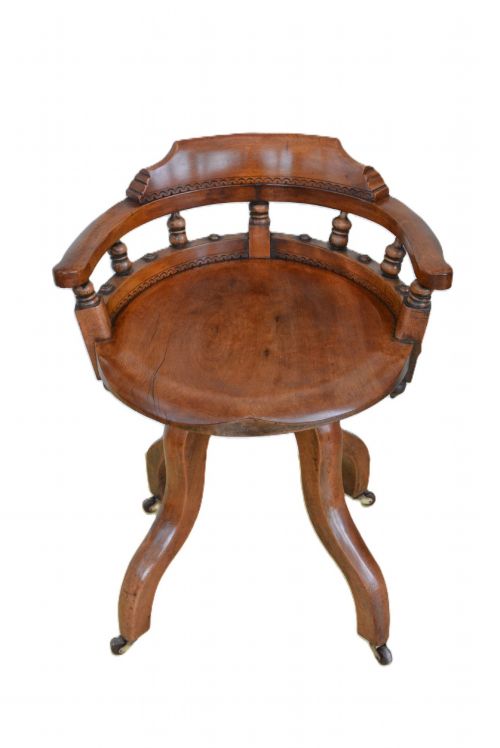


Edwardian Revolving Chair
An edwardian revolving chair combines practical workspace mobility with period craftsmanship, offering comfort and mechanism that collectors and daily users seek.
Edwardian Revolving Chair
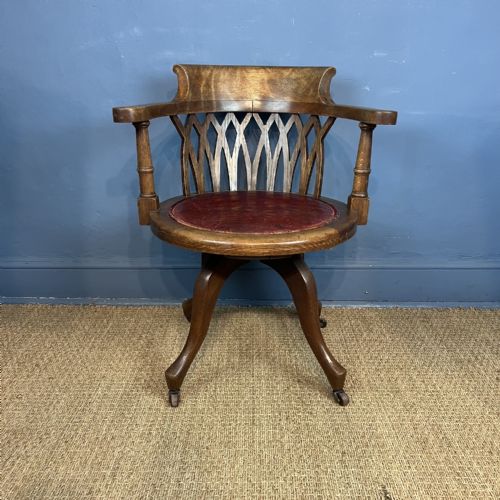
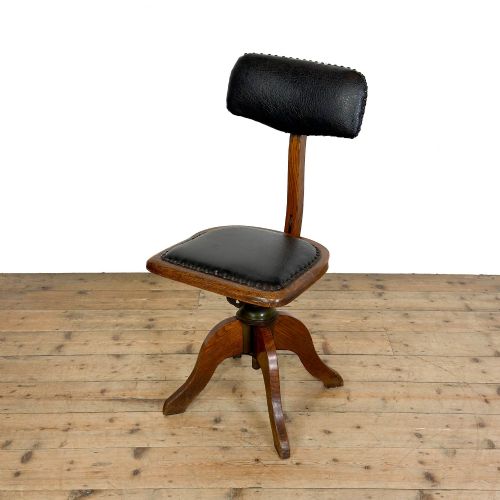
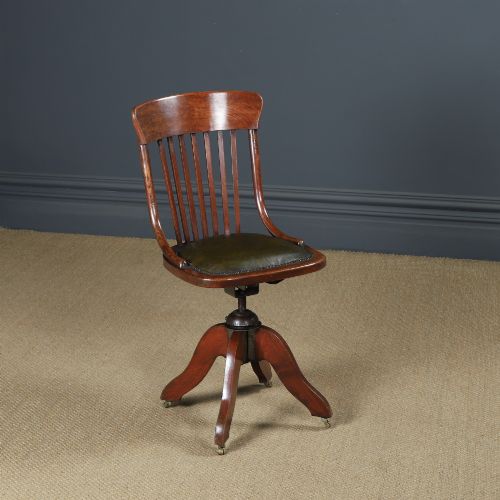
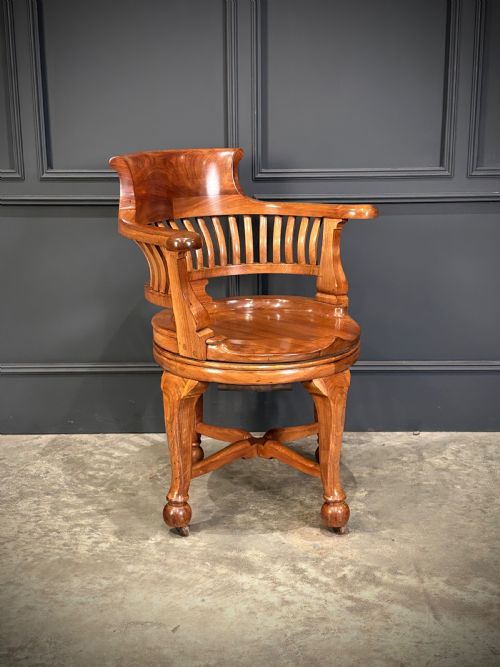
The edwardian revolving chair primarily serves as an office, desk, or library seat designed to swivel and often tilt. Surviving examples frequently emerge from the early twentieth century, spanning late Victorian periods up to the nineteen-twenties.
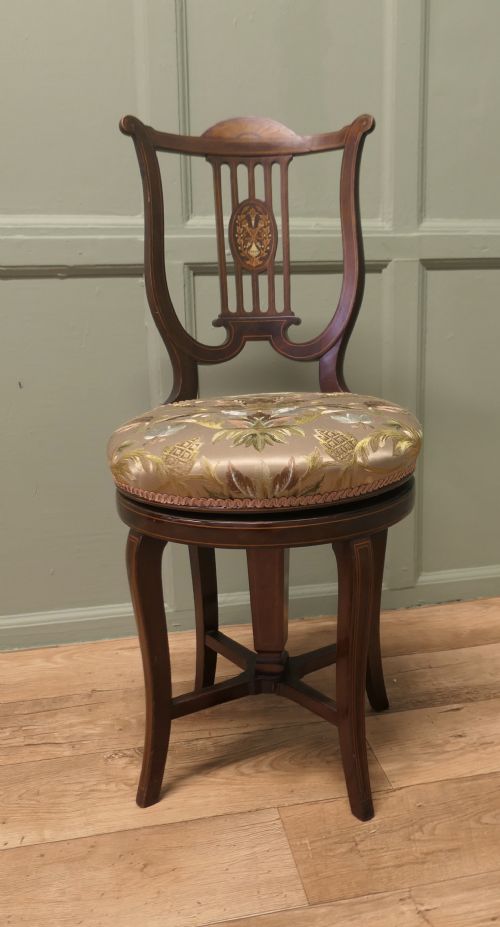
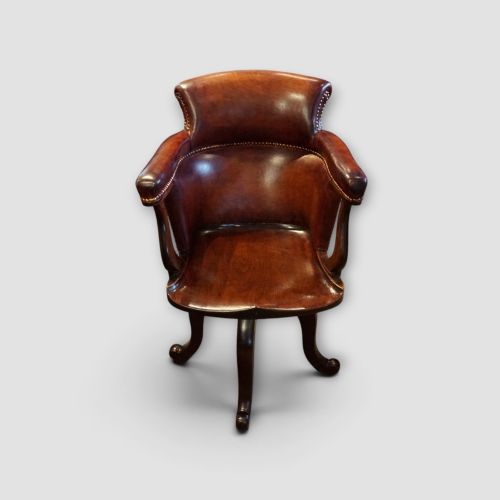
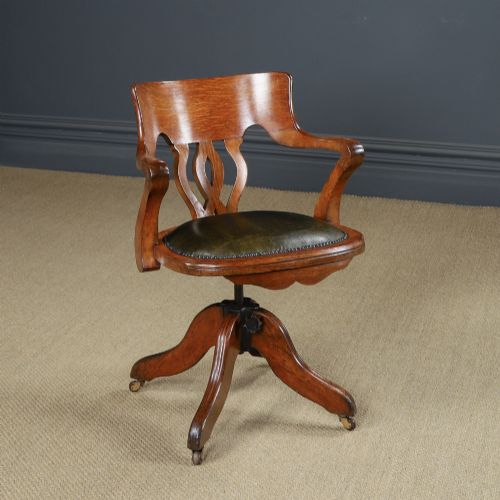
Buyers encounter robust oak and mahogany frameworks fitted with leather pads, alongside lighter beech and walnut versions. Forms range from heavy captain chairs and armchairs to smaller side chairs and specialised music stools.
These seating pieces reflect the expanding administrative workspaces of their era, blending mechanical swivel actions with traditional aesthetic movements and arts and crafts styles.
Materials and construction methods
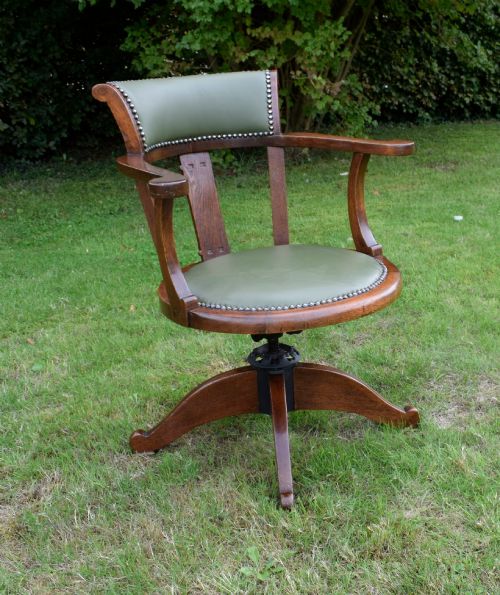
Timbers such as solid oak, rich mahogany, walnut, and resilient beech form the structural framework, shaped into curved backrests and supportive arms. Metal iron and brass components underpin the central swivel mechanisms, enabling smooth rotation and adjustable height functions.
Upholstered inserts utilise supple leather in green or red tones, frequently secured with brass tack detailing. Turn-of-the-century cabinetmakers combined traditional joinery with emerging cast-iron pivot technology to ensure lasting mechanical reliability.
Maritime examples from passenger liners let captains and musicians keep their balance while the room kept moving.
Assessing quality and craftsmanship
Superior examples distinguish themselves through heavier timber selection, intricate hand-carving, and refined proportions in the backrest and spindle turnings. The integrity of the original under-seat iron and brass swivel mechanism determines the operational smoothness and enduring value of the piece.
The grade of leather upholstery and the precision of the frame joinery separate standard commercial seating from workshop-marked pieces produced by notable cabinetmakers of the period.
Kendrick & Jefferson·James Shoolbred·William Birchcraft
The Edwardian Revolving Chair Glossary
- Swivel
- A mechanical pivot assembly beneath the seat that allows the chair to rotate fully. This metal and wood mechanism provides mobility for office and desk tasks.
- Tilt
- A functional adjustment allowing the upper portion of the chair to lean backward against a tension spring. It offers personalized ergonomic comfort during extended periods of sitting.
- Bergere
- A traditional upholstered type featuring woven cane panels set within a wooden frame. This technique lightens the visual weight of the chair back.
- Rise and fall
- An adjustable height mechanism operated by a threaded spindle screw. It allows the seat level to move vertically up or down.
- Saddle seat
- A wooden seat base carved into a contoured, ergonomic shape resembling a horse saddle. It provides natural comfort without requiring deep padding.
Edwardian Revolving Chair: Frequently Asked Questions
How do I adjust the height on these chairs?
Most models utilise a central threaded wooden or iron spindle beneath the seat. Rotating the entire chair clockwise or counter-clockwise raises or lowers the sitting height.
Heavier office versions may rely on a mechanical lever system to control both tilt tension and vertical positioning.
Were these designed exclusively for offices?
While heavily associated with administrative desks, libraries, and ship captains' quarters, similar revolving mechanisms were built for music rooms and dressing tables.
Piano stools and cello chairs utilised the same swivel action to give musicians freedom of movement.
How do I distinguish Edwardian from Victorian models?
Victorian examples tend to feature heavier carved ornamentation, darker rosewood or walnut timbers, and more ornate aesthetic movement detailing. Pieces from the Edwardian era often showcase cleaner lines in lighter oak or mahogany.
Construction stamps and registration numbers can help narrow down the exact manufacturing decade.
Can I use an antique swivel chair daily?
These pieces were built from solid hardwoods and robust cast iron to withstand demanding daily commercial use. Routine wax maintenance on the timber and light lubrication of the pivot mechanism keep them functional for modern workspaces.
Checking that the under-seat carriage remains secure ensures safe long-term seating.