




Georgian Style Piano Seat
A georgian style piano seat delivers classic lines and solid proportions, offering a practical seat that anchors a room with understated character.
Georgian Style Piano Seat
A georgian style piano seat draws on eighteenth-century design traditions, often appearing in forms such as stools, benches, and music chairs. These pieces emerge across various periods, including the eighteenth century, the nineteenth century, and the early twentieth century.
The selection on this page relies heavily on revival aesthetics, encompassing Georgian Revival, Regency, Queen Anne style, Chippendale style, and Sheraton revival. Makers adapted these historical idioms to suit later domestic interiors, producing sturdy seating for daily use.
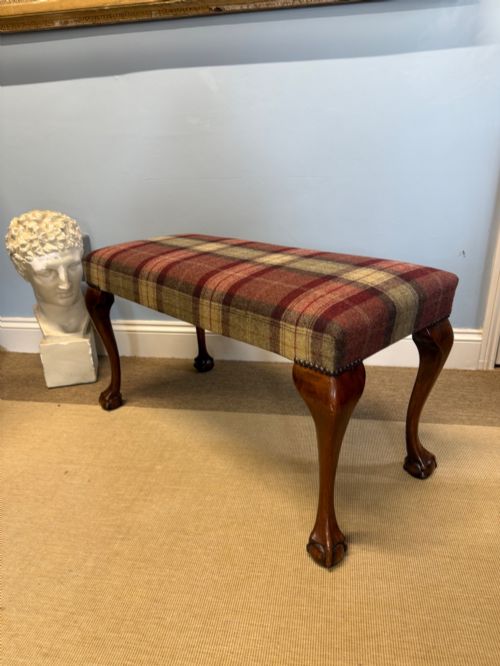
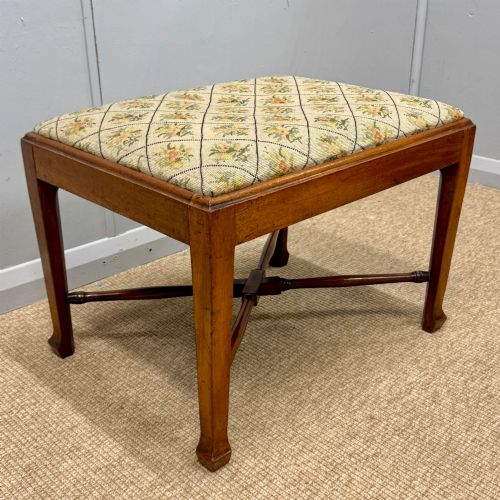
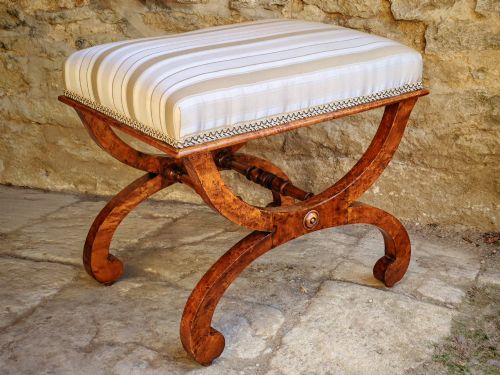
Forms vary from simple mahogany stools to revolving music chairs and large dressing table benches with cross stretchers. Walnut, mahogany, satinwood, and burr maple provide the primary timber foundations for these diverse seating options.
How they were made
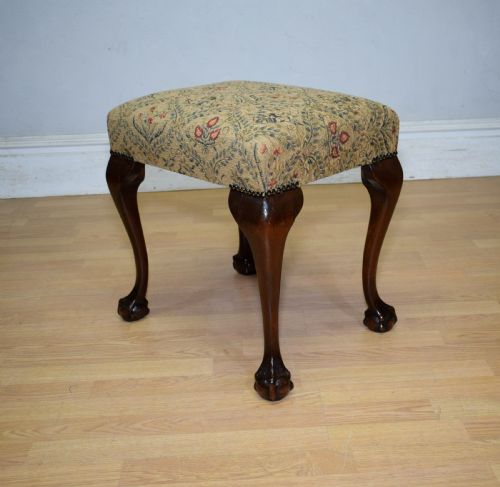
Cabinetmakers constructed these frames using dense timbers like mahogany, walnut, and satinwood, frequently employing detailed carving to emulate Chippendale and Georgian manners. Woodworkers shaped cross stretchers and legs to support the weight of a player or sitter.
Upholstery plays a central role in the finish, utilising traditional textiles such as fabric, velvet, wool, tapestry, and cream damask. Brass details occasionally appear as accents on revolving mechanisms or foot fittings.
Materials documented across the inventory include mahogany, walnut, satinwood, burr maple, fabric, velvet, wool, tapestry, and brass.
What varies in quality
Depth of hand-carving and the crispness of classical motifs separate standard examples from finer interpretations. Timber selection dictates the base visual weight, with figured grains like burr maple and satinwood lifting a piece above plain mahogany.
The integrity of the frame construction and the quality of the textile upholstery determine the overall execution. Pieces featuring well-carved cabriole legs or precise cross stretchers demonstrate superior workshop attention.
The Georgian Style Piano Seat Glossary
- Chippendale Style
- A decorative approach inspired by the eighteenth-century designer Thomas Chippendale, characterised by intricate wood carving and ball-and-claw feet. This aesthetic resurfaced strongly during nineteenth and twentieth-century revivals.
- Cross Stretcher
- An X-shaped or intersecting wooden brace connecting the legs of a stool or bench beneath the seat. It provides structural rigidity and visual balance.
- Revolving Music Chair
- An adjustable seat designed for keyboard players, allowing the user to rotate and alter height during performance. These typically feature central screw mechanisms.
- Damask
- A reversible figured fabric traditionally woven on a jacquard loom, frequently utilised for formal upholstery. Its patterned surface catches the light through contrasting matte and satin threads.
- Georgian Revival
- A design movement looking back to the architectural and furniture forms of the reigns of the first four Georges. It reinterprets classical symmetry and proportion for later homes.
Georgian Style Piano Seat: Frequently Asked Questions
Are these seats comfortable to use daily?
Most examples provide sturdy seating supported by traditional wooden frames and padded upholstery. Their original design catered to musicians and dressing table users who required stable, upright posture.
Upholstery depth varies between pieces, ranging from firm damask pads to softer velvet surfaces. Selecting the right match depends on whether the piece serves as a primary piano seat or an occasional accent stool.
How do I date a georgian style seat?
Dating relies on examining the timber grain, tool marks, and upholstery tack methods visible beneath the frame. Pieces span from genuine eighteenth-century work to later nineteenth-century and Edwardian revivals.
Stylistic cues also help narrow the age, as Edwardian and late nineteenth-century interpretations often blend Georgian proportions with machine-assisted construction techniques.
What woods were used for these seats?
Mahogany and walnut form the backbone of the material evidence, offering durability and rich dark tones. Finer variants utilise satinwood or burr maple to create distinct visual contrast.
Secondary timbers often line the internal frames, while brass components appear in mechanical elements like revolving music chairs.
Where should I place a piano bench?
These benches suit piano setups, dressing tables, or window recesses where compact, elegant seating is required. Their classic profiles allow them to blend easily into traditional and transitional rooms.
Ensure the height matches the intended instrument or table surface if intended for active daily tasks.