

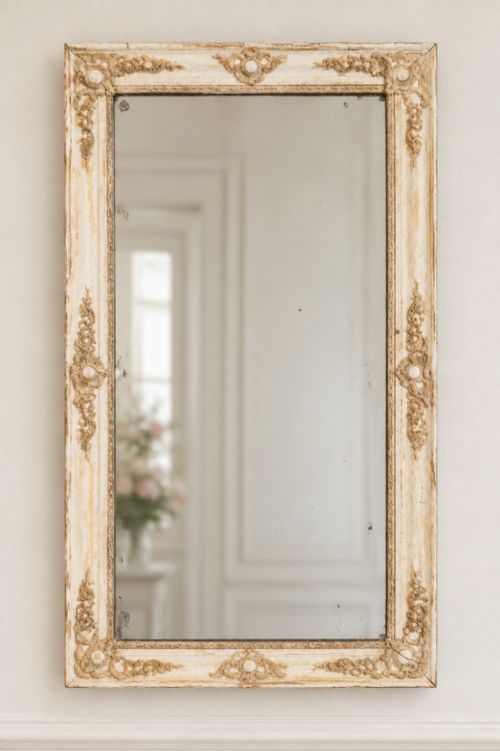
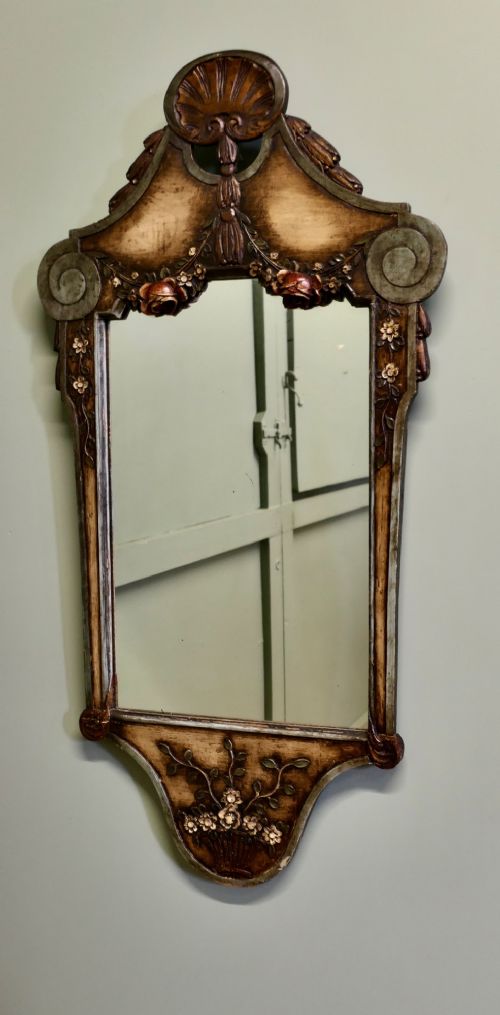
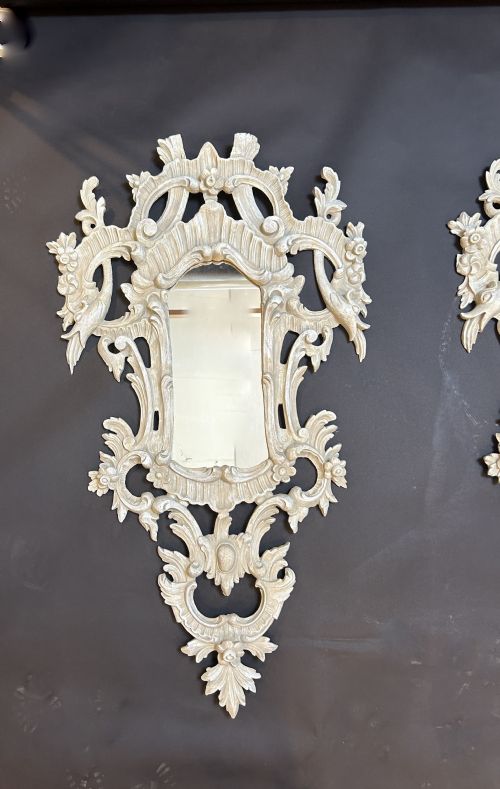


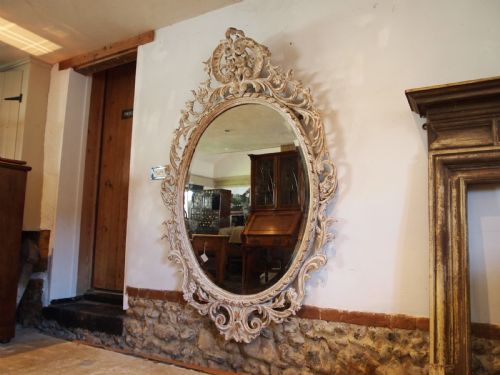


Painted Rococo Pier Glass
A painted rococo pier glass brings dramatic French and Italian flourish to a room, combining curved mirrors with delicate painted scenes.
Painted Rococo Pier Glass
A painted rococo pier glass sits between windows or above a console table, reflecting light and adding vertical height to a room. These mirrors draw on eighteenth-century French and Italian designs, bringing scrollwork and asymmetrical curves into domestic spaces.
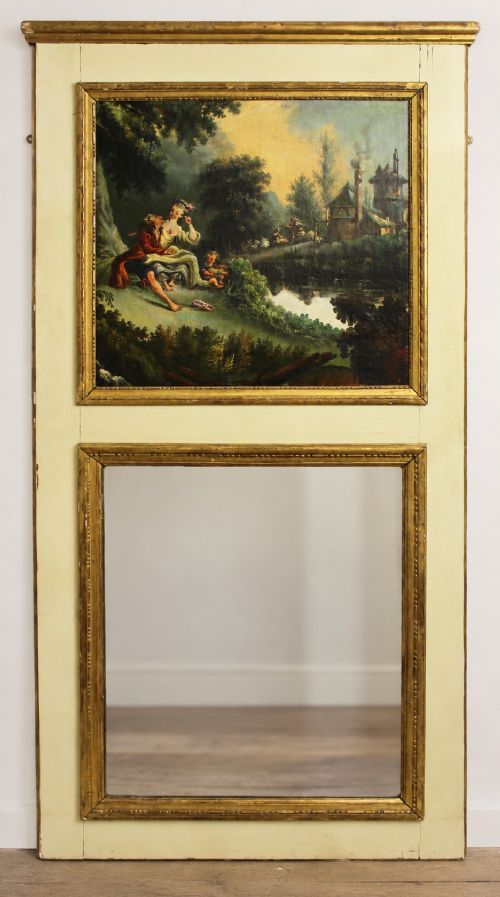
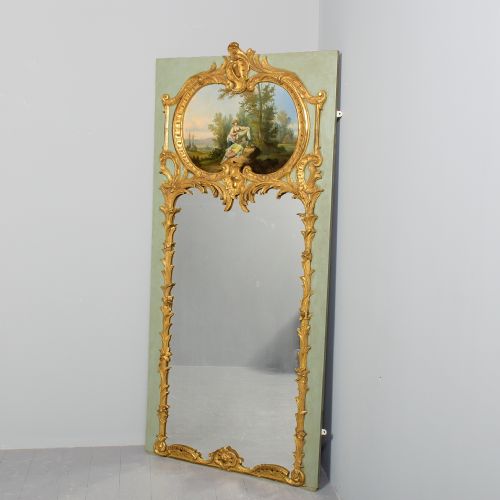
Most examples found here date from the nineteenth century, including revival pieces from the eighteen-sixties, seventies, and eighties alongside genuine eighteenth-century originals. Buyers will frequently encounter French trumeau mirrors featuring pastoral oil paintings set above the glass.
Continental wall mirrors in this style incorporate carved wood frames finished with paint and parcel-gilding. They range from tall, architectural formats to smaller, decorative Italian hand-painted pier glasses.
Materials and construction
Carved wood and gesso form the structural base of these frames, providing the foundation for intricate scrollwork and moulded details. Artisans applied layers of gesso over carved timber to create smooth surfaces suitable for gilding and painting.
Finishes rely on a combination of paint, parcel-gilding, and occasional eglomise techniques on the glass plates. Oil paintings set into trumeau panels complete the composition, executed directly on canvas or wood panels.
Painted Rococo Pier Glass Retail Price Guide 2026
Typical asking prices for painted rococo pier glass among the pieces listed under this phrase on Sellingantiques today, from the lower quarter to the upper quarter. They describe what is for sale here now, not the wider market.
Listings feature Italian and French styles, spanning the eighteenth century and nineteenth-century revival periods using carved wood, gesso, and oil paint.
Evaluating the standard
Quality rests in the crispness of the carved wood and gesso ornamentation, where sharper detail distinguishes finer work from softer, later castings or heavy-handed restorations. The execution of the painted panels and the preservation of original mirror plates also set individual pieces apart.
The integration between the mirror glass, the painted upper panels, and the surrounding frame reveals the maker's hand. Cohesion in the decorative scheme and the survival of original surface finishes indicate superior craftsmanship.
The Painted Rococo Pier Glass Glossary
- Pier glass
- A tall mirror designed specifically to hang on the wall space between two windows.
- Trumeau
- A decorative wall panel, often incorporating a mirror surmounted by an oil painting.
- Gesso
- A plaster mixture applied to wood frames to create a smooth surface for carving and gilding.
- Eglomise
- A technique involving cold painting and gilding on the rear face of glass.
- Parcel-gilt
- Partially gilded, leaving portions of the painted or wood base exposed alongside the gold leaf.
Painted Rococo Pier Glass: Frequently Asked Questions
Where should I hang a pier glass?
These mirrors work best on narrow wall spaces between windows or positioned directly above a console table or fireplace. Their vertical proportions help draw the eye upward and bounce natural light around the room.
Ensure the wall structure can support the weight of a substantial carved wood and gesso frame before installation.
How do I date a painted rococo mirror?
Dating relies on examining the construction methods of the wood frame, the composition of the gesso, and the characteristics of the mirror plate itself. Eighteenth-century examples display hand-carved details and older glass plates with subtle imperfections.
Nineteenth-century revival pieces often utilise more uniform machine-drawn glass and distinct secondary woods beneath the gesso layer.
What is a trumeau mirror?
A trumeau mirror combines a lower glass plate with an upper decorative panel, frequently containing an oil painting with pastoral or classical scenes. This architectural format originated in eighteenth-century French interior design.
They were built to integrate seamlessly with the wood panelling of formal reception rooms.
How do I clean an antique mirror frame?
Dust the carved wood and gesso frame gently with a soft, dry brush to prevent dirt accumulation in the crevices. Avoid using liquid cleaners or abrasive cloths on painted or gilded surfaces.
Clean the glass plate sparingly with a mild glass cleaner applied to a cloth rather than sprayed directly onto the mirror.