


Painted Porcelain Mantel Clock
A painted porcelain mantel clock brings colour and craftsmanship into a room, combining fine ceramic panels with rich metalwork.
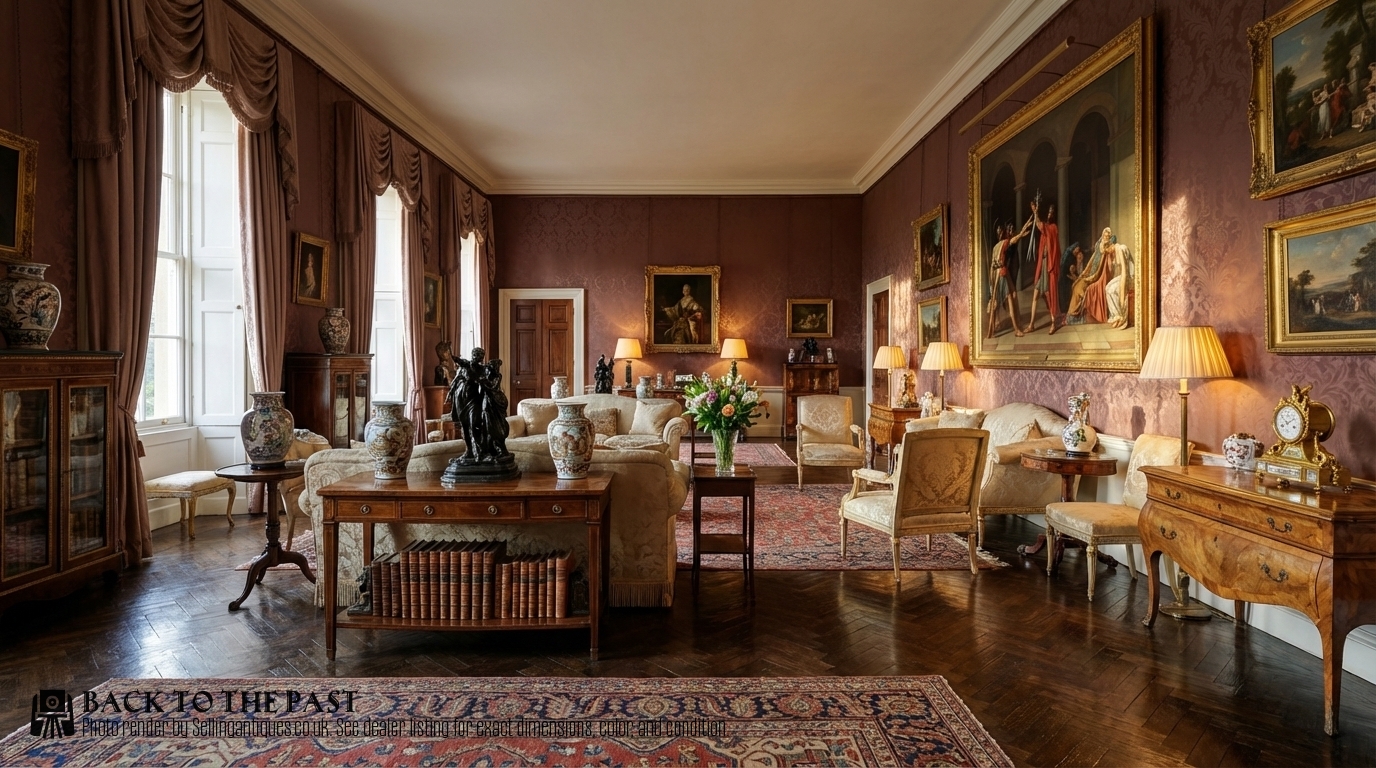
Painted Porcelain Mantel Clock
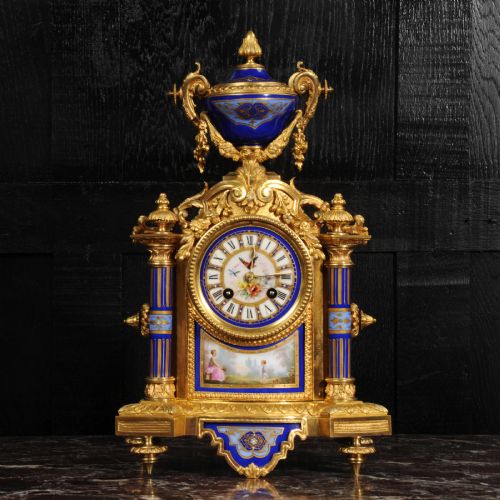
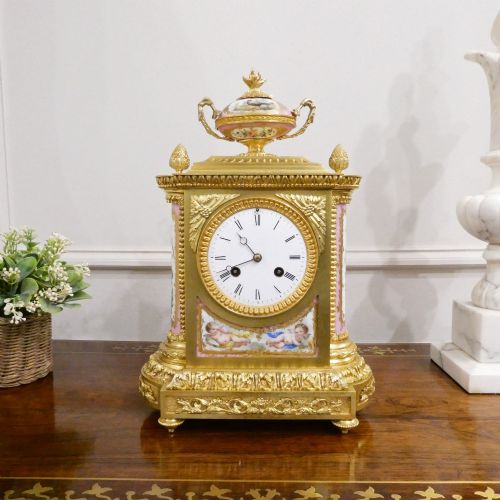
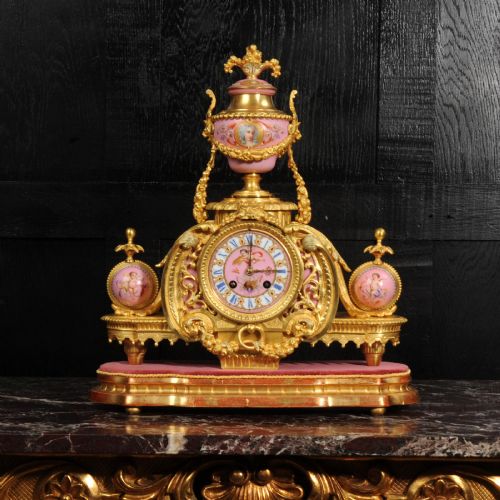
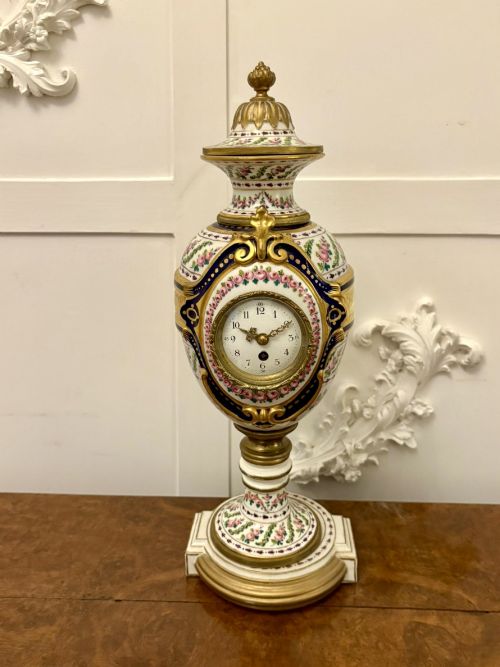
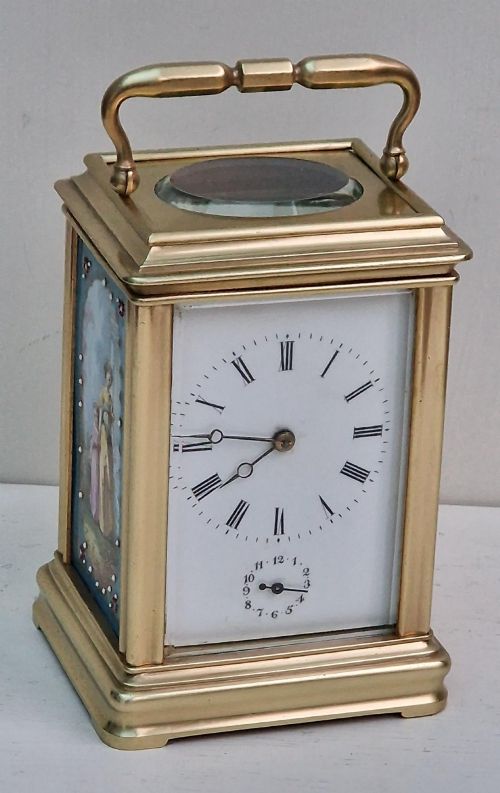
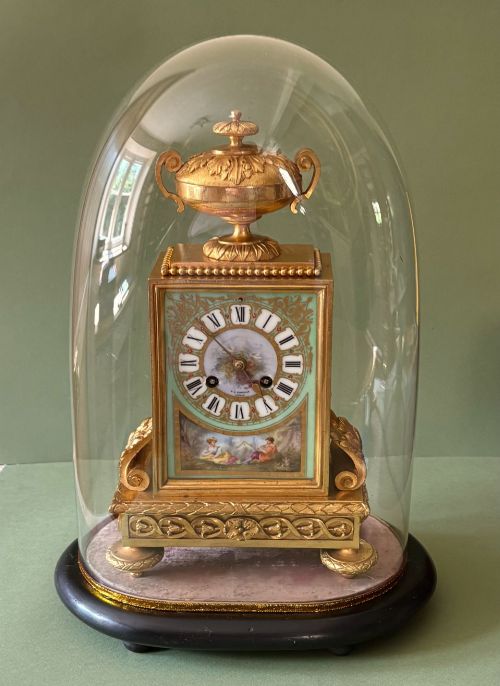
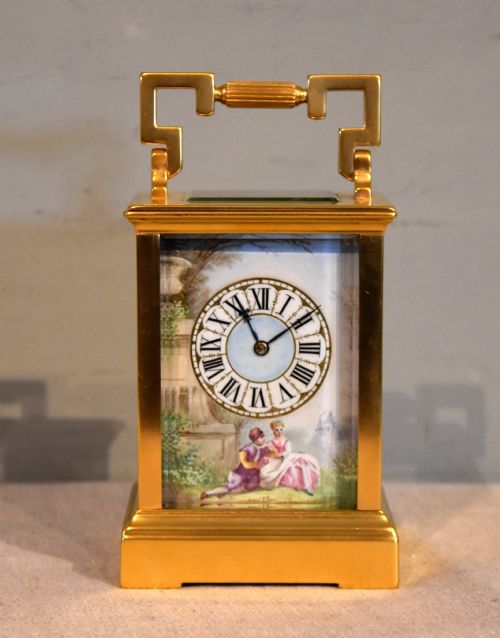
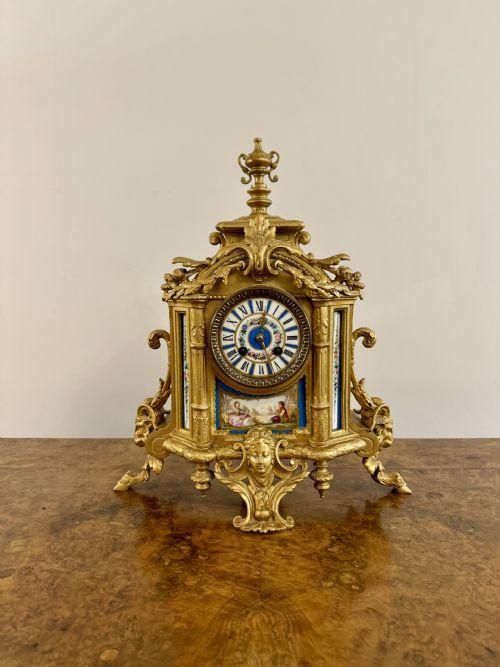
A painted porcelain mantel clock is primarily a nineteenth-century French creation, often incorporating Sevres style plaques or hand-painted ceramic panels into an elaborate metal housing.
The version most commonly met on this page is the French mantel clock or clock garniture set, combining porcelain with gilt bronze, ormolu, or gilt metal.
These pieces range from urn-shaped mantle clocks and drum head bronze clocks to crystal regulators and boudoir clocks dating from the mid to late nineteenth century.
Judging quality in painted porcelain
The distinction between ordinary and exceptional examples rests on the crispness of the gilt bronze casting and the artistry of the hand-painted porcelain panels.
Finer pieces display superior depth in the gilding, more sophisticated hand-painting on the ceramic surfaces, and fully restored mechanical movements by known makers.
The overall harmony of the garniture set or clock case, including matching porcelain elements and integrated glass components, defines the upper tier of the range.
Painted Porcelain Mantel Clock Retail Price Guide 2026
Typical asking prices for painted porcelain mantel clock among the pieces listed under this phrase on Sellingantiques today, from the lower quarter to the upper quarter. They describe what is for sale here now, not the wider market.
Some delicate boudoir clocks include secret glass panels just so you can admire the ticking heartbeat inside.
Japy Freres·Jean-Baptiste Delettrez·Achille Brocot·PH Mourey·Le Roy et Fils·KPM Berlin·Vincenti of Paris·Miroy Freres
The Painted Porcelain Mantel Clock Glossary
- Ormolu
- Gilded bronze, where a gold amalgam is applied to a bronze base. This technique creates a rich, warm metallic finish common on nineteenth-century French clock cases.
- Garniture set
- A matched group of decorative objects consisting of a central clock flanked by matching vases, urns, or candelabra. These sets create a balanced display on a mantelpiece.
- Crystal regulator
- A mantel clock featuring glass panels on multiple sides, allowing the movement and pendulum to be seen clearly. These often include delicate enamel dials and painted porcelain details.
- Enamel dial
- A clock face made by fusing powdered glass onto a metal substrate at high heat. They provide a smooth, durable white surface for painted numerals.
- Drum head clock
- A clock design where the movement is housed in a circular drum-shaped metal case, frequently mounted atop a larger porcelain or bronze plinth.
Painted Porcelain Mantel Clock: Frequently Asked Questions
How do I wind my painted porcelain mantel clock?
Most nineteenth-century mantel clocks utilise an eight-day mechanical movement wound via key arbours on the dial face. Insert the appropriate winding key and turn gently until resistance is felt, avoiding over-winding.
Ensure you do not force the spring past its limit, and consult a professional restorer if the movement feels unusually stiff or fails to hold power.
Where should I place a porcelain mantel clock?
These clocks suit stable flat surfaces away from direct sunlight, excessive moisture, and temperature fluctuations that might affect the enamel dial or velvet elements. A mantelpiece or secure sideboard provides an ideal setting.
Keep the clock away from heavy vibrations to ensure the pendulum maintains an even beat and the delicate porcelain mounts remain secure.
How do I tell different nineteenth-century styles apart?
Louis XVI style clocks typically display symmetrical neoclassical lines, urn motifs, and straight or fluted columns. Rococo revival cases embrace asymmetrical scrolls, naturalistic foliage, and flowing organic curves.
Examining the casting style and painted porcelain motifs helps distinguish between mid-century Rococo pieces and later revival iterations.
What is a clock garniture set?
A clock garniture set comprises a central mantel clock accompanied by matching side pieces such as porcelain vases, urns, or candelabra. These matched groupings were designed for symmetrical display.
All components share matching materials, such as gilt bronze mounts and painted porcelain panels, creating a unified decorative scheme.