

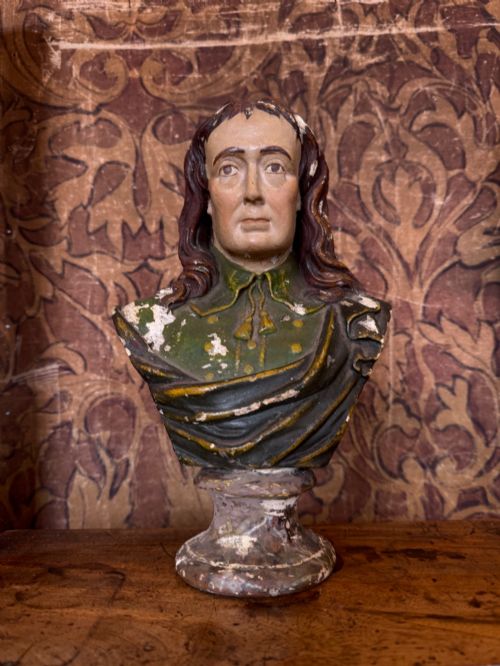
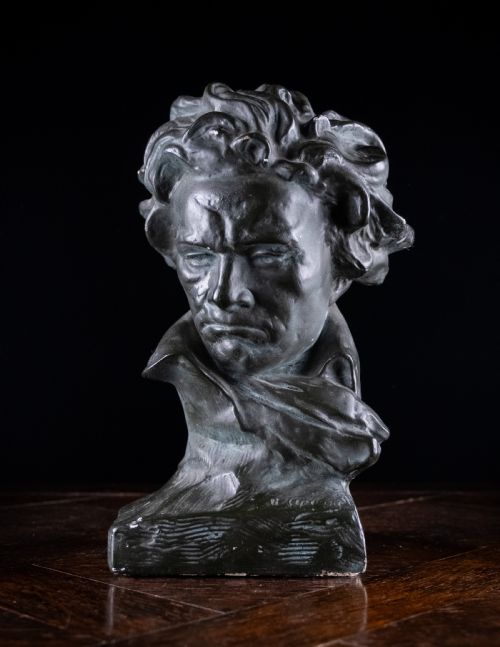


Painted Plaster Bust
A painted plaster bust captures likeness and character through moulded detail and pigment, offering enduring presence for an interior.
Painted Plaster Bust
A painted plaster bust represents figures, animals, or characters through moulded form and surface pigment. When you search for a painted plaster bust, you encounter works ranging from historical gentlemen and classical figures to Art Deco shop mannequins and animals.
The pieces listed here span the nineteenth century up to the nineteen-thirties. You meet library busts, advertising displays, and wall sculptures reflecting styles from neoclassical to French Art Deco.
Nineteenth-century examples often depict library subjects and gentlemen, while nineteen-thirties pieces tend toward advertising mannequins and streamlined Art Deco forms. Spanish horses and French subjects also appear among the selections.
How they were made
Surface finish relies on paint applied to simulate bronze, stone, or lifelike skin tones. Some pieces incorporate metal elements or carved wooden stands to support the main composition.
Painted Plaster Bust Retail Price Guide 2026
Typical asking prices for painted plaster bust among the pieces listed under this phrase on Sellingantiques today, from the lower quarter to the upper quarter. They describe what is for sale here now, not the wider market.
Listings feature periods from the nineteenth century through the nineteen-thirties, utilising plaster, paint, wood, and gesso materials.
What varies in quality
The application and preservation of the painted surface determine visual depth. Original polychrome or simulated bronze finishes show deliberate layering rather than flat coverage.
The Painted Plaster Bust Glossary
- Plaster
- A building and moulding material made from gypsum, water, and other ingredients. It sets hard quickly after being poured into a mould.
- Gesso
- A plaster mix used as a smooth base for paint. It prepares the surface of the sculpture.
- Chalkware
- A material made from moulded plaster or chalk painted to resemble more expensive ceramics. It offers a lighter alternative to solid stone.
- Neoclassical
- A style inspired by classical antiquity prevalent in art and architecture. It values symmetry, proportion, and classical subjects.
Painted Plaster Bust: Frequently Asked Questions
What are painted plaster busts made of?
These pieces consist primarily of moulded plaster, sometimes categorized as chalkware or reinforced with gesso layers. Artisans finish the surfaces using paint to mimic bronze, stone, or natural skin tones.
Additional structural support occasionally comes from wood bases or internal metal elements. The combination of plaster and pigment creates a detailed sculpture with a distinct tactile surface.
How do I date a plaster bust?
Dating relies on stylistic clues, subject matter, and materials visible on the piece. Nineteenth-century examples often portray library gentlemen or classical figures, while nineteen-thirties pieces frequently feature Art Deco advertising mannequins.
Maker marks, numbering, or specific Paris foundry stamps provide further chronological markers. Surface wear and the specific type of paint application also indicate the period of creation.
How should I display a plaster bust?
Plaster sculptures suit placement on sturdy shelves, mantels, or dedicated pedestals and plinths. Because the material is sensitive to moisture and heavy impacts, stable indoor locations away from damp areas work best.
Pairing a library bust with wooden furniture or placing an Art Deco mannequin on a counter top highlights its historical context. Adequate lighting helps accentuate the painted surface details and moulded contours.
Are these busts solid plaster?
Most large library busts and shop mannequins are cast with hollow interiors to reduce weight while maintaining structural integrity. Thicker walls provide sufficient strength for mounting or freestanding display on wooden stands.
Smaller wall sculptures and detailed portrait heads vary in density depending on the manufacturing technique used. The weight typically reflects the size of the piece and any integrated mounting materials.