

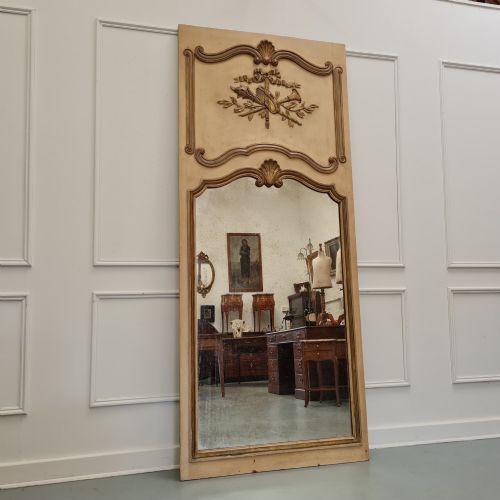


Painted Panel Wall Mirror
A painted panel wall mirror brings together reflective glass and oil painting or decorative panels, adding depth and narrative charm to a room.
Painted Panel Wall Mirror
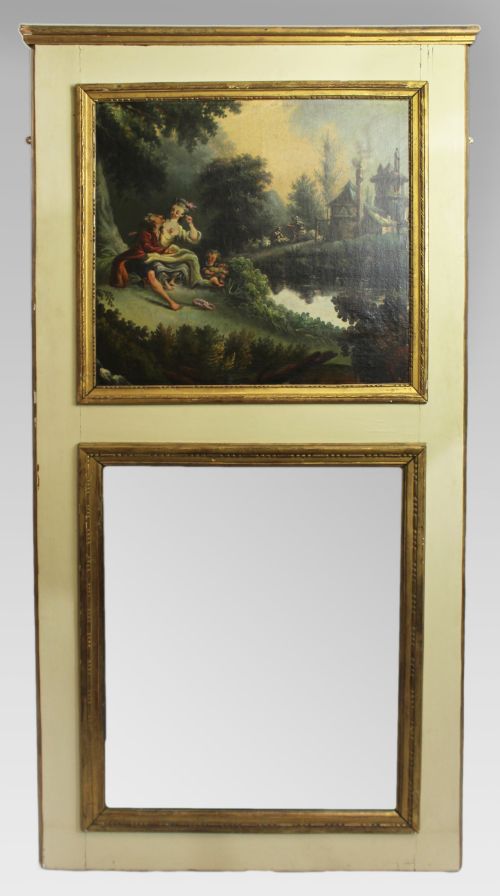
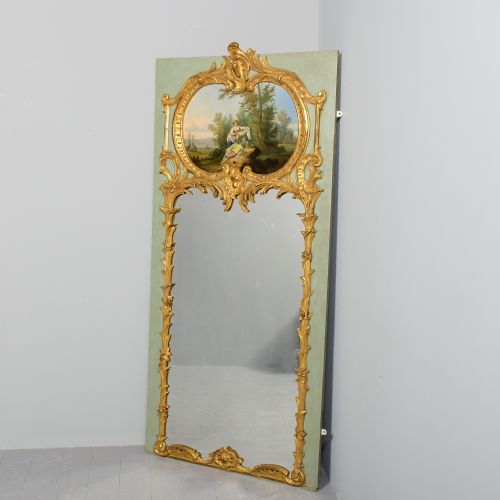
When you search for a painted panel wall mirror, you encounter pieces that combine traditional mirror glass with integrated artwork, most frequently seen in tall French trumeau formats and British overmantels. These mirrors serve a dual purpose as both functional looking glasses and decorative wall art, often featuring pastoral scenes, classical motifs or floral details set above or beside the glass.
The pieces on this page span several centuries and styles, ranging from Regency and Victorian examples to 18th century pine overmantles and Louis XVI style trumeaus. French examples with pastoral oil paintings or decorative relief panels appear frequently alongside British overmantle mirrors incorporating hand-painted foliate or shipping panels.
Buyers often select these mirrors to anchor a room, placing them above mantelpieces or along principal walls where the combination of giltwood, painted wood and canvas panels can reflect natural light while providing a distinct focal point. The formats vary from intimate hanging mirrors to large architectural overmantels designed to command an entire interior elevation.
Materials and construction
Makers constructed these mirrors using timber frames of pine, mahogany, walnut or satinwood, often enhanced with carved giltwood, gold leaf or parcel-gilt details. The structural woodwork supports heavy mirror glass alongside canvas or wooden panels prepared with paint, oil works or reverse-painted glass techniques.
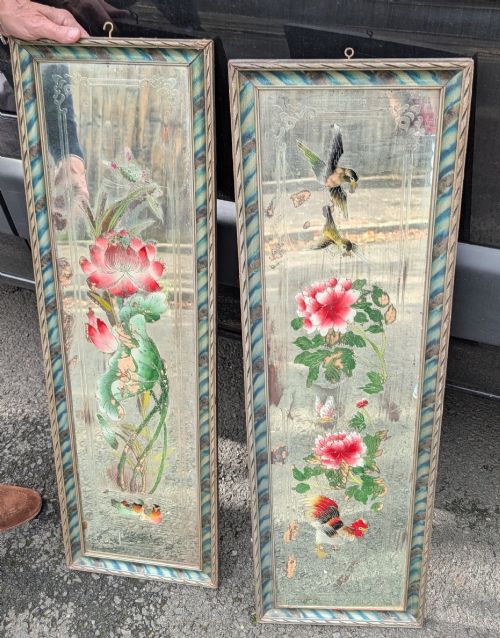
Surface decoration frequently involves traditional paint finishes, gilding and decorative relief work, sometimes incorporating eglomisé panels or etched glass. The integration of the painted section requires careful joinery within the main frame to unite the artwork and the glass securely.
Listings feature painted panel wall mirrors spanning the 18th, 19th, and early 20th centuries, incorporating materials such as giltwood, paint, canvas, and mirror glass.
Markers of quality
Quality in these pieces rests upon the execution of the painted panel and the harmony of its integration with the mirror frame. Finer examples feature accomplished hand-painted oil artwork, such as pastoral scenes or classical figures, rather than simpler decorative motifs.
The crispness of the carving on the giltwood elements and the depth of the gilding distinguish superior workshops from standard production. Original mirror glass with appropriate ageing also contributes to the integrity of the piece.
The Painted Panel Wall Mirror Glossary
- Trumeau
- A decorative wall mirror featuring an integrated painted panel or carved relief above the glass plate. These pieces originate largely from French interior design traditions.
- Eglomisé
- A process where cold painting and gilding are applied to the rear face of glass to produce a brilliant, reflective motif. This technique appears on specialised panels within antique frames.
- Overmantle
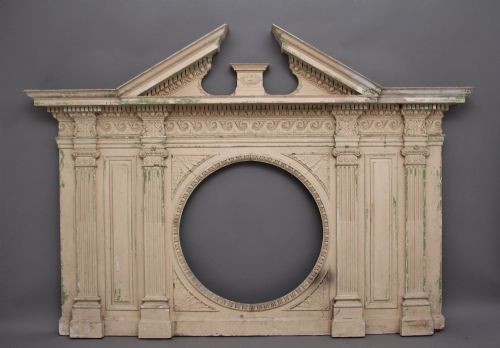
- A large mirror designed specifically to be hung above a fireplace mantel. They often span considerable widths and incorporate architectural mouldings.
- Pier mirror
- A tall, narrow mirror traditionally hung on the pier or wall space between two windows. They reflect additional light into darker recesses of a period room.
- Parcel gilt
- A finishing method where only specific carved details or raised ornaments are highlighted with gold leaf while the rest of the frame remains painted or stained wood.
Painted Panel Wall Mirror: Frequently Asked Questions
Where should I hang a trumeau mirror?
These mirrors suit principal reception rooms, hallways or above drawing room mantelpieces where their height and integrated artwork can be fully appreciated. Their vertical proportions make them effective for drawing the eye upward in rooms with high ceilings.
Ensure the wall anchors are rated for the combined weight of the timber frame, glass and painted panel, as these pieces can be exceptionally heavy.
How do I clean the painted panel?
Dust the painted surface gently with a dry, soft cloth and avoid chemical cleaning solutions or excessive moisture. The oils and pigments on antique canvas or wood panels are sensitive to modern detergents.
Keep the mirror glass clean using a mild glass cleaner applied to a cloth rather than sprayed directly onto the glass, preventing liquid from seeping into the surrounding painted frame.
Are these mirrors original or later reproductions?
The listings on this page encompass authentic period pieces from the 18th, 19th and early 20th centuries, showing appropriate signs of age in the wood, paint and mirror plates. Examining the construction of the backboards and the patina of the gilt helps confirm period manufacture.
Styles such as Louis XVI style or Georgian style indicate the aesthetic tradition a Victorian or later piece draws upon, rather than its exact date of construction.
What is an eglomisé panel?
An eglomisé panel is created by applying gold or silver leaf and paint to the reverse side of glass, producing a gleaming, metallic finish with distinct visual depth. This technique was frequently utilised for decorative panels within Regency and Victorian mirrors.
Care should be taken around the edges of these panels to protect the delicate reverse-painted layer from moisture and handling.