







Painted Oriental Coffee Table
A painted oriental coffee table brings layered lacquer and decorative scenes to a sitting room.
Painted Oriental Coffee Table
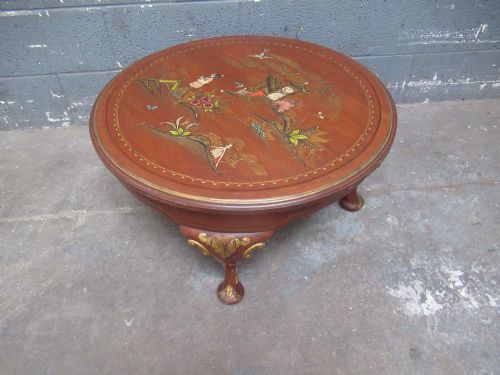
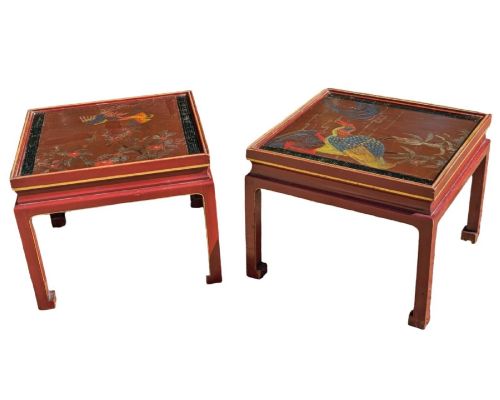
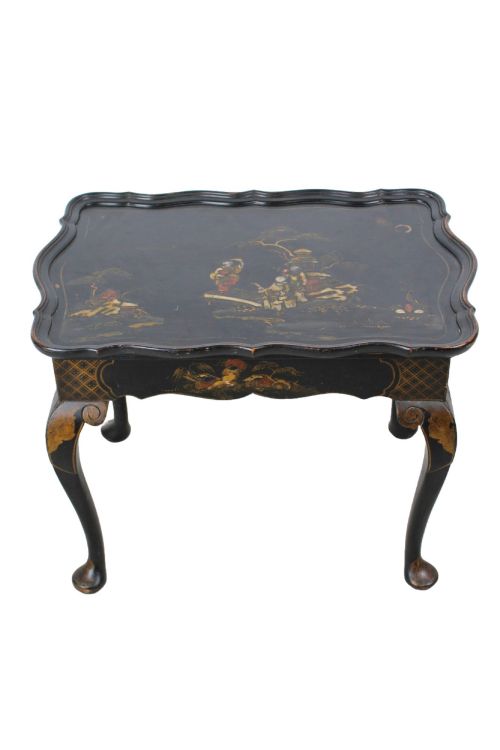
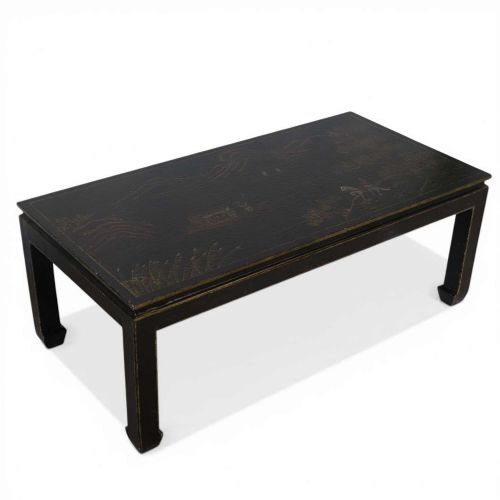
A painted oriental coffee table encompasses low timber surfaces finished with decorative pigment and lacquer, often taking the form of tray tables or nests. These pieces draw on traditions from Chinoiserie to Kashmiri and Middle Eastern aesthetics, spanning the nineteenth and twentieth centuries.
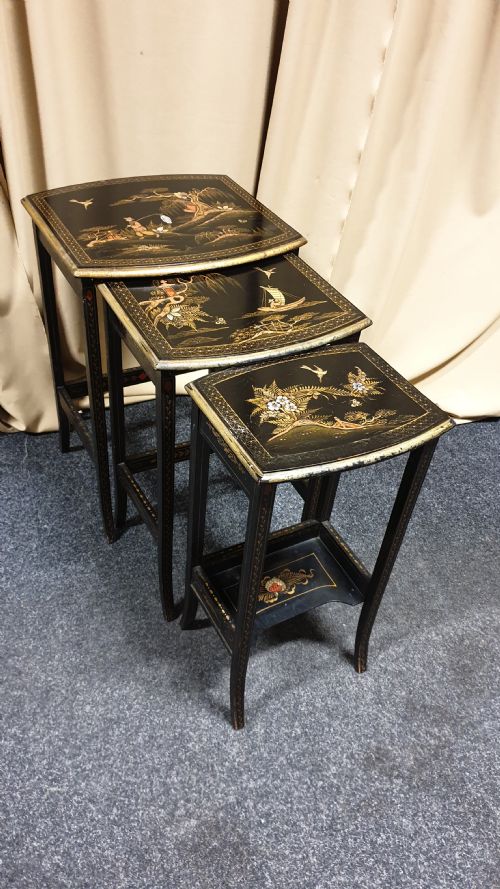
The versions most commonly met on this page include Edwardian interpretations, early twentieth-century round or low coffee tables, and nested sets. Makers adapted traditional motifs onto low proportions suited to western living spaces of the period.
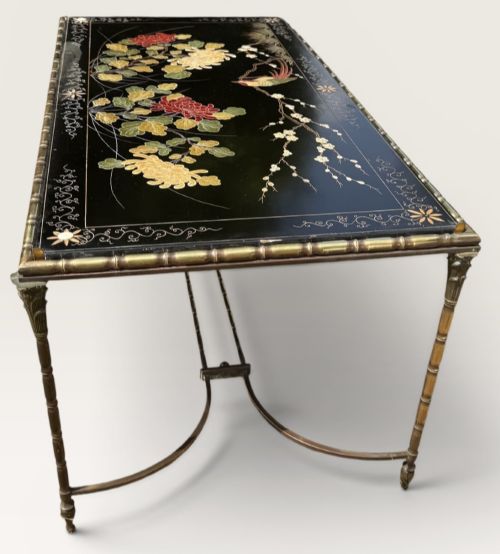
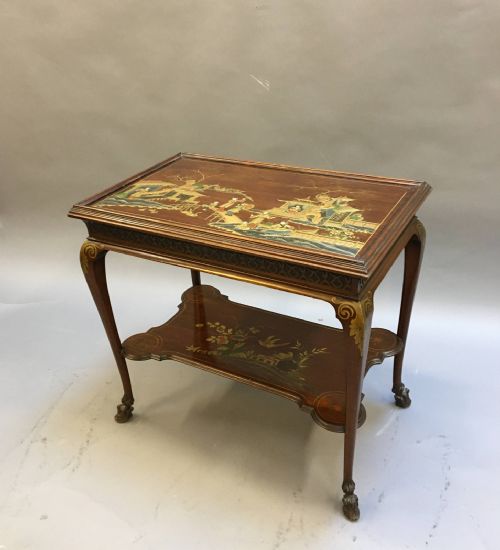
Forming the core of the selection are occasional tables, tray tables, and occasional nests originating from English, French, and Asian workshops. Each piece employs painted surfaces to display figurative or floral schemes upon a lacquered wood base.
Materials and construction
Construction relies upon timber bases prepared for lacquer, gold leaf, or pigment application. Artisans built surfaces using wood and papier-mâché, applying multiple coats of lacquer to create a smooth ground for subsequent painting.
Decoration involves hand-applied paint, pigment, and gilt, sometimes complemented by brass hardware. The finishing process requires precise layering to seal the imagery and provide durability to the low table surface.
Painted Oriental Coffee Table Retail Price Guide 2026
Typical asking prices for painted oriental coffee table among the pieces listed under this phrase on Sellingantiques today, from the lower quarter to the upper quarter. They describe what is for sale here now, not the wider market.
Listings span the nineteenth century up to the 1930s, featuring wood, lacquer, paint, and brass.
Distinctions in craftsmanship
Quality rests upon the depth of the lacquer work and the execution of the painted scenes. Finer examples display intricate brushwork and rich layering that remain stable across the timber substrate over generations.
The refinement of the supporting frame and the integrity of the joints distinguish standard production from superior workshop output. Attention to detail in the painted motifs separates standard decorative pieces from those retaining sharp, articulate composition.
Maison Bagues
The Painted Oriental Coffee Table Glossary
- Chinoiserie
- European decorative style imitating Chinese and East Asian artistic traditions. It appears frequently on nineteenth and twentieth-century lacquered furniture.
- Japanned
- European-made lacquered furniture mimicking Japanese or Asian export wares. This technique involves building up layers of varnish and pigment.
- Lacquer
- A durable resin finish applied in multiple coats to wood or papier-mâché. It creates a glossy, protective surface suitable for detailed painting.
- Nest of tables
- A set of graduated tables designed to fit neatly beneath one another. They offer flexible surface space in compact rooms.
Painted Oriental Coffee Table: Frequently Asked Questions
What periods do these coffee tables come from?
The pieces span from the nineteenth century through the early decades of the twentieth century, including Victorian, Edwardian, and mid-century examples.
Production methods shifted across these eras, blending traditional Asian lacquer techniques with European furniture forms.
How were these low tables originally used?
Many began as tray tables, occasional tables, or low chests adapted for serving and display in period interiors.
Over time, their low heights made them suitable for placement in front of seating areas as coffee tables.
Are nested tables practical for daily living?
Nested sets provide multiple surfaces when entertaining and tuck away compactly when floor space is needed.
Their lightweight construction allows for easy movement around a room as required.
How do I care for a lacquered surface?
Keep these tables out of direct sunlight and away from excessive moisture to protect the delicate lacquer and gilt.
Dust gently with a dry, soft cloth and avoid chemical polishes that can damage the painted finish.