

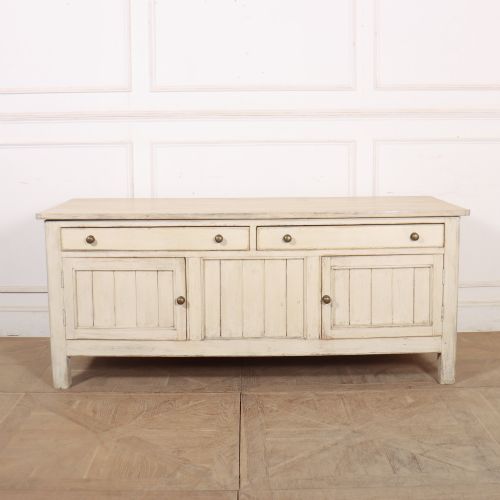
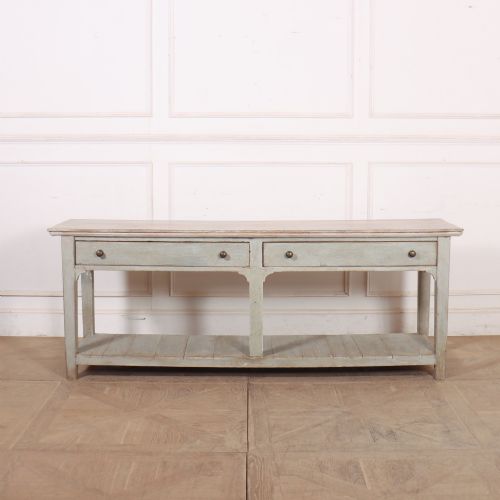

Painted Kitchen Sideboard
A painted kitchen sideboard brings utilitarian charm to a room, offering sturdy pine construction and historic painted finishes for practical storage.
Painted Kitchen Sideboard
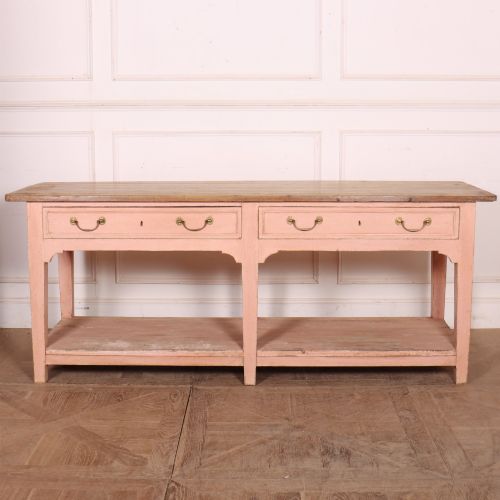
A painted kitchen sideboard sits within a tradition of practical domestic furniture, spanning dresser bases, serving tables, and shop counters. You encounter forms dating from the eighteenth century through the nineteenth century, reflecting both English and continental provincial origins.
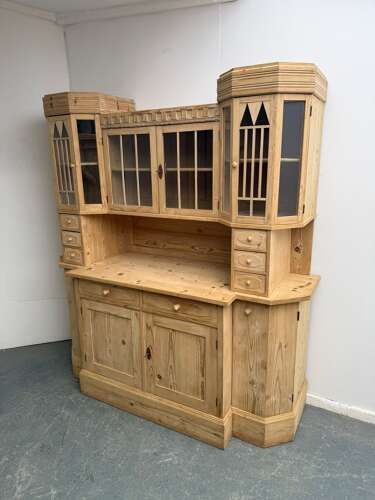
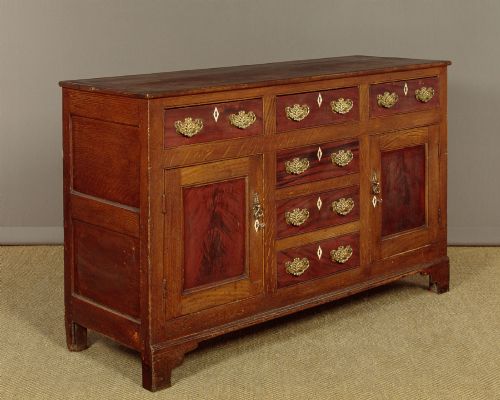
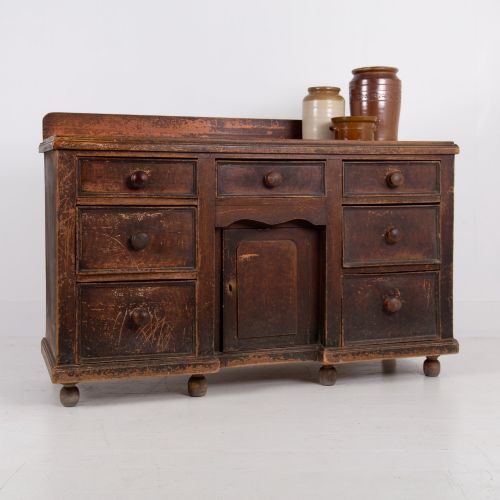
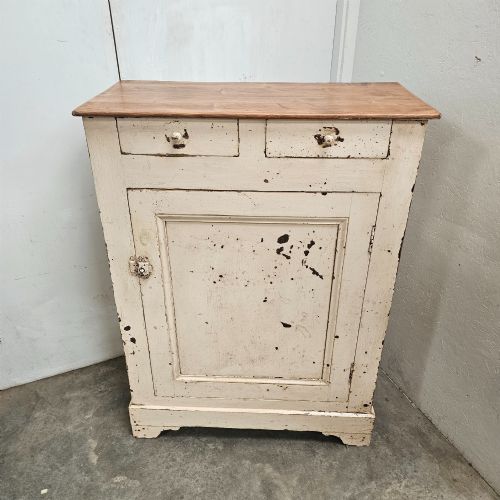
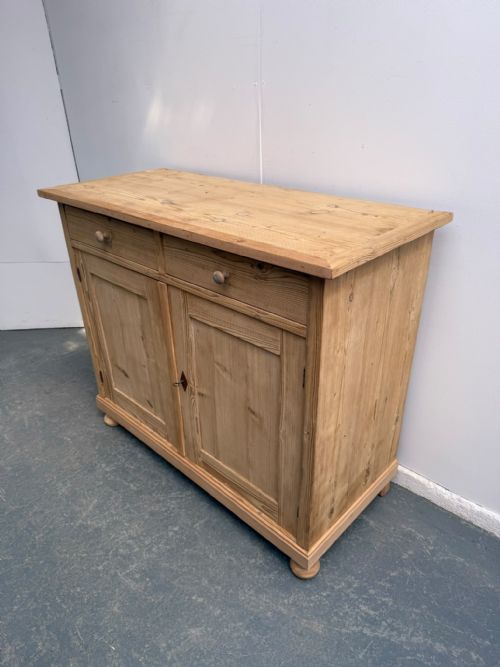
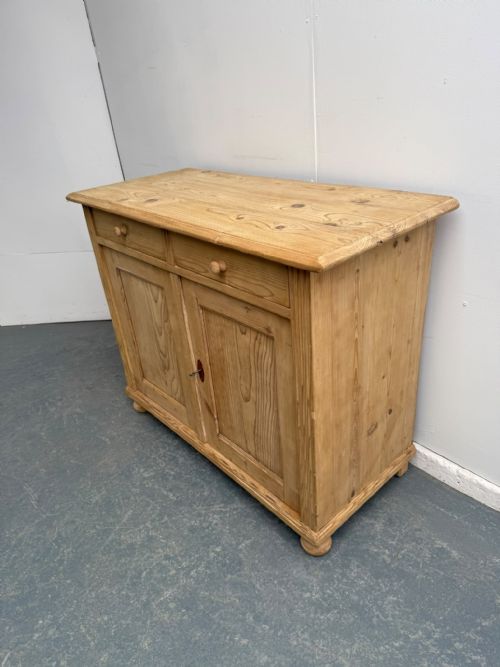
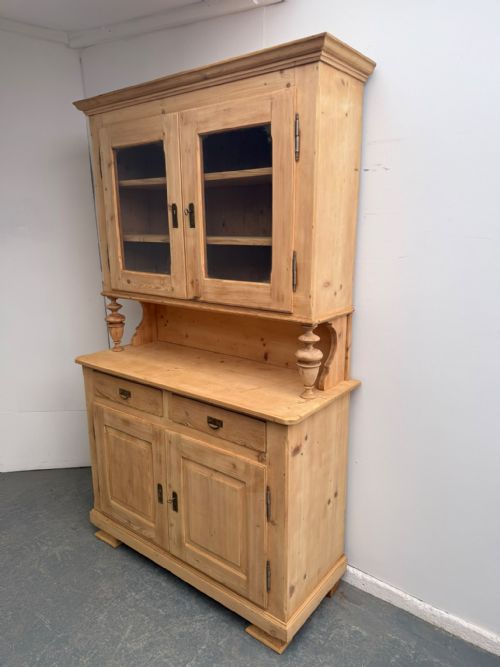
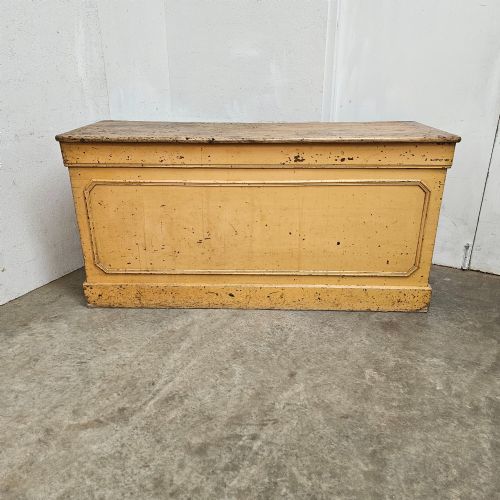
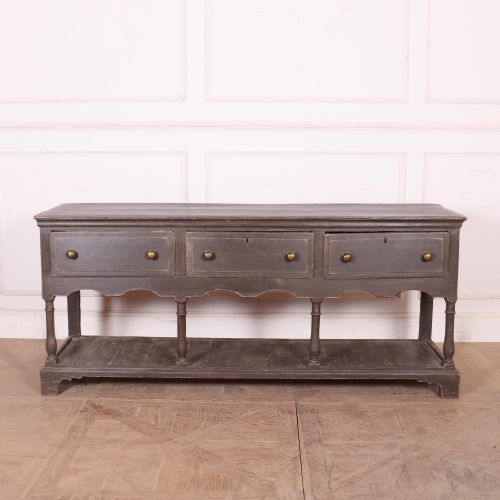
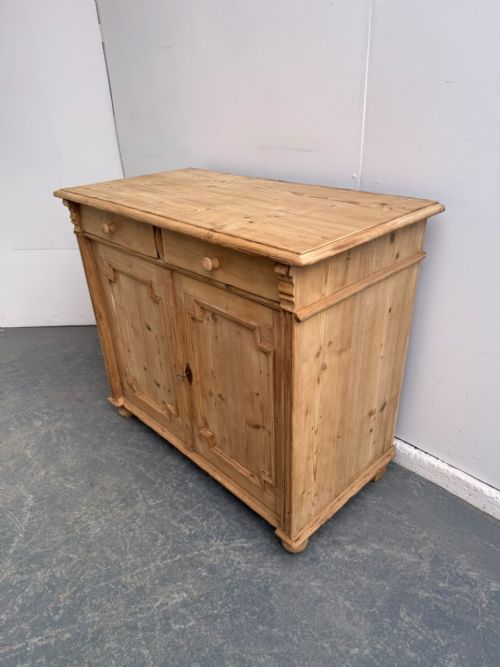
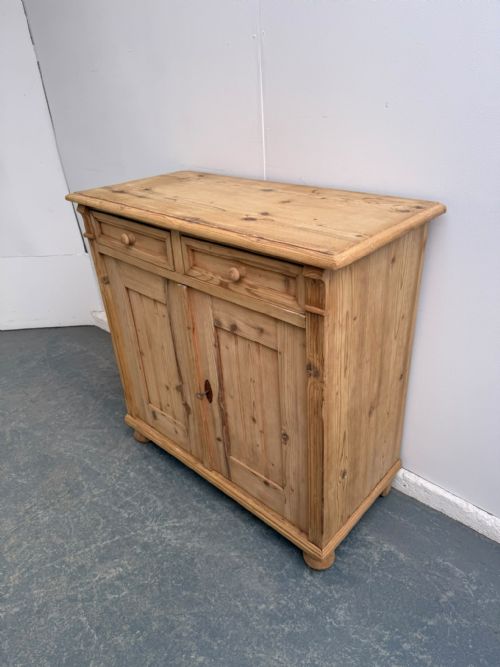
The pieces appearing here include potboard dresser bases, shop counters, and jam cupboards rendered in pine and oak. The version most commonly met on this page is the nineteenth-century pine sideboard or dresser base, often retaining its original paint.
Regional variations span English country house styles alongside French provincial, Scandinavian, and Victorian country pieces. These items served working kitchens and domestic spaces, combining cupboards and drawers with low potboards or serving surfaces.
How they were made
Makers built these sideboards principally from solid pine and oak, relying on durable local timber suitable for heavy daily use. Surfaces were frequently left bare for finishing or coated with layers of paint that protected the wood over generations.
Construction methods involved traditional joinery to support heavy drawers, panelled doors, and lower potboards. Metal hardware, including brass and iron fixtures, alongside glass elements on specific cabinets, completed the assembly of these functional pieces.
Listings feature eighteenth-century and nineteenth-century examples, spanning Georgian, Victorian, and Arts and Crafts periods in pine and oak.
What varies in quality
Quality rests in the integrity of the original construction and the preservation of early or original paint surfaces. Pieces exhibiting honest proportions and sturdy timber framing stand apart from simpler or heavily altered examples.
The presence of untouched historic paint layers significantly elevates a piece, as does well-executed regional joinery such as potboards and panelled doors. Finer examples retain their original drawers, hardware, and structural balance without excessive modern intervention.
The Painted Kitchen Sideboard Glossary
- Potboard
- An open lower shelf on a dresser base designed to hold pots and heavy kitchen utensils. This traditional feature provides sturdy base storage.
- Dresser base
- The lower section of a kitchen dresser, functioning as a standalone sideboard with cupboards and drawers. It offers a flat top surface for food preparation or serving.
- Shop counter
- A heavy commercial table or cabinet adapted from retail use for domestic storage. These pieces often feature robust proportions and deep drawers.
- Confiturier
- A small French cupboard traditionally used for storing confit and preserves. These compact cabinets usually feature a single door and drawer.
Painted Kitchen Sideboard: Frequently Asked Questions
What is a painted kitchen sideboard?
A painted kitchen sideboard is a practical storage item, often a dresser base or serving table, made from pine or oak with a painted finish.
These pieces originate mainly from the eighteenth and nineteenth centuries, serving domestic and commercial kitchens across England and continental Europe.
How were these sideboards used?
They functioned as robust work surfaces and storage units for heavy kitchenware, provisions, and household stores.
The lower cupboards, drawers, and open potboards kept everyday utensils close to hand while providing a stable top for food preparation.
How do I care for original paint?
Original painted surfaces require gentle cleaning with a dry or barely damp cloth, avoiding harsh chemical solvents.
Keeping the wood away from direct heat sources and excessive moisture preserves the historic finish and underlying pine.
How can I tell the period?
Dating relies on examining construction methods, timber selection, tool marks, and the type of hardware fitted to the drawers.
Eighteenth-century examples often display heavier framing and pegged joints, whereas Victorian pieces incorporate standardised iron fittings and pine construction.