

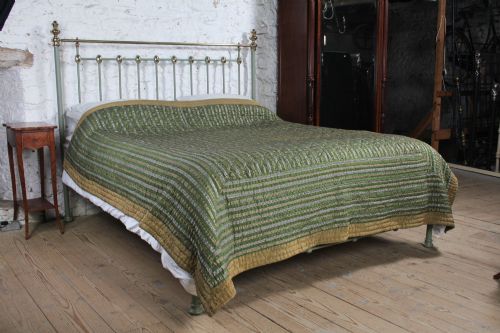
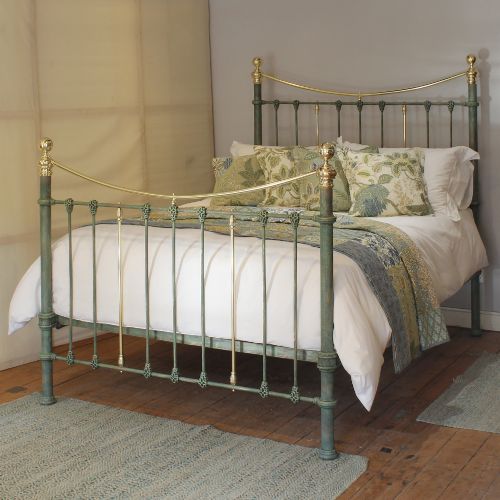
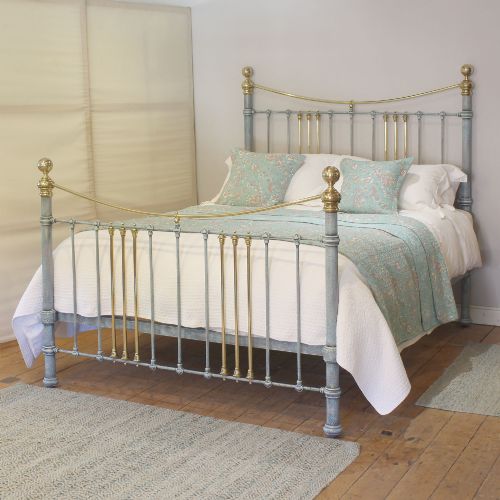
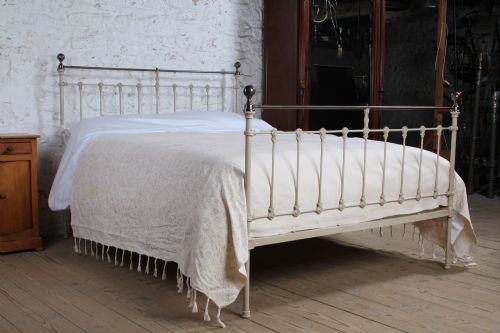


Painted Iron King Bed
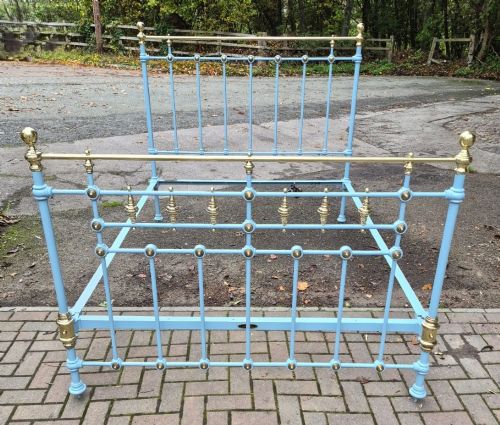
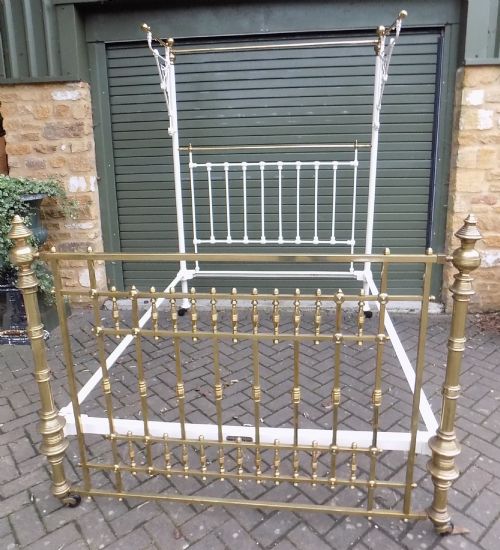
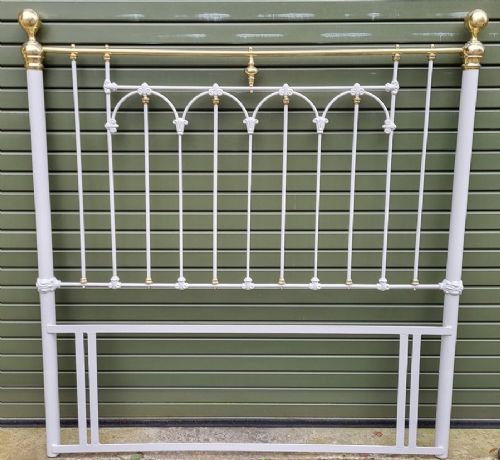
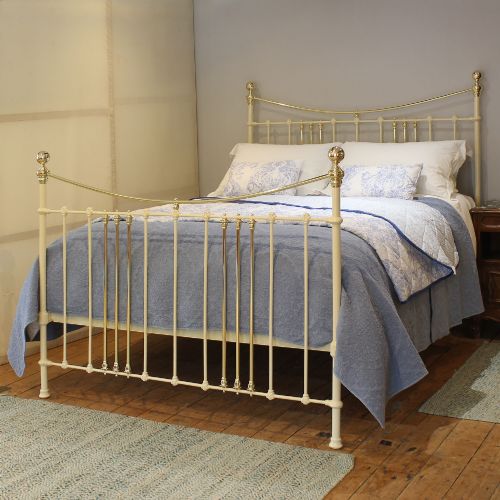
These painted iron king bed examples bring together grand nineteenth-century proportions and sturdy metal frames for a striking bedroom centrepiece.
Painted Iron King Bed
A painted iron king bed offers generous sleeping quarters supported by robust metal construction, spanning from the mid-nineteenth century up to the early twentieth century. These substantial pieces arrive in various regional styles, including Victorian British designs, Portuguese regional pieces, French country models, and Italian examples.
Buyers encounter formats such as classic straight rail platforms, no end styles, and half tester designs. Many of these larger frames combine cast iron or wrought iron with brass detailing, finished in colours ranging from cream and antique green to blue verdigris and black.
Originating across different European workshops, these beds provide a practical yet characterful alternative to modern frames. The selection on this page demonstrates the wide variety of nineteenth-century metalwork available for modern homes.
How they were made
Makers utilised cast iron, wrought iron, and forged iron for the core structural frames, often integrating sheet metal and brass components for decorative effect. The metal elements were shaped using traditional blacksmithing and casting techniques to achieve classic shaping, ribbon reed details, and curvaceous profiles.
Surfaces received protective and decorative coatings of paint, painted metal, and tole ware finishes, with colours applied to enhance the detailed metalwork. Structural joints and brass embellishments were carefully fitted to ensure stability across the wide king and super king dimensions.
Painted Iron King Bed Retail Price Guide 2026
Typical asking prices for painted iron king bed among the pieces listed under this phrase on Sellingantiques today, from the lower quarter to the upper quarter. They describe what is for sale here now, not the wider market.
The inventory records diverse regional origins, including Portuguese country models, French super king frames, and Italian bedsteads.
What varies in quality
The sophistication of the metal detailing and the refinement of the shaping distinguish finer examples from simpler utilitarian frames. Elaborate brass mounts, complex forged iron work, and detailed casting elevate the visual presence of certain pieces.
The integrity of the painted surface and the original condition of the iron and brass components play a significant role in the overall character. Supererior regional variations, such as specific Portuguese or Italian decorative traits, also contribute to the distinction of individual bedsteads.
Heals
The Painted Iron King Bed Glossary
- Cast iron
- A strong, hard iron-carbon alloy poured into moulds to create intricate decorative shapes and structural bed components. It forms the solid foundation for many nineteenth-century bedframes.
- Brass
- A yellow alloy of copper and zinc utilised for ornamental knobs, rails, and finials on iron bedsteads. It provides a bright contrast to the painted iron body.
- Tole ware
- Lacquered or enamelled metalware, typically associated with decorative nineteenth-century Italian pieces. This finish offers a distinctive painted surface texture.
- Half tester
- A bed style featuring a partial canopy or tester projecting from the headboard rather than covering the entire length. This configuration adds architectural height to the sleeping quarters.
- Straight rail
- A minimalist bed frame design featuring linear top rails without elaborate end risers. This format suits understated interiors while maintaining generous proportions.
Painted Iron King Bed: Frequently Asked Questions
Will a standard king mattress fit these antique beds?
Most of these historic frames accommodate standard modern king or super king dimensions, though slight variations can occur in nineteenth-century sizing. It is sensible to check the exact internal rail measurements before sourcing a mattress.
Because these pieces were constructed abroad and domestically prior to modern standardisation, frame widths occasionally differ from contemporary retail norms. Consulting the specific listing details ensures a proper fit for your bedding.
How do I care for the painted iron finish?
Maintenance requires gentle dusting with a soft, dry cloth to prevent the accumulation of grit on the painted surfaces. Avoid abrasive cleaners or harsh chemical solvents that could compromise the original or historic paint layers.
Keeping the metalwork away from excessive moisture preserves the integrity of the iron and brass components. Regular inspection of the joints ensures the frame remains stable during everyday use.
How do I assemble an antique metal bed?
These bedsteads typically utilise wedge-locking side rails or bolt-together joints that connect the headboard and footboard securely. Assembling the frame in the intended room prevents the need for heavy lifting after construction is complete.
Having a second person assist with holding the large iron components upright makes alignment much simpler. Checking that all connections are firm guarantees the bed remains sturdy and safe.
How can I tell a Victorian bed from a later piece?
Victorian examples often display specific design markers such as brass rail combinations and distinct nineteenth-century proportions. Dating relies on stylistic clues like classical shaping, ribbon reed details, and the specific composition of the ironwork.
Pieces stretching into the early twentieth century may adopt slightly different regional characteristics or simpler structural arrangements. Comparing the decorative motifs helps clarify the approximate decade of manufacture.