
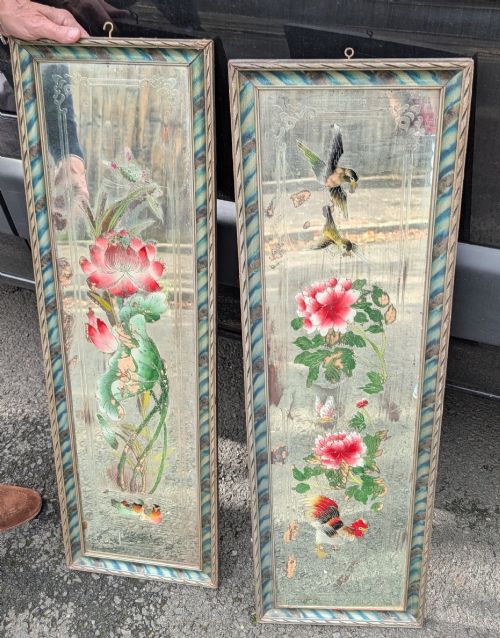
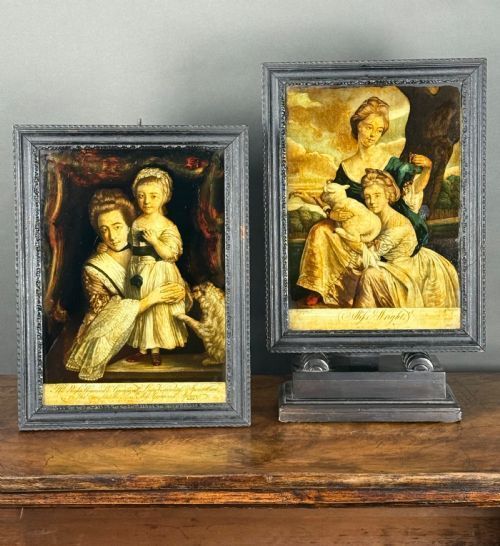

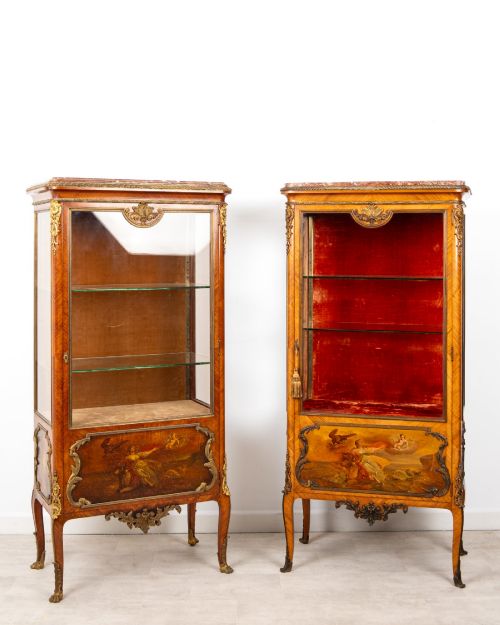
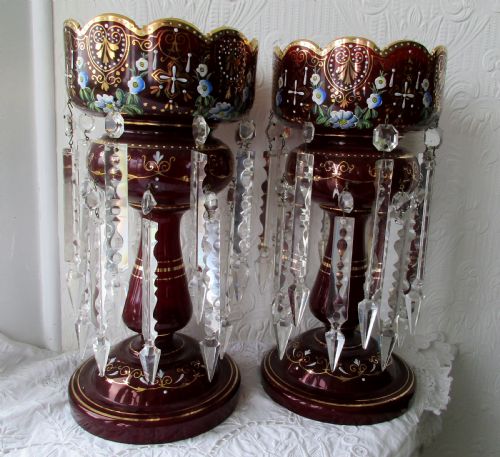
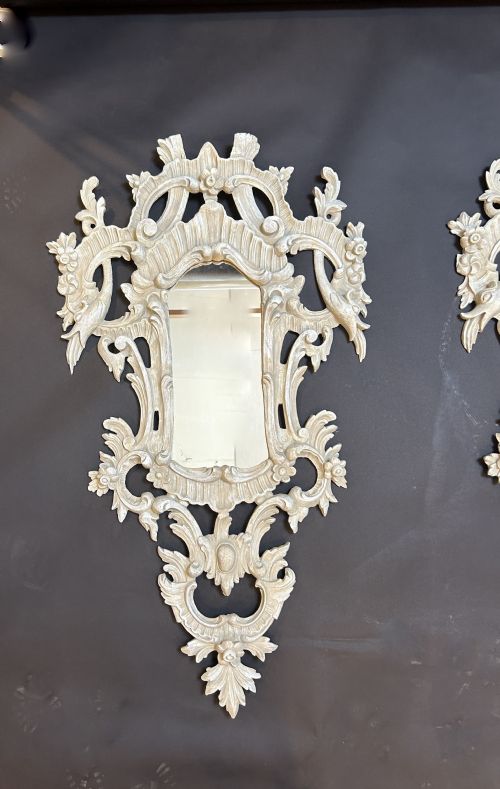


Painted Glass Pair
When you search for a painted glass pair, you uncover matching decorative objects, vessels, and mirrors decorated by hand across centuries.

Painted Glass Pair
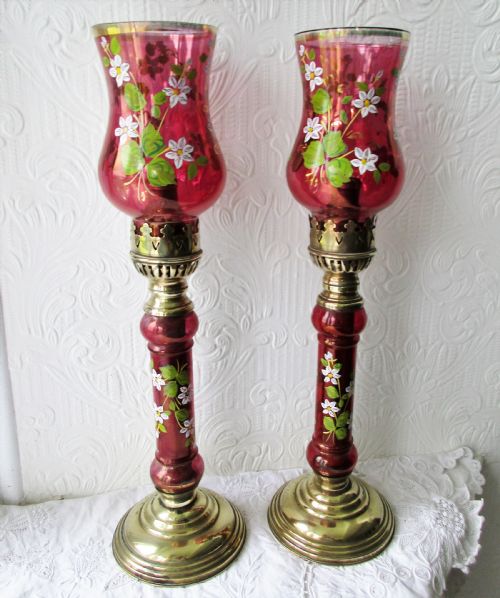
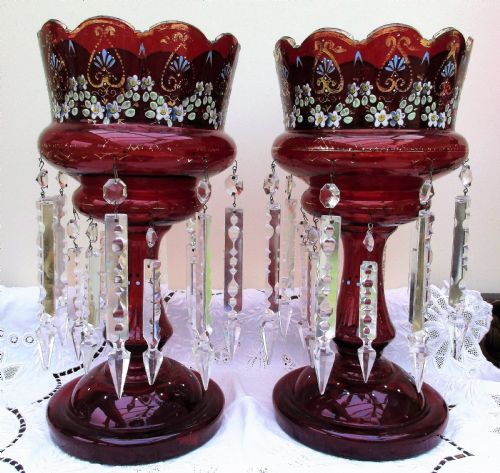
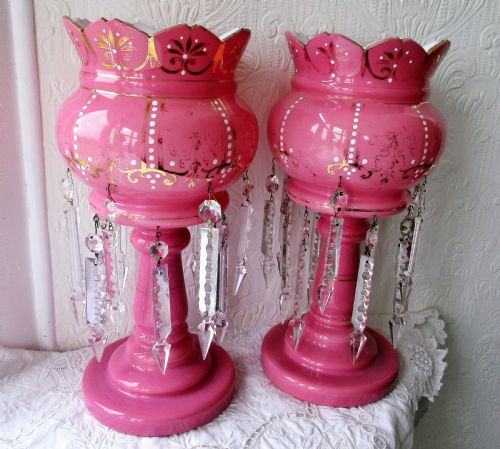
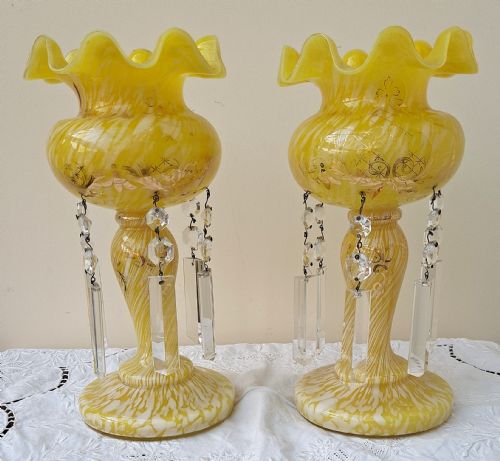
A painted glass pair comprises matching decorative objects, vessels, or panels created across the eighteenth, nineteenth, and early twentieth centuries. These objects span diverse forms such as mantel lustres, vases, table lamps, wall mirrors, and reverse-painted pictures.
Victorian mantel lustres and nineteenth-century Bohemian overlay vases represent the versions most frequently encountered on this page. These vessels often feature rich ruby, green, pink, or opaline glass adorned with hand-painted enamel and gilding.
Other notable forms include Georgian reverse glass prints and portraits, French opaline glass, and architectural stained or painted glass windows. Each pair exhibits the balanced symmetry characteristic of objects manufactured to be displayed together as matching counterparts.
How they were made
Makers utilised molten glass blown into moulds or free-blown into vessels, later applying surface pigments, enamels, and gold leaf by hand. Many nineteenth-century pieces combine layered glass techniques, such as cased or overlay glass, where contrasting colours are fused before cutting and painting.
Reverse glass painting required artists to apply details, meztotints, or portraits directly to the rear of the glass plate so the finished image was viewed correctly through the polished front surface. Architectural panels and windows integrated lead cording to hold individual painted and stained glass segments together.
Listings feature eighteenth-century Georgian reverse glass prints alongside nineteenth-century Victorian opaline lustres and twentieth-century enameled crystal.
What varies in quality
The precision and delicacy of the hand-painted enamel work and gilding dictate the standing of a painted glass pair. Superior examples display crisp brushwork, intricate floral or figurative motifs, and well-preserved gold leaf without rubbing.
The underlying glass quality also influences value, with clear, heavy crystal, deeply saturated ruby or opaline colours, and sophisticated casing techniques setting finer pieces apart from simpler utilitarian vessels.
Jean Francois Robert·Theresienthal·Richardson
The Painted Glass Pair Glossary
- Lustre
- A decorative table vase or garniture fitted with hanging glass prisms that catch and reflect candlelight. These are commonly found in Victorian ruby or opaline glass.
- Reverse glass painting
- An artistic technique where the painting or portrait is applied directly to the back of a glass pane. The finished artwork is viewed through the transparent front.
- Overlay glass
- A method where a glass vessel is formed with multiple distinct layers of coloured glass. Sections of the outer layer are cut away to reveal the contrasting colour beneath.
- Opaline glass
- An opaque, pastel-hued art glass popular during the nineteenth century. It frequently serves as a ground for delicate enamel-painted floral designs.
- Crystoleom
- A Victorian method of applying a colour print to glass, rubbing away the paper backing, and hand-painting the remaining transparent layer with oils or watercolours.
Painted Glass Pair: Frequently Asked Questions
What is a glass lustre?
A glass lustre is a decorative vase fitted around the rim with cut glass pendants suspended from brass pins. These pendants refract candlelight or daylight to create a sparkling display.
Originating in the eighteenth century and reaching peak popularity during the Victorian era, they were typically arranged on mantelpieces alongside matching candlesticks.
How do you care for painted glass?
Painted glass requires gentle handling because the historic enamel pigments and gold leaf can wear away with aggressive cleaning. Dusting with a soft, dry cloth is usually sufficient to maintain the surface.
Moisture and chemical cleaners must be kept away from the painted areas, particularly on reverse-painted panels where the pigment sits unprotected on the back of the glass.
What is reverse glass painting?
Reverse glass painting involves applying fine pigments, prints, or gold leaf to the rear surface of a glass sheet. The artist works backwards, painting foreground details before background layers.
When viewed from the front, the glass acts as a protective glaze while imparting a glossy finish to portraits, landscapes, and decorative scenes.
How do you date nineteenth-century glass?
Dating nineteenth-century glass relies on examining manufacturing marks, colour palettes, and decorative styles such as Gothic Revival or Art Nouveau. Pontil marks on the base of blown vessels indicate hand-finished production methods.
Matching the specific enamel motifs, casing techniques, and recorded workshop styles helps narrow the period of manufacture.