
Painted Glass Cabinet
A painted glass cabinet brings together fine timber and decorative artistry to show off porcelain and silver.
Painted Glass Cabinet
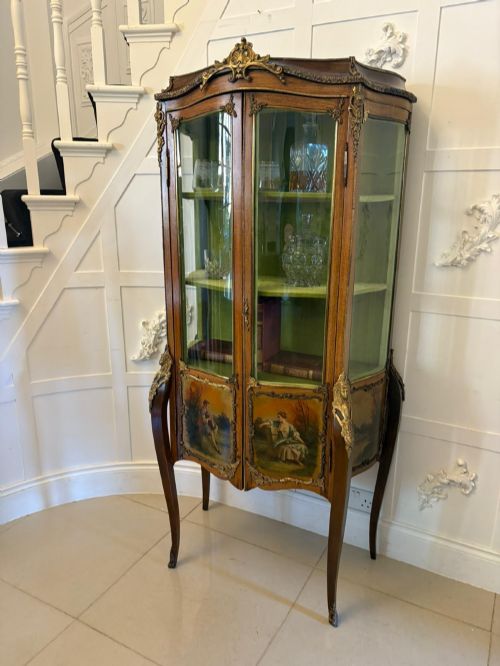
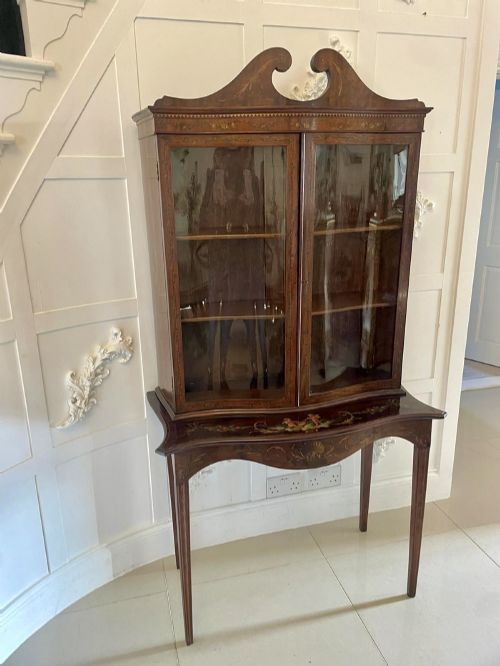
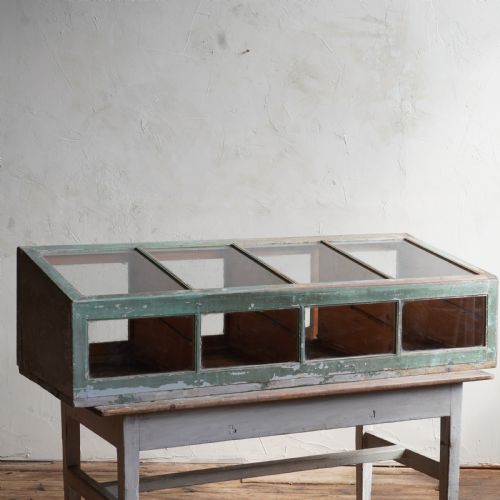
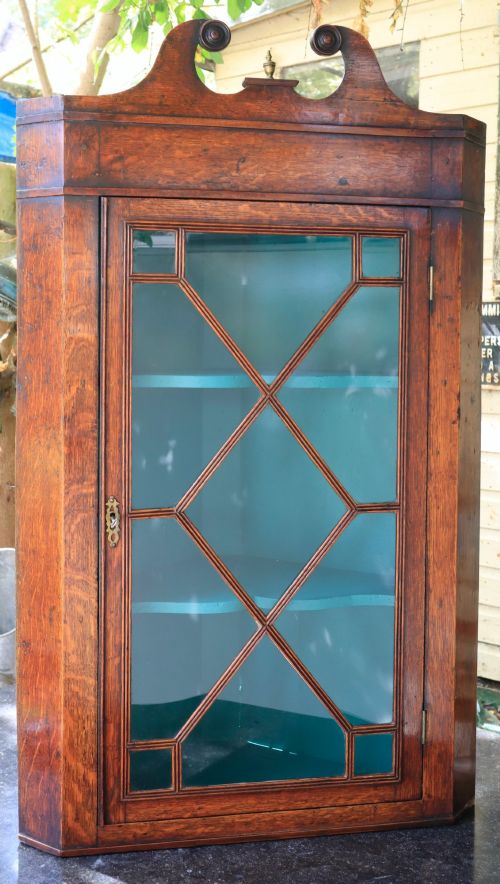
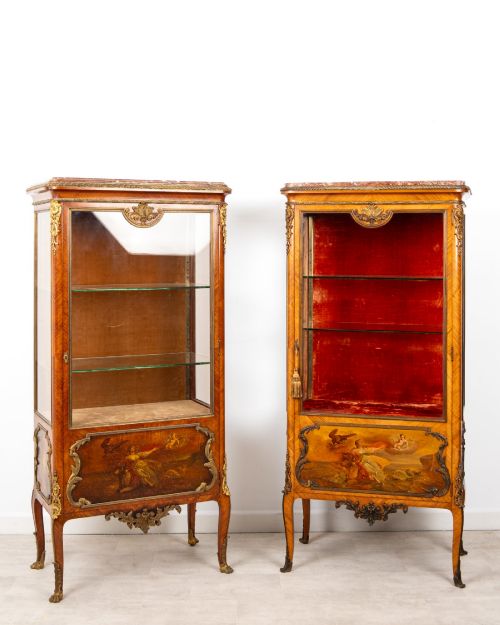
A painted glass cabinet takes many forms on this page, stretching from grand freestanding display pieces down to intimate countertop vitrines and wall-hanging units. These objects serve to protect precious items behind glazed doors while adding colour and ornamentation to a room through painted panels.
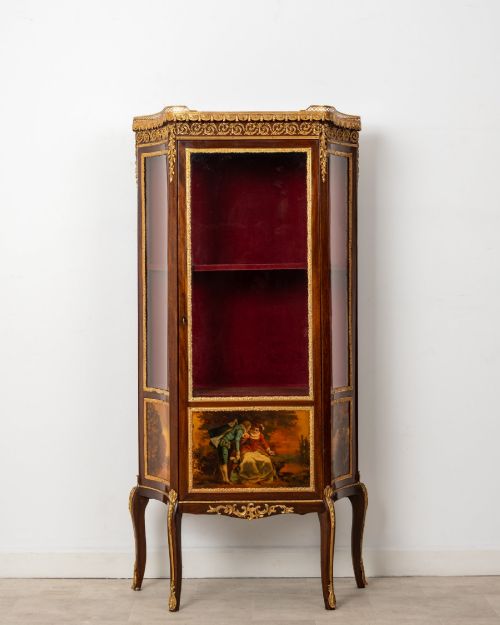
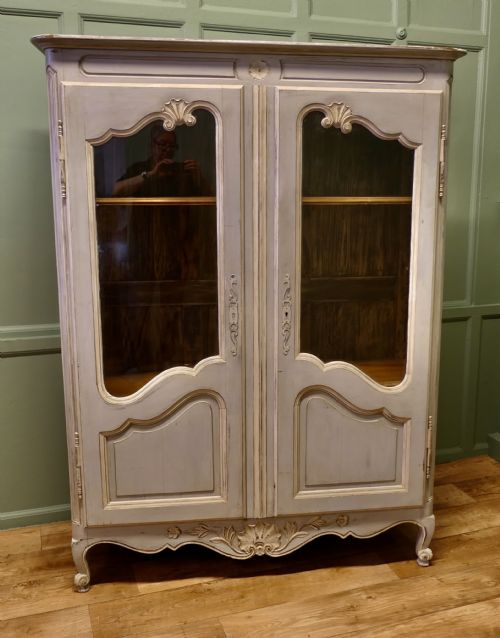
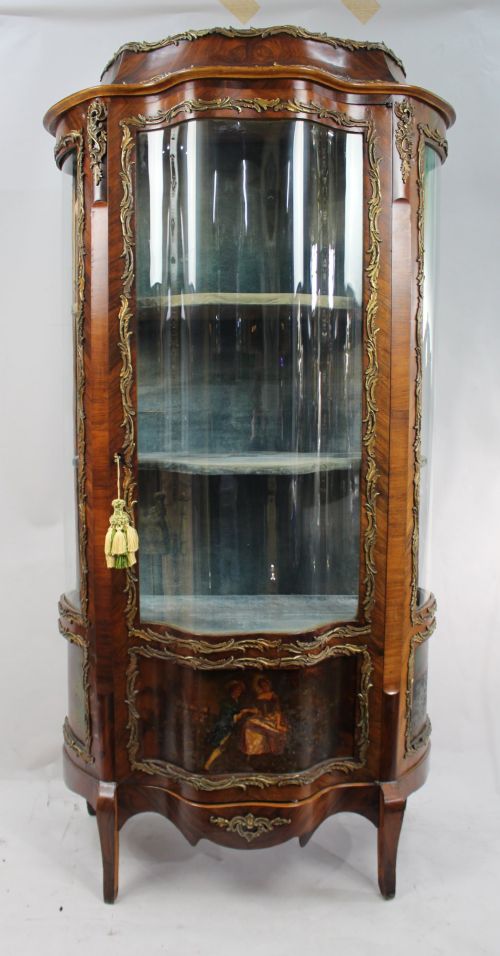
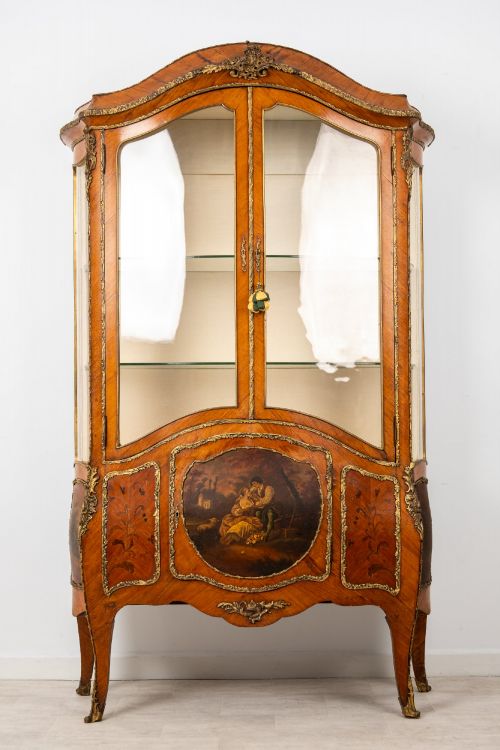
The most frequent examples stem from the nineteenth and early twentieth centuries, spanning Victorian, Edwardian and later periods. Makers drew heavily upon French Rococo and Louis XV revivals, incorporating serpentine shapes, gilt bronze mounts and distinct painted decoration.
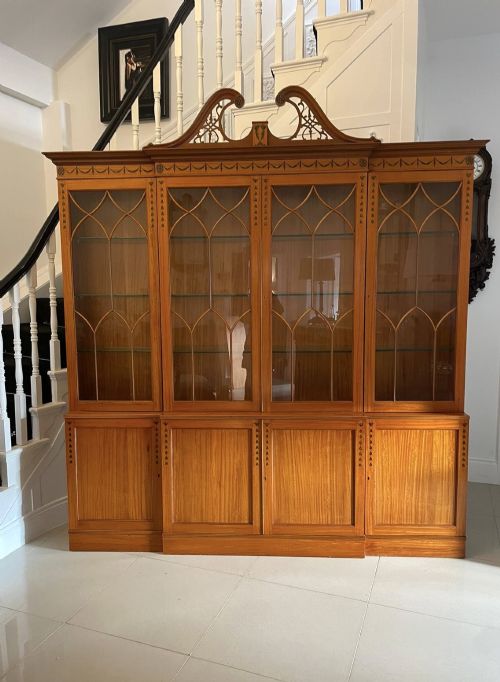
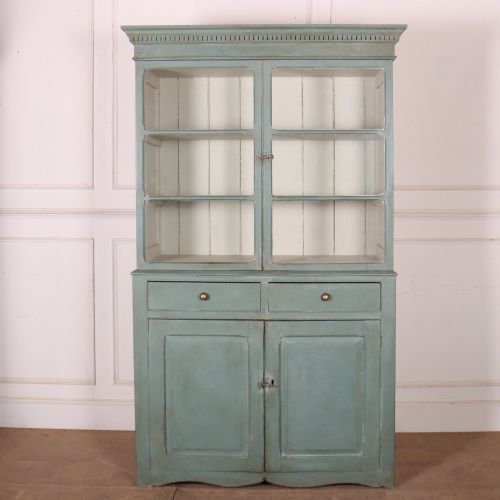
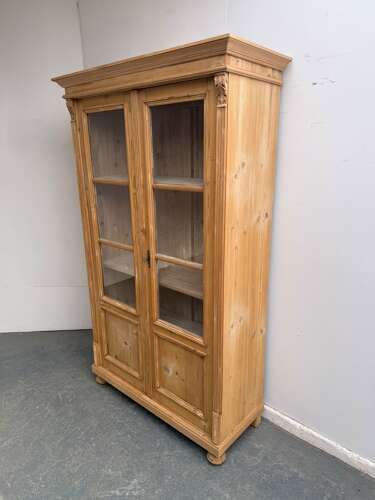
Alongside formal imported vitrines, the selection includes simpler pine kitchen cupboards and bookcases finished in paint. These variations let a buyer choose between opulent reception room display furniture and more domestic storage vessels.
Materials and construction
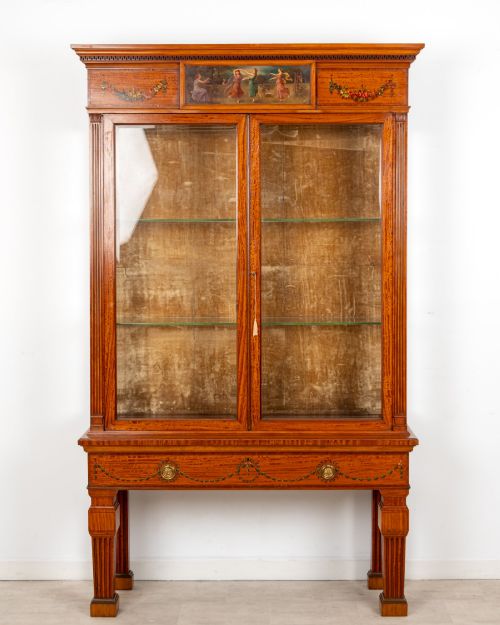
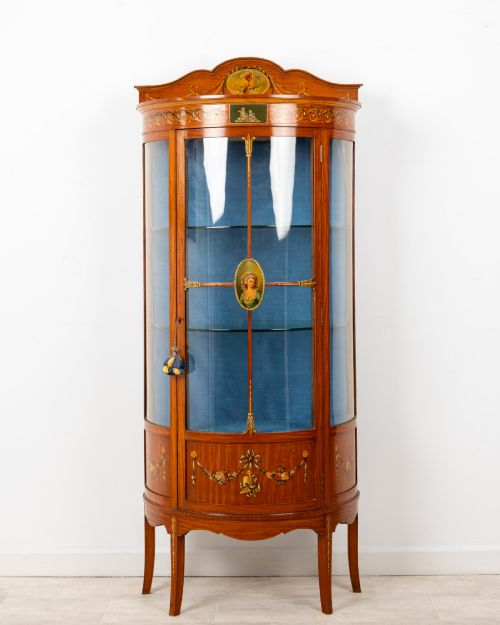
Cabinet makers utilised a range of timbers including mahogany, kingwood, satinwood and pine as the structural carcase for these display pieces. Finer exhibition pieces often incorporated exotic veneers and intricate inlay alongside glass panes.
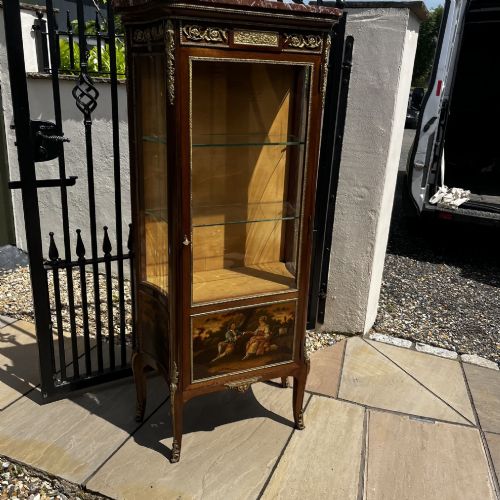
Metal mounts in brass or ormolu were cast and applied to frame the glazed doors and accent the corners of French revival vitrines. Marble tops also appear on specific nineteenth-century pieces, adding weight and a cool surface contrast to the polished timber.
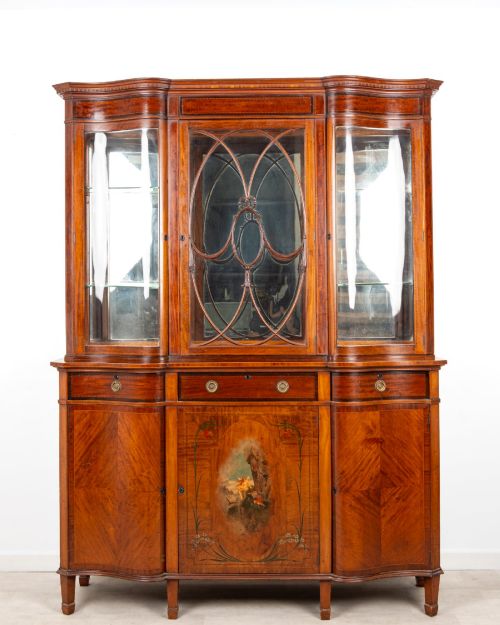
Painted decoration took several paths, from delicate floral motifs directly applied to satinwood surfaces to traditional Vernis Martin lacquer panels depicting pastoral scenes. Countertop and kitchen variants frequently rely on simple layers of paint over pine.
Listings feature pieces spanning the nineteenth and early twentieth centuries, constructed from mahogany, satinwood, pine, and kingwood.
Measures of quality
Quality reveals itself in the fidelity of the timber selection and the precision of the cabinetmaker's joinery. Fine satinwood and figured mahogany framing demonstrate superior workshop standards compared to basic pine utility builds.
The sophistication of the painted panels and the crispness of the cast ormolu mounts separate standard production from exceptional output. Pieces bearing attribution to known makers or carrying elaborate Vernis Martin work command closer attention from serious collectors.
Hampton & Sons·Jewell of Holborn·François Linke
The Painted Glass Cabinet Glossary
- Vernis Martin
- A simulated Japanese lacquer technique developed in eighteenth-century France and emulated on later vitrines. It uses multiple resin layers to produce translucent painted scenes.
- Vitrine
- A glass-fronted display cabinet specifically designed for showing off porcelain, miniatures and curiosities. These pieces often feature glass on the sides as well as the doors.
- Ormolu
- Gilded bronze used for decorative mounts and framing on furniture. High-quality examples show sharp chasing and rich fire-gilding.
- Breakfront
- A piece of furniture where the central section projects forward from the flanking wings. This architectural shaping breaks up the visual mass of large bookcases and display cabinets.
- Serpentine
- A furniture front or top shaped with a double curve, flowing outward then inward. It requires high skill in carpentry to fit glass and drawers to these compound curves.
Painted Glass Cabinet: Frequently Asked Questions
Where should I place a vitrine?
A vitrine requires a stable spot away from direct sunlight to protect fragile contents and sensitive timber veneers. Placing the cabinet in a drawing room or study allows the glass panels and interior items to catch natural light.
Because many examples feature glazed sides, positioning them where light can pass through the cabinet enhances visibility. Ensure the floor is level, particularly with taller or marble-topped variants.
How do I date a painted cabinet?
Dating relies on examining the timber construction, hardware, and the style of the painted decoration. Victorian and Edwardian examples often display specific revival motifs, such as French Rococo curves or Sheraton satinwood inlay.
Cabinet backs, drawer construction methods, and hinge types provide further clues to the manufacturing decade. Comparing the painted motifs to documented period pattern books helps confirm the era.
Can I adjust the shelves?
Many glazed bookcases and display cabinets include adjustable shelving supported by wooden racks or metal pins. This adaptability accommodates books or display objects of varying heights.
Older units may feature fixed wooden shelves integrated into the carcase construction. Checking the interior setup ensures the cabinet suits your specific storage requirements.