
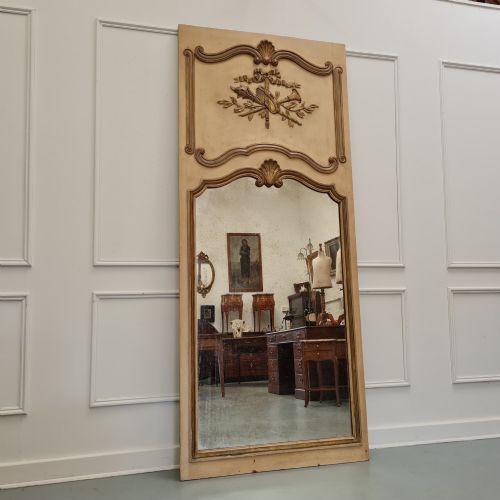


Painted Floor Mirror
A painted floor mirror brings architectural presence and reflected light into a room, standing tall with period charm.
Painted Floor Mirror
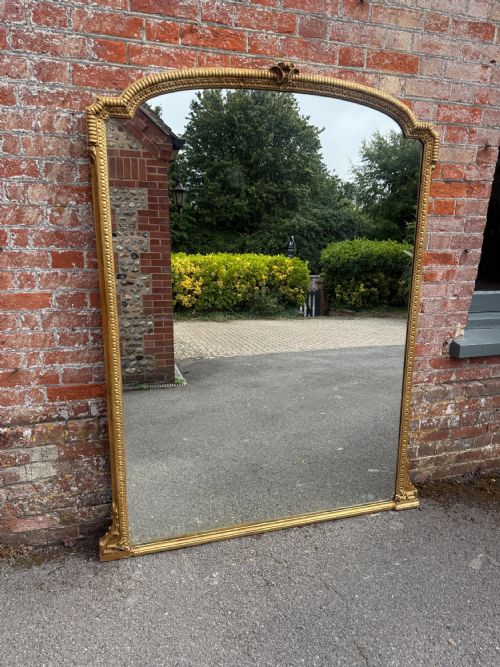
A painted floor mirror stands tall to reflect a full figure while anchoring a room with decorative presence. These pieces appear frequently as nineteenth-century French and English designs, alongside early twentieth-century examples.
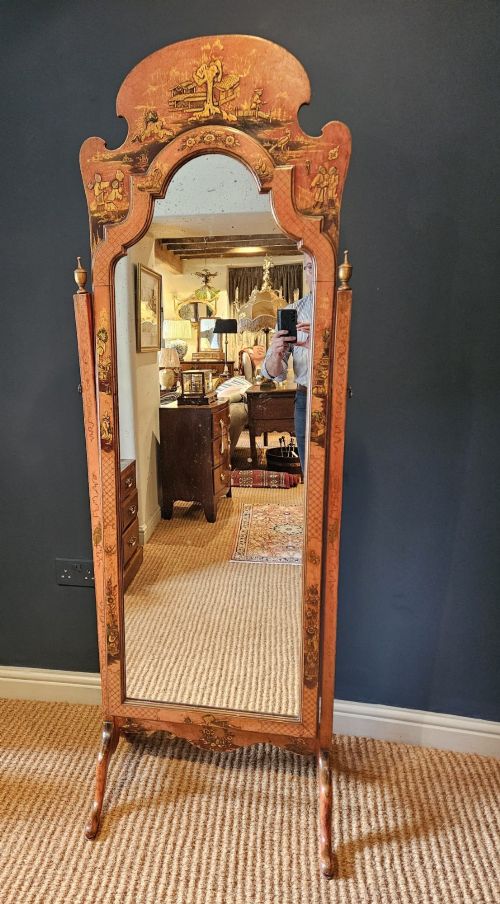
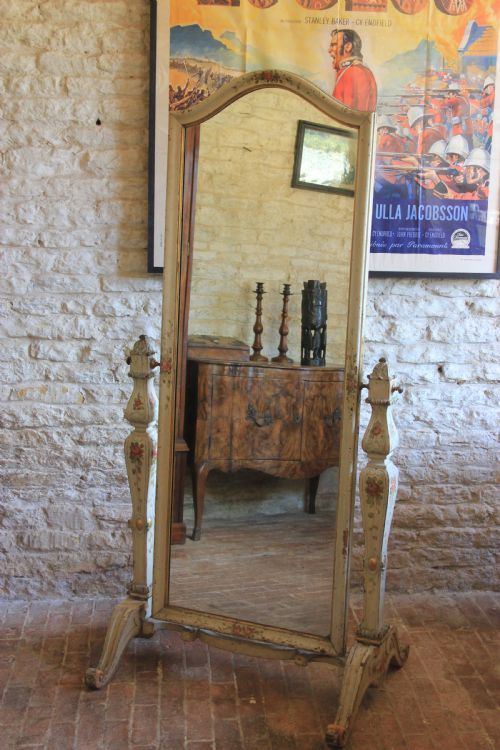
The selection ranges from cheval mirrors on pivoted frames to grand trumeau and bistro mirrors adapted for floor standing. Carved wood and gesso frames shaped with arched or ribbed tops dominate the offerings.
Origin points stretch across French provincial and chateau styles, Italian country workshops, and English neoclassical interpretations.
How they were made
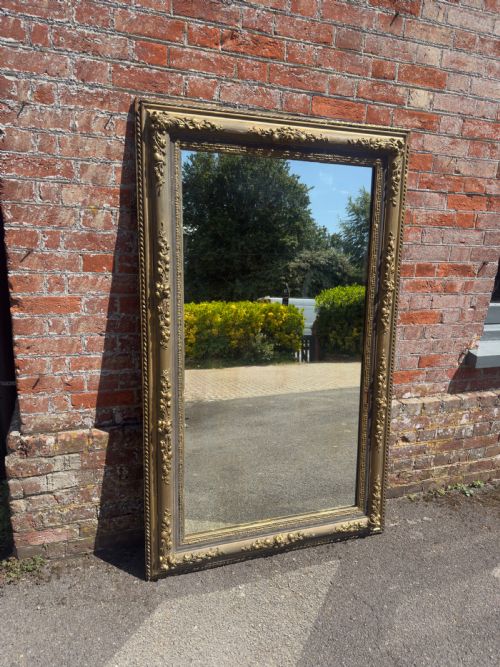
Carved wood provides the structural frame, frequently layered with gesso to build up intricate relief ornaments, scrolls, and mouldings before finishing. Artisans applied multiple coats of paint, occasionally adding gold leaf or parcel gilt highlights to accentuate the carved details.
Mirror glass is set within the timber rebates, secured from behind, and paired with sturdy floor-standing supports or pivoting cheval hardware where movement is required.
Many a nineteenth-century bistro mirror spent its early days reflecting bustling Parisian dining rooms before finding a quieter retirement in a hallway.
What varies in quality
The depth and crispness of the wood carving dictate the distinction between standard workshop output and exceptional craftsmanship. Heavy gesso ornamentation retains sharper definition on finer examples, showing careful hand-modelling rather than mass-produced uniformity.
Surface treatments differ significantly, with original layered paint finishes and subtle gilding holding greater decorative integrity than later overpainting.
The Painted Floor Mirror Glossary
- Cheval mirror
- A freestanding mirror suspended on a vertical frame with pivots that allow the glass to tilt. This form became popular for dressing rooms and bedrooms during the nineteenth century.
- Gesso
- A plaster-like mixture applied to carved wood to create a smooth surface for painting and gilding. It allows artisans to shape sharp decorative reliefs.
- Trumeau
- A decorative wall mirror or panel featuring painted scenes or carvings above the glass. These originate from traditional eighteenth and nineteenth-century European interiors.
- Pier mirror
- A tall mirror designed to fit the narrow wall space between windows. They often sat above matching console tables.
- Bistro mirror
- A simplified commercial mirror style featuring clean painted wooden frames. They were originally used in public spaces and cafes.
Painted Floor Mirror: Frequently Asked Questions
How do I secure a floor mirror safely?
Most large floor standing mirrors benefit from discreet wall fixings at the top rear of the frame to prevent accidental tipping. Placing them on stable, level flooring ensures the weight distributes evenly across the base.
Heavier cheval frames rely on properly tightened side pivots to maintain the desired tilt without slipping.
Where should I place a floor mirror?
Positioning a tall mirror opposite a window multiplies natural light and opens up dark corners of a room. Bedrooms and dressing areas suit cheval designs, while living rooms and hallways accommodate broader frames.
Keep the glass angled slightly downward if you wish to reflect architectural details rather than the ceiling.
How do I clean antique mirror glass?
Use a soft microfiber cloth and a mild, ammonia-free glass cleaner sprayed onto the cloth rather than directly onto the glass. This prevents moisture from seeping behind the silvering or damaging the painted wooden frame.
Avoid abrasive materials that might scratch the aged surface of the mirror.
How can I tell the period of the frame?
Examine the construction methods visible on the reverse, including timber species, hand-cut screws, and the composition of the gesso layers. Nineteenth-century examples often display denser carving and distinct paint layering compared to later twentieth-century reproductions.
Stylistic cues such as Louis XVI revival scrolls or Chinoiserie motifs also point to specific manufacturing eras.