

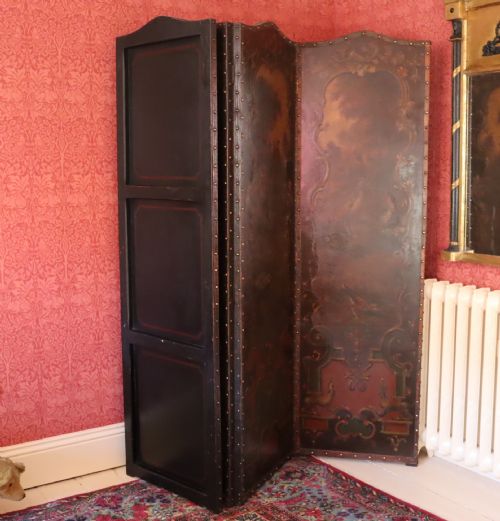


Painted Draught Screen
A painted draught screen partitions a room or curbs a chill with colour and form, offering an instant architectural focal point.
Painted Draught Screen
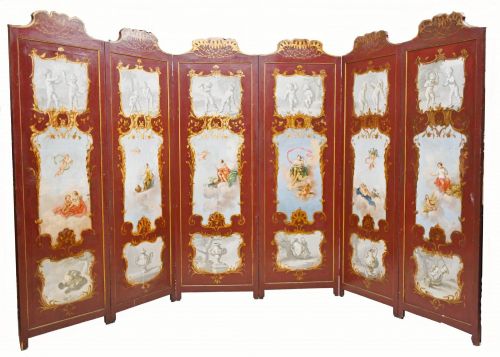
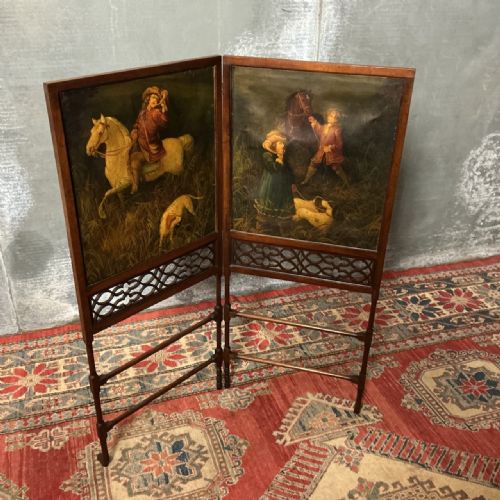
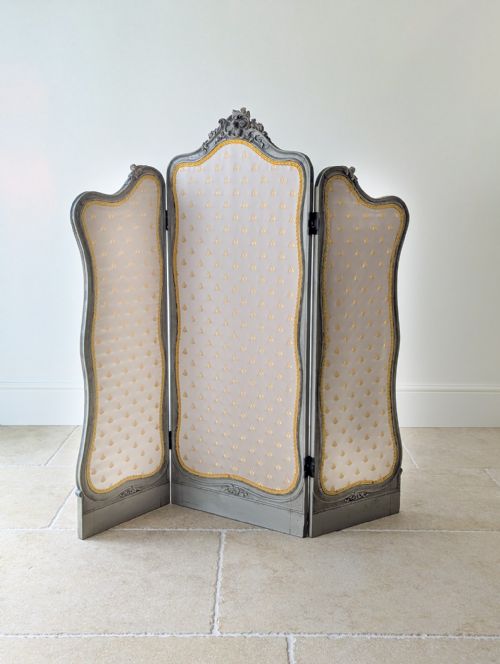
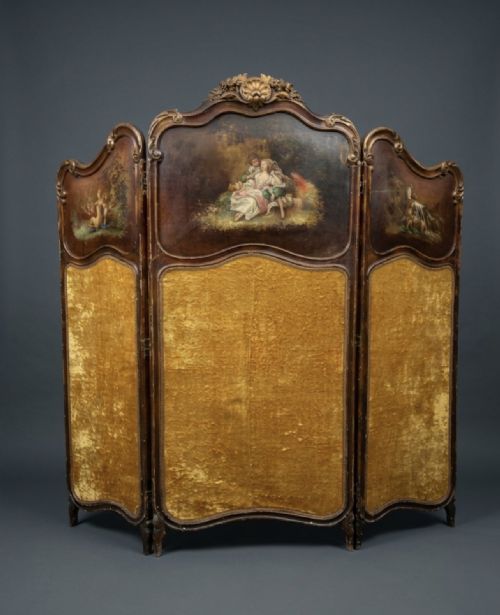
A painted draught screen divides a room or keeps a hearthside warm, using multiple folding panels hinged together. The examples here span the eighteenth, nineteenth and early twentieth centuries, drawing on Victorian, Edwardian, French Rococo Revival and Chinese Republic Era styles.
Most entries on this page consist of three or four folding panels, though six-panel variants and smaller modesty or fire screens also appear. Materials range from wood frames holding canvas or silk to heavy leather panels and lacquered surfaces.
Origins vary widely across the selection, encompassing English country house pieces, French salon screens, Dutch chinoiserie works and East Asian lacquer pieces. Buyers encounter both robust wooden folding structures and decorative leather room dividers.
Materials and construction
Makers built the primary structures using woods such as mahogany and ebonised timber, often shaping hinges to allow panels to fold in both directions. Frames frequently house canvas, card, or thick leather panels prepared for decorative work.
Surface decoration relies on oil paint, lacquer and gold leaf, applied by hand to depict floral motifs, figures and architectural scenes. Embossing techniques also appear on leather panels, adding raised texture beneath the paint and gilding.
Painted Draught Screen Retail Price Guide 2026
Typical asking prices for painted draught screen among the pieces listed under this phrase on Sellingantiques today, from the lower quarter to the upper quarter. They describe what is for sale here now, not the wider market.
The selection includes French Rococo Revival, Continental Baroque, Napoleon III and Chinese Republic Era design influences.
Judging quality and execution
Quality reveals itself in the execution of the painted panels and the durability of the structural hinges. Finer screens display confident, detailed brushwork on canvas or leather, whereas simpler versions rely on repetitive stencilled motifs.
The choice of base material marks a clear distinction in grade, with Cordoban embossed leather and heavy lacquered panels representing more costly production methods than basic wooden frames with painted canvas.
Paul Sormani
The Painted Draught Screen Glossary
- Modesty screen
- A small screen originally designed to shield a seated lady from the intense heat of an open fireplace or to block draughts around a desk. These pieces typically feature painted panels set within low wooden frames.
- Chinoiserie
- A European artistic style reflecting Chinese aesthetic influences, prominent in decorative screens from the eighteenth and nineteenth centuries. It relies on motifs of landscapes, figures and pagodas rendered in paint and gold leaf.
- Cordoban leather
- Heavy, embossed and gilded leather originating from Spain and widely utilised for luxury folding screens. The surface receives intricate stamped patterns before being hand-painted.
- Fire screen
- A single-panel screen placed before an unlit hearth to block soot or draughts. They share decorative painted surfaces with larger folding room dividers.
Painted Draught Screen: Frequently Asked Questions
How do I use a draught screen?
Position the screen to block cold air currents near doors or windows, or angle the panels to carve out a private seating nook within a larger reception room. They also function well as decorative backdrops against plain walls.
Ensure the panels are not over-extended to maintain stability when placing a multi-fold screen on uneven flooring.
How do I clean painted leather?
Dust the leather surface gently with a dry, soft cloth to remove surface particles without disturbing the aged paint or gold leaf. Avoid liquid cleaners and damp cloths, which can penetrate cracked paint layers and damage the material.
Consult a professional restorer if the painted panels show signs of flaking or active deterioration.
Are these screens stable?
Most folding screens rely on their multi-panel zigzag arrangement to remain upright on flat floors. Heavier leather and wooden frames offer greater stability than lighter silk or canvas variations.
Keep panels slightly angled rather than pulled completely flat to prevent tipping.
How do I date a screen?
Examine the construction of the hinges, the type of wood used in the frame, and the ageing patterns of the paint or lacquer. Styles such as French Rococo Revival or Edwardian mahogany provide strong chronological markers.
Check the reverse of the panels for maker marks, paper labels or remnants of historical upholstery webbing.