

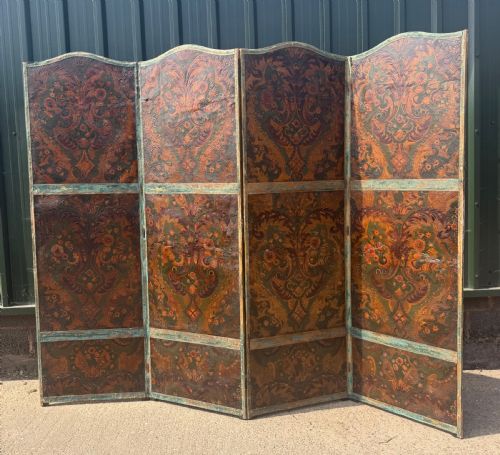
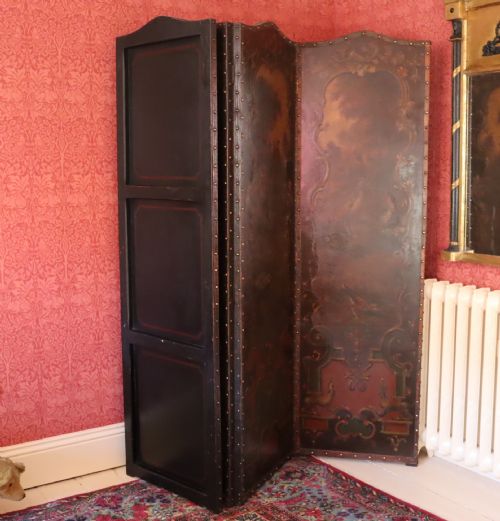


Antique Leather Panel Screen
An antique leather panel screen divides a room with rich texture and hand-painted history, offering warmth and flexible space.
Antique Leather Panel Screen
An antique leather panel screen provides a substantial room divider formed of multiple hinged folds designed to shape interiors and block draughts. These folding screens appear across periods from the eighteenth century through to the late nineteenth century, including Victorian and continental examples.
The pieces listed here showcase various forms, spanning three-fold and four-fold constructions in painted and gilt leather. Buyers encounter both French chateau styles and Dutch tooled leather interpretations among the available folding screens and room dividers.
Origins stretch across Europe, taking in 18th century Dutch, French, and Spanish workshops alongside later Victorian interpretations. Each antique leather panel screen brings distinct painted decoration, ranging from polychrome country-house motifs to elaborate chinoiserie scenes.
How they were made
Makers constructed these panels using heavy leather mounted over timber frames, frequently joining the folds with brass hinges. Artisans applied oil paint, gold leaf, and canvas reinforcement to create durable surfaces capable of holding intricate decoration over centuries.
Surface ornamentation relied on hand painting and gilt embossing, often executed in styles mimicking Cordoban techniques or 18th century Dutch tooled leather. Artisans worked pigments directly onto the leather or canvas backing to build up rich polychrome scenes and chinoiserie landscapes.
Antique Leather Panel Screen Retail Price Guide 2026
Typical asking prices for leather panel screen among the pieces listed under this phrase on Sellingantiques today, from the lower quarter to the upper quarter. They describe what is for sale here now, not the wider market.
Materials across the inventory include leather, wood, brass, oil paint, canvas, timber, and gold leaf.
What varies in quality
Quality rests upon the depth of the hand-painted detail and the preservation of the original gilt and oil paint across the leather panels. Finer examples display crisp brushwork and sophisticated polychrome or chinoiserie compositions that remain intact across each fold.
The underlying timber structure and the integrity of the leather determine the longevity and stability of the screen. Superior pieces retain their original brass hardware and show minimal disruption to the heavy hide despite centuries of folding and repositioning.
The Antique Leather Panel Screen Glossary
- Polychrome
- Decorated in multiple colours. This technique defines the richly painted surfaces seen on many nineteenth-century screens.
- Chinoiserie
- European imitation of Chinese and East Asian artistic traditions. This style appears frequently on eighteenth-century painted leather panels.
- Gilt embossed
- Stamped with raised patterns and finished with gold leaf. This method creates the luxurious tactile quality found on Cordoban-style panels.
- Four-fold
- Constructed from four distinct panels linked by hinges. This configuration allows the screen to stand in a zig-zag formation across a room.
Antique Leather Panel Screen: Frequently Asked Questions
How do I clean an antique leather screen?
Dust the surface gently with a soft, dry cloth to prevent the accumulation of dirt within the painted crevices. Avoid using modern leather cleaners or water, which can damage aged oil paint and gilt embossing.
Consult a professional conservator if the leather requires deeper conditioning or if the paint shows signs of flaking.
Are these screens sturdy enough for daily use?
These folding screens function well as room dividers and decorative backdrops when handled with care. The heavy leather and timber frames provide natural stability when arranged in a zig-zag stance.
Frequent repositioning should be done gently to protect the original hinges and prevent stress on the painted panels.
What is the difference between Dutch and Spanish styles?
Dutch styles often feature elaborate chinoiserie and floral motifs executed in rich oil paint on dark leather grounds. Spanish and Cordoban traditions lean towards heavy gilt embossing and geometric stamped patterns.
Both regional traditions produced robust panels designed to insulate grand rooms.
How can I tell an eighteenth-century screen from a Victorian one?
Eighteenth-century examples frequently display deep Cordoban-style embossing or intricate Dutch chinoiserie with patinated oil paint. Victorian pieces often embrace revival aesthetics, French chateau influences, or brighter polychrome palettes.
Examining the canvas backing, framing timber, and hardware style helps clarify the period of production.