
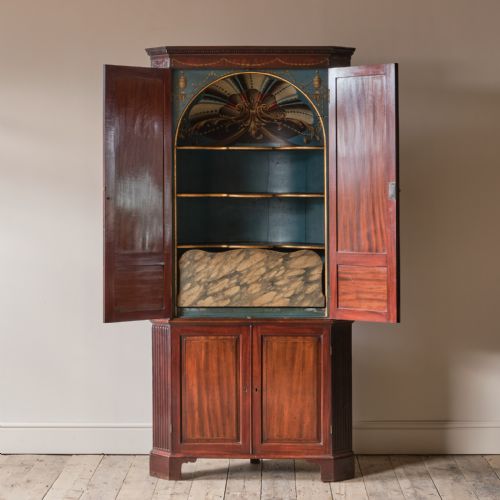
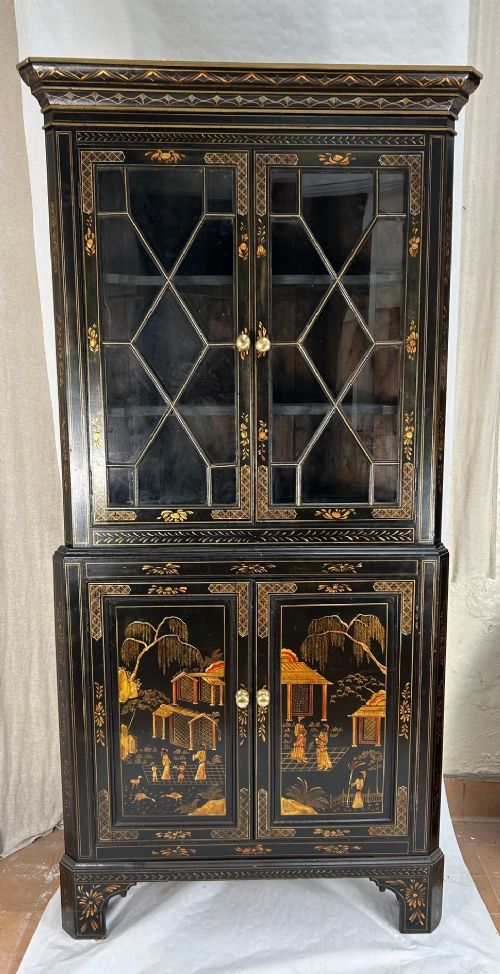
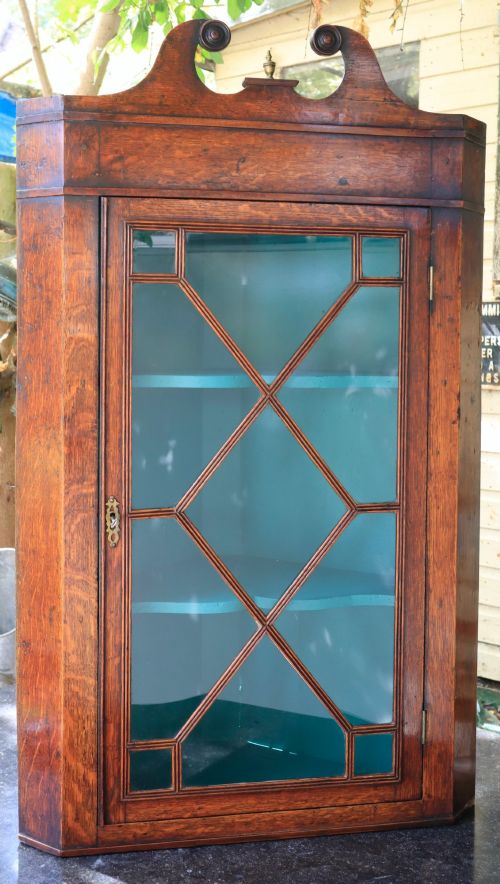
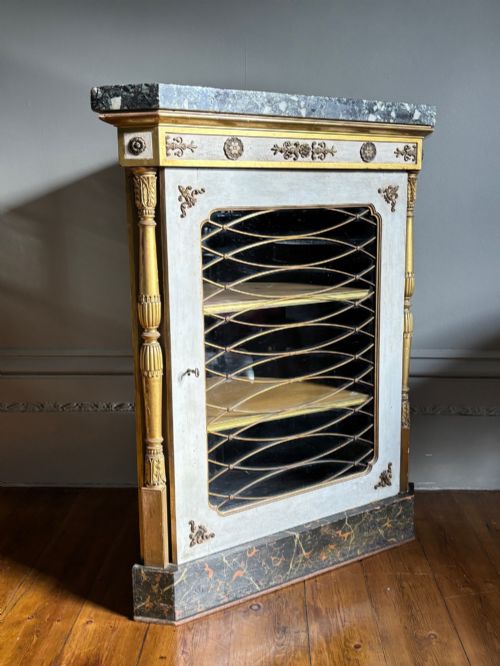




Painted Corner Display Cabinet
These painted corner display cabinets turn empty wall junctions into focal points while holding porcelain or glass.
Painted Corner Display Cabinet
When you search for a painted corner display cabinet, you are looking at fitted or freestanding corner storage designed to maximise awkward spaces. These pieces combine closed lower cupboards with glazed upper doors or open shelving for display.
You are most likely to meet 18th century and 19th century examples on this page, alongside Edwardian and 20th century interpretations. Formats range from tall two-part standing units to smaller hanging cupboards, often shaped with bow fronts or architectural cornices.
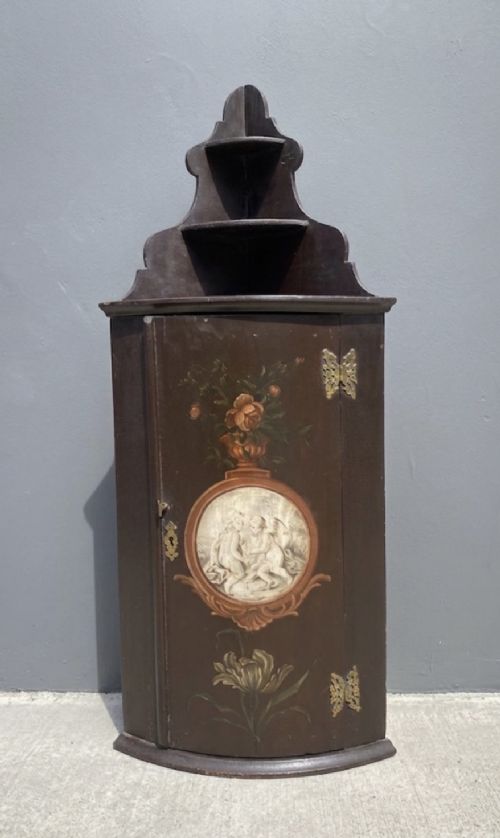
Origins span English pine and mahogany pieces to continental pieces featuring Scandinavian folk art, Dutch rococo, and Italian or Chinoiserie decoration. Many display original painted finishes, aged patinas, or deliberate decorative schemes like lacquer and gilding.
How they were made
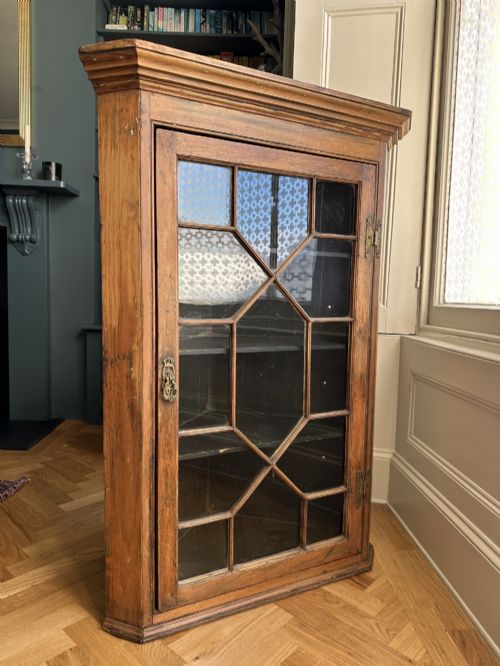
Carpenters typically constructed the carcase from pine, mahogany, or satinwood, cutting the sides at right angles to fit snugly into room corners. Glazed doors incorporate timber glazing bars to hold individual panes of glass securely.
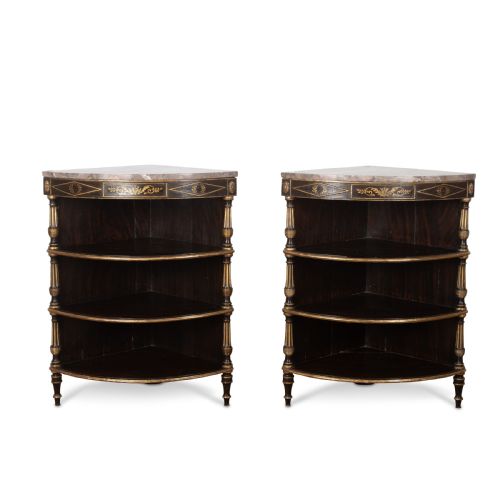
Surfaces received decorative paint finishes, ranging from simple coloured layers to complex Chinoiserie motifs, lacquer, and gilding. Some pieces feature marble tops or brass hardware such as hinges and escutcheons.
Listings feature pieces spanning the eighteenth, nineteenth, and twentieth centuries, constructed from pine, mahogany, satinwood, and marble.
What varies in quality
Quality rests primarily in the survival of original painted surfaces and the crispness of applied decoration. Pieces retaining untouched period paintwork sit above later repainted or heavily restored examples.
Construction details also separate pieces, such as the thickness of timber used in the carcase, the elegance of the glazing bars, and the harmony of the proportions within the corner silhouette.
The Painted Corner Display Cabinet Glossary
- Bow front
- A convex, outwardly curved front that softens the hard angles of a piece. This shape appears frequently on nineteenth-century cabinets.
- Chinoiserie
- European decorative style reflecting Chinese artistic traditions, often featuring figures, pagodas, and landscapes in paint or lacquer. It is common on Edwardian and eighteenth-century pieces.
- Vitrine
- A glass-fronted cabinet designed specifically for displaying porcelain or curiosities. These units utilise glass panes on the upper sections.
- Glazing bar
- A wooden strip holding individual panes of glass within a door. Finer bars indicate higher quality cabinetmaking.
- Gustavian
- Swedish neoclassical style characterised by pale paint colours and restrained classical details. Pieces from this tradition often feature carved fluting.
Painted Corner Display Cabinet: Frequently Asked Questions
How do I fit a corner cabinet into my room?
Measure the wall depth from the internal corner outwards on both sides to ensure the cabinet sides will sit flush against the skirting boards.
Take note of whether the unit is a single piece or a two-part construction, as tall standing cupboards require vertical clearance during positioning.
Were these cabinets used in kitchens or living rooms?
Original placements varied widely depending on the household, serving in parlours to display fine ceramics or in dining spaces to hold glassware and silverware.
Some robust pine examples functioned as kitchen or pantry cupboards, while grander glazed vitrines belonged in formal reception rooms.
How can I tell if the paint finish is original?
Examine the surface under natural light to check for craquelure, wear patterns, and consistency of age across the woodwork and decorative motifs.
Original painted interiors and aged finishes show micro-abrasions and softening that modern repainting struggles to replicate convincingly.
What is the difference between an 18th century and an Edwardian painted cabinet?
Eighteenth-century examples generally feature heavier pine or hardwood carcases with hand-mixed oil paints and structural joinery suited to daily utility.
Edwardian pieces often revive earlier aesthetics like Chinoiserie or satinwood finishes, employing lighter construction methods typical of the early twentieth century.