
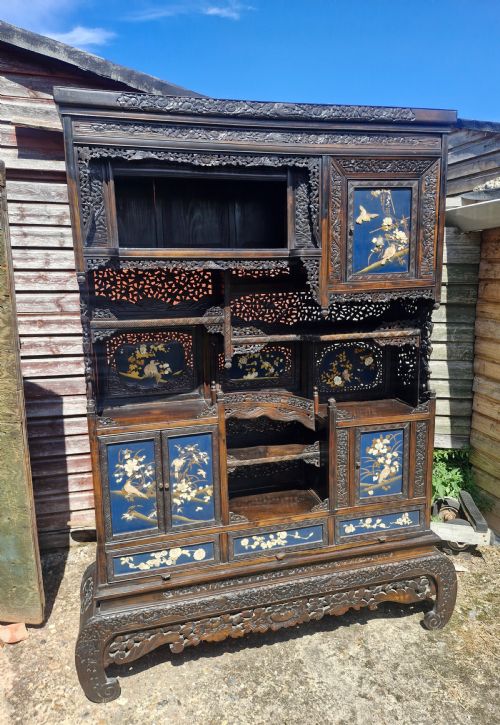
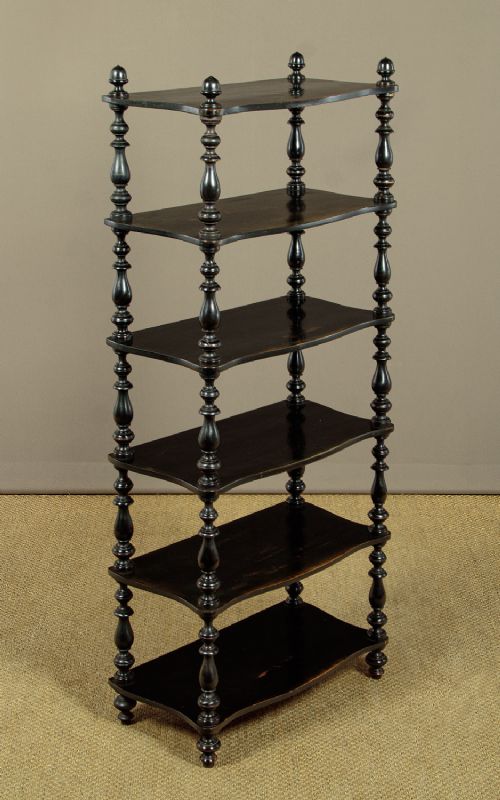


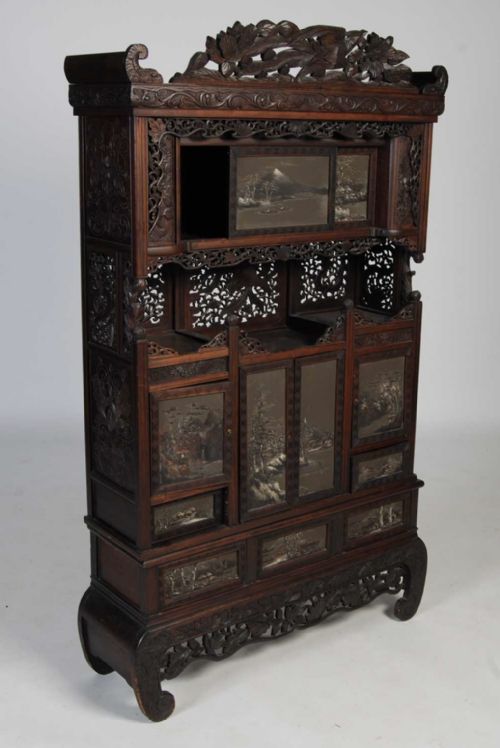


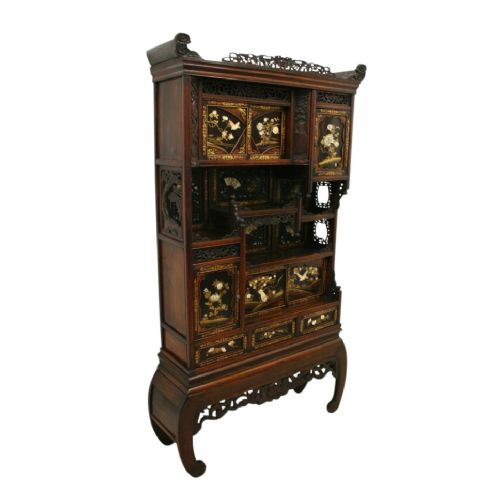
Lacquered Display Unit
These lacquered display unit pieces combine polished surfaces with dedicated shelving, offering a striking way to showcase ceramics and small treasures.
Lacquered Display Unit
A lacquered display unit serves primarily to hold and exhibit precious objects, bringing together decorative external finishes and functional internal shelving. Buyers searching this phrase encounter a rich variety of forms, from tiered stands to tall cabinets with glazed or open fronts.
The pieces appearing on this page span several distinctive regional traditions, including Japanese Meiji period cabinets, Chinese Qing dynasty examples, and European Chinoiserie interpretations. Forms range from compact corner cupboards to substantial multi-tier shelving units and freestanding vitrines.
Most examples originate from the nineteenth century or the Edwardian era, alongside occasional eighteenth-century survivals. These objects frequently utilise contrasting surface treatments, blending dark wood or ebonised frames with intricate pictorial panels.
How they were made
Construction relies heavily on sturdy framing timbers such as hardwood, bamboo, and ebonised wood to support the weight of numerous display tiers. Joinery methods vary according to origin, connecting delicate shelving to robust carcass structures.
Surface decoration defines these items, employing layers of lacquer alongside inlaid mother of pearl, bone, and brass. Vernis Martin techniques appear on European pieces, while Asian workshops applied successive coats of natural lacquer to build up deep, protective finishes.
Several cabinets manage to pack six distinct tiers into a remarkably compact footprint, proving that Victorians loved vertical storage almost as much as tea.
What varies in quality
The depth and durability of the lacquer finish distinguish finer items from simpler productions, with superior examples showing smooth, even application free from heavy crazing. Artisanal skill appears in the precision of inlaid details and the crispness of carved elements.
Structural integrity also separates the grades, particularly in tall shelving units and cabinets where joints must support varied loads over time. Original hardware, intact glazing, and well-fitted doors or drawers demonstrate a higher standard of original workshop craftsmanship.
The Lacquered Display Unit Glossary
- Lacquer
- A durable finish applied to wood surfaces, built from resin and polished to a hard, glossy sheen. This technique provides both protection and a striking decorative background.
- Shodana
- A traditional Japanese multi-tiered display cabinet featuring staggered shelves and small cupboards. These pieces were designed to hold scholarly objects and precious ornaments.
- Chinoiserie
- A European decorative style reflecting imaginative Chinese motifs and landscapes. Artisans applied these painted or lacquered designs to furniture throughout the eighteenth and nineteenth centuries.
- Ebonised
- Wood treated with a chemical stain or black finish to imitate expensive ebony. This process became particularly popular during the Victorian period for accentuating cabinetwork.
- Vernis Martin
- A simulated Japanese lacquer developed by French cabinetmakers in the eighteenth century. It employs layered varnishes to achieve translucent, colourful decorative panels.
Lacquered Display Unit: Frequently Asked Questions
How do I place a corner cupboard?
Corner cupboards utilise neglected room angles to provide storage and display space simultaneously. They work effectively in dining rooms or drawing rooms to break up straight wall lines.
Ensure the unit matches the scale of the corner and remains secure against the wall. Many feature painted Chinoiserie details that brighten darker corners of a room.
What is Vernis Martin?
Vernis Martin is a European lacquer technique created to mimic Asian imports during the eighteenth century. It uses multiple layers of varnish to produce a luminous, durable surface.
Cabinets finished this way often display pastoral or whimsical scenes in muted tones. The technique requires careful application and drying between each coat.
Can bamboo shelves hold heavy books?
Bamboo shelf units are lightweight structures intended primarily for displaying ornaments rather than heavy volumes. The natural material offers surprising tensile strength while maintaining a slender profile.
Load these shelves with lighter ceramics, plants, or photographs to preserve the joints. Distributing weight evenly prevents sagging across wider spans.
How do I date a Chinoiserie piece?
Dating relies on examining the underlying carcass timber, construction marks, and the style of the painted decoration. Eighteenth-century examples often use native European softwoods beneath the lacquer, while later pieces show distinct nineteenth-century framing methods.
Compare the motifs against known period patterns and hardware styles. Hinges and escutcheons frequently provide reliable clues to the exact decade of manufacture.