


Lacquered Corner Cupboard
A lacquered corner cupboard brings depth and rich orientalist narrative to a neglected room junction.
Lacquered Corner Cupboard
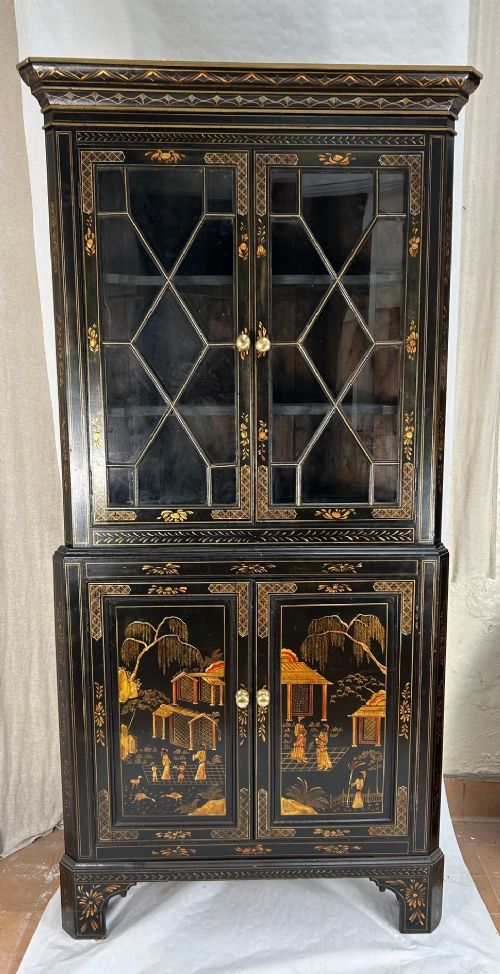
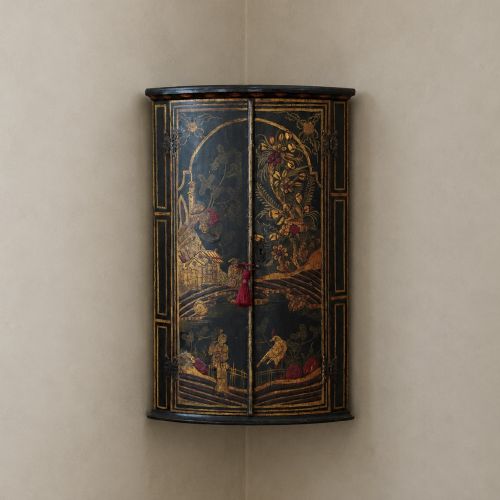
A lacquered corner cupboard is a specialised wall-hanging or standing cabinet built to fit into the ninety-degree angle of a room, finished with orientalist decoration. When you search for a lacquered corner cupboard, you encounter forms ranging from modest single-door timber units to bowfront double-door cabinets with teal interiors. The pieces on this page span the 18th Century, Georgian period, Victorian era, Edwardian period, and into the early 20th century.
The aesthetic vocabulary leans heavily on Chinoiserie and Georgian Chinoiserie styles, alongside occasional Italian Rococo expressions. The primary object types seen here are corner cupboards, corner cabinets, and corner cabinets with bow fronts. These pieces utilise the dead space of a room while displaying elaborate painted and gilt surfaces.
Materials and construction
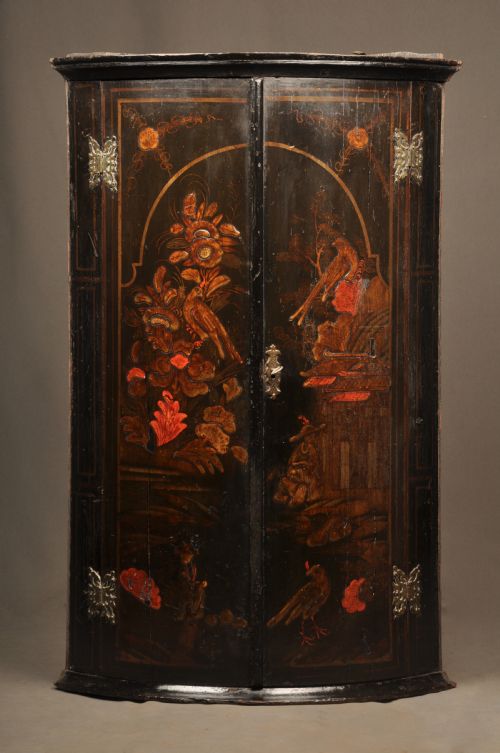
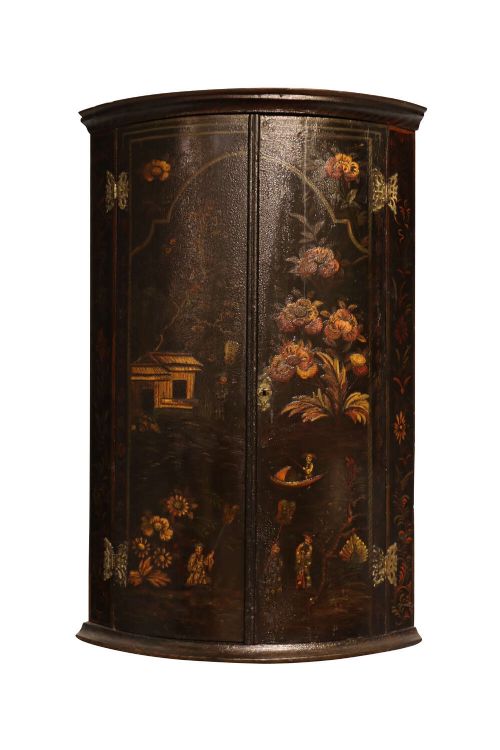
Makers built these cabinets using wood and pine as the structural carcass, shaped into flat or bowfront profiles to suit the room. The exterior surfaces received layers of lacquer and paint, often finished with gilt and gold leaf to highlight the raised pictorial motifs. Brass hardware such as hinges and escutcheons secured the doors and added functional metal contrast.
The decorative schemes rely on Chinoiserie painting techniques, depicting figures, landscapes, and architectural elements in gold or colour against dark or red grounds. Interiors sometimes feature contrasting pigments, such as teal, revealed when the cupboard doors open.
Materials recorded across these items include brass, glass, gold leaf, paint, pine, and wood, applied to support lacquer and Chinoiserie styles.
Distinctions in quality
The sophistication of the lacquer work and the depth of the gilt decoration separate standard items from finer examples. Superior cabinets display intricate, multi-layered Chinoiserie scenes with subtle tonal variation rather than flat, stencilled repetition.
Structural execution also dictates standing. Well-formed bowfronts, solid timber carcases like pine fitted with original brass hardware, and intact interior finishes demonstrate superior craftsmanship from Georgian workshops onwards.
The Lacquered Corner Cupboard Glossary
- Lacquer
- A durable resin or varnish applied in multiple coats and polished to a hard, glossy finish. It forms the protective and decorative skin of these cabinets.
- Chinoiserie
- The European interpretation and imitation of Chinese and East Asian artistic traditions. This style dominates the surface decoration of the cupboards.
- Bowfront
- A convex, outwardly curved front facade. This shape softens the angular geometry of a corner cabinet.
- Escutcheon
- A flat plate of brass surrounding a keyhole. It protects the surrounding wood from wear and adds a decorative metallic accent.
- Gilt
- Applied gold leaf or gold paint used to accentuate details on the lacquered surface. It catches the light in dimly lit room corners.
Lacquered Corner Cupboard: Frequently Asked Questions
How do I hang a wall cupboard?
Wall-hanging corner cupboards require secure fixing directly into wall studs or masonry using appropriate brackets. The weight of the timber and lacquer demands robust support.
Ensure the internal hanging fixings are sound before loading the shelves with heavy ceramics or glassware.
Where should I place it?
These cabinets are purpose-built to occupy empty room corners, turning dead space into a focal point. They work particularly well in dining rooms or hallways.
Keep them away from direct sunlight and strong heat sources to protect the delicate lacquer and gilt finishes.
How do I clean lacquer?
Dust the surface gently with a soft, dry microfibre cloth to remove everyday particles. Avoid chemical sprays, abrasive cloths, or excess water.
Moisture can penetrate tiny cracks in the lacquer layer and lift the underlying paint or gold leaf.
Are interiors always painted?
Many examples feature plain wood interiors, but some display contrasting painted surfaces such as bright teal. These interior colours add a pleasant surprise when the doors are opened.
Original interior paintwork contributes significantly to the character of an antique piece.