


Oriental Lacquered Corner Cupboard
An oriental lacquered corner cupboard transforms an awkward room angle into a focal point of rich colour and narrative detail.
Oriental Lacquered Corner Cupboard
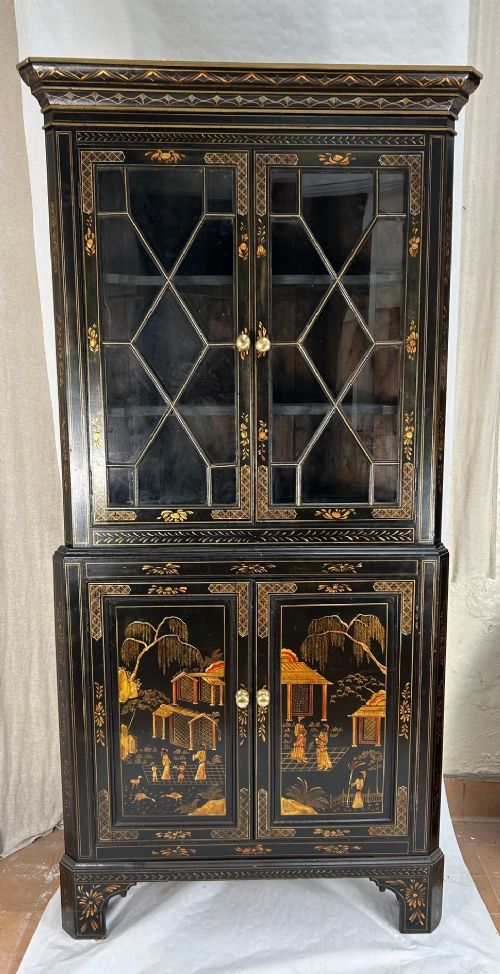
An oriental lacquered corner cupboard uses the tight angles of a room to display rich surface decoration and cabinetwork. You encounter these cabinets across multiple eras, ranging from early Georgian items to Edwardian and later reproductions.
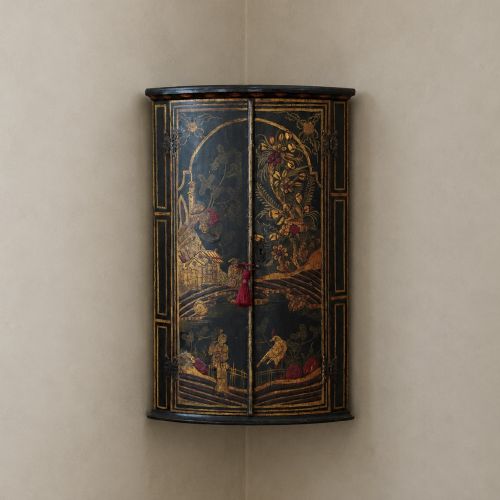
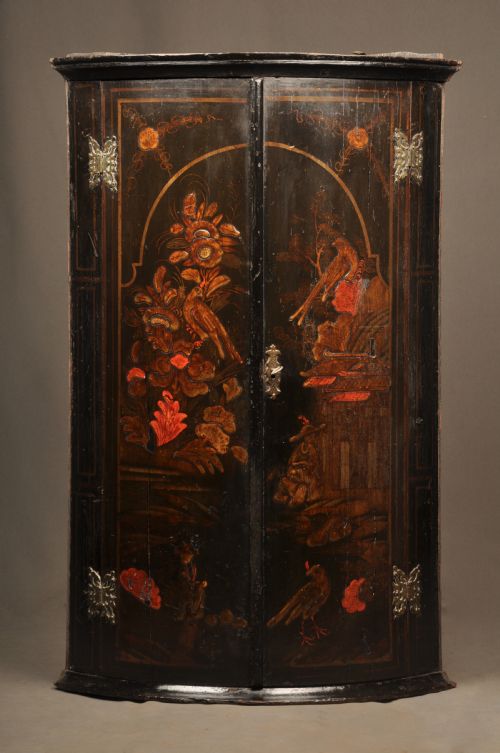
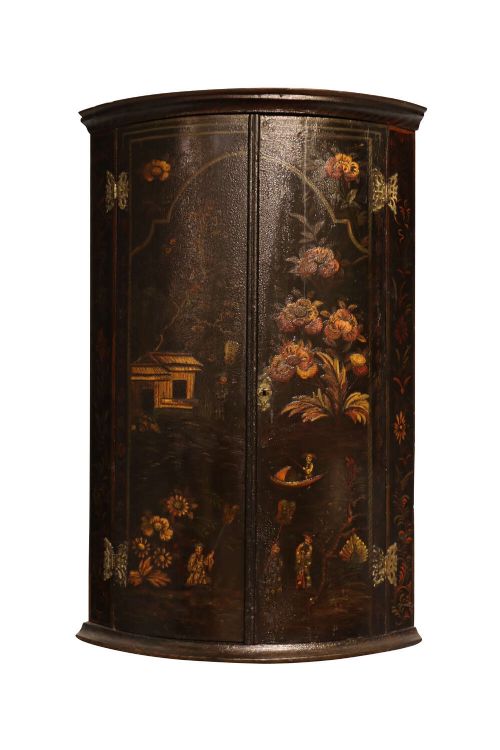
The primary forms on this page include both bow front shapes and flat two-door cabinets. They are designed to fit securely into room corners while offering shelved storage behind hinged doors.
Origins and styles lean heavily towards Chinoiserie interpretations, bringing painted figurative scenes and motifs into British interiors. The visual weight of these pieces depends upon the underlying finish, which ranges from deep black to striking red.
Materials and construction methods
Makers built these cabinets using supportive structural timbers such as pine and softwood, providing a stable carcase for the decorative surface layers. Brass hinges and escutcheons secure the doors and provide functional contrast to the painted panels.
The decorative schemes rely upon applied lacquer and detailed paint work, frequently enriched with gilt highlights to catch the light. Surfaces often depict traditional Chinoiserie landscapes, figures, and pavilions layered over wood bases.
Many of these corner cabinets hide tiny painted mandarins peering out from behind impossibly small bridges.
Assessing quality and craftsmanship
The refinement of the painted Chinoiserie decoration dictates the visual standard of the piece, distinguishing finely rendered pictorial scenes from simpler brushwork. The depth and layering of the lacquer finish also signal the time and skill invested by the maker.
Structural integrity rests on the stability of the timber carcase and the alignment of the corner fit. Superior examples maintain crisp mouldings and well-preserved brass hardware that complement the overall aesthetic without overwhelming the painted panels.
The Oriental Lacquered Corner Cupboard Glossary
- Chinoiserie
- European artistic interpretation of Chinese and East Asian decorative motifs, prevalent in furniture decoration. This style employs painted landscapes, figures, and pavilions.
- Japanned
- European imitation of traditional East Asian lacquerwork, created using layers of varnish and metallic dust. The technique produces a hard, glossy surface finish often associated with black or red grounds.
- Bow front
- A convex, outwardly curved front section on a cabinet or chest of drawers. This shape softens the angular geometry of standard corner furniture.
- Escutcheon
- A protective plate surrounding a keyhole, often made from brass. It guards the surrounding wood from wear caused by the key.
Oriental Lacquered Corner Cupboard: Frequently Asked Questions
Where should I place a corner cupboard?
These cabinets fit neatly into the unused 90-degree angles of dining rooms, hallways, or living spaces. They utilise vertical height without encroaching far into the floor area.
Position them away from direct sunlight to protect the lacquer and painted pigments from fading over time.
How do I clean lacquered furniture?
Dust the surface gently with a soft, dry microfibre cloth to remove everyday particles. Avoid using harsh chemical sprays, abrasive cloths, or excessive water on the finish.
If needed, a slightly damp cloth can be used followed immediately by drying with a clean soft towel.
How are different periods identified?
Cabinet construction methods, timber choices, and hinge types help indicate the age of a piece. Early 18th century examples display different carcase construction compared to Edwardian or 1920s pieces.
Stylistic shifts in Chinoiserie painting also provide clues regarding when the cabinet was produced.
What is the difference between lacquer and Japanning?
True lacquer derives from the sap of Asian trees, whereas European Japanning uses shellac-based varnishes and resin mixtures. Both create glossy, durable decorative surfaces.
Japanning became the favoured method for British cabinet makers replicating eastern aesthetics locally.