
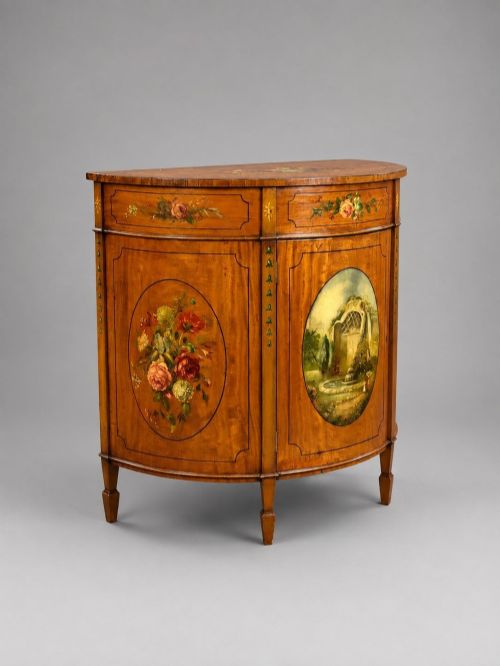


Painted Console Cabinet
These painted console cabinet examples bring together satinwood, timber, and classical panels for interiors needing a refined surface.
Painted Console Cabinet
A painted console cabinet combines the footprint of a wall-anchored table with the enclosed storage of a side cabinet, frequently taking the graceful demi-lune form. Buyers searching for a painted console cabinet will encounter pieces primarily from the nineteenth century, Edwardian era, and the early twentieth century.
The most common form on this page is the satinwood demi-lune commode or side cabinet decorated with painted panels. Influenced by Sheraton Revival, Neoclassical, and Venetian Rococo styles, these items bridge the gap between ornamental display and practical utility in a room.
How they were made
Cabinetmakers utilised timber carcasses, most notably satinwood, forming curved demi-lune shapes and flat surfaces designed to support marble or wood tops. Artisans applied decorative paintwork directly onto the wood, sometimes incorporating giltwood accents and brass hardware.
Specialised techniques include lacquer work seen in Chinoiserie interpretations and hand-painted classical panels framed by fine woodwork. Mirror glass and zinc tops also appear on specific regional variations such as Swedish sideboards.
Listings feature pieces spanning the nineteenth century, the Edwardian era, and the early twentieth century, utilising satinwood, painted wood, marble, and giltwood.
What varies in quality
The sophistication of the hand-painted panels dictates much of the distinction between standard items and superior examples. Crisp classical figures, delicate floral motifs, and detailed Chinoiserie scenes require a skilled hand that elevates the entire furniture piece.
Material selection and underlying cabinet construction further divide the range. Solid timber framing, well-fitted doors, and the integrated use of figured satinwood or heavy marble tops separate straightforward utility furniture from high-style revival pieces.
Pauly et Cie
The Painted Console Cabinet Glossary
- Demi-lune
- Half-moon shape in furniture design. This curved profile allows side cabinets and console tables to sit flush against a wall while projecting into the room.
- Satinwood
- A durable exotic wood with a lustrous, golden sheen. It serves as the primary canvas for many fine painted cabinets from the nineteenth and Edwardian periods.
- Sheraton Revival
- A late nineteenth and early twentieth century design movement. It reinterprets the light, classical proportions and painted satinwood motifs of eighteenth-century designer Thomas Sheraton.
- Chinoiserie
- European artistic tradition reflecting Chinese motifs. This style utilises lacquered surfaces and painted oriental scenes on cabinets and screens.
- Commode
- A low standing cabinet with doors or drawers. In these listings, the term often overlaps with side cabinet and demi-lune forms.
Painted Console Cabinet: Frequently Asked Questions
How do I date an Edwardian painted cabinet?
Edwardian pieces typically date from the start of the twentieth century up to the First World War. They frequently draw upon earlier Sheraton Revival aesthetics, using light satinwood and delicate hand-painted classical panels.
Examining the interior construction, secondary timbers, and the style of the painted decoration helps distinguish an Edwardian revival piece from an original eighteenth-century work.
Where should I place a side cabinet?
These cabinets suit entrance halls, dining rooms, or drawing rooms where surface space and subtle storage are required. Their shallow curved profiles make them particularly useful in narrow passages.
Pairing the cabinet with a wall mirror or placing decorative objects on the marble or wood top completes the traditional arrangement.
What is Sheraton Revival style?
Sheraton Revival furniture draws inspiration from the neoclassical designs popularised by Thomas Sheraton in the late eighteenth century. Makers working in this style favoured satinwood, tapered legs, and painted floral or classical motifs.
Pieces from this movement often display fine craftsmanship and a lighter visual weight compared to heavier Victorian furniture.