





Painted Classical Side Table
These painted classical side table examples bring sculptural refinement and decorated surfaces into a room.
Painted Classical Side Table
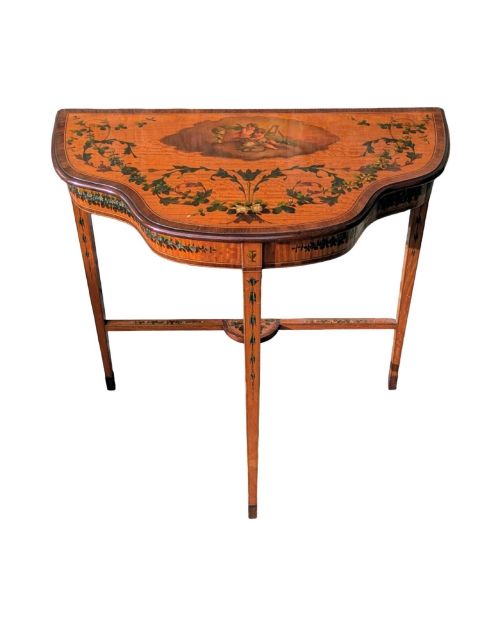
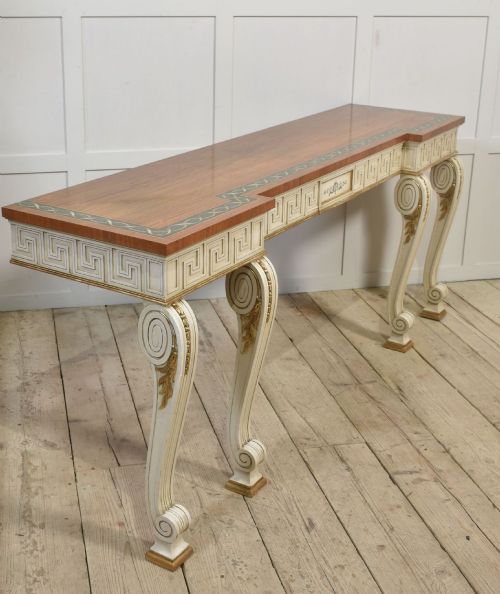
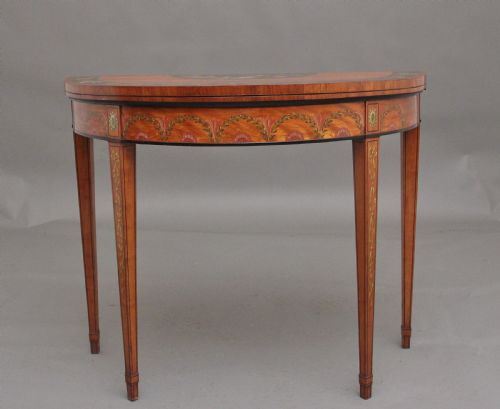
A painted classical side table encompasses console tables, occasional pieces, and demilune forms spanning the Georgian, Victorian, and early twentieth-century periods. These furnishings draw on Italian Neoclassical, Regency, Louis XVI, and Sheraton Revival styles, bringing formal architectural lines together with decorated timber surfaces.
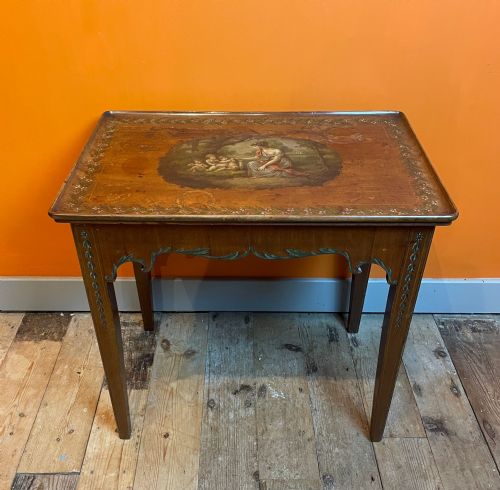
Originating from English, French, Italian, and Spanish workshops, these tables range from eighteenth-century console pieces to early twentieth-century revival works. Buyers will encounter side tables displaying hand-painted scenes, faux porphyry finishes, and polychrome ornamentation.
How They Were Made
Cabinetmakers constructed these tables using timbers such as mahogany, pine, and satinwood as the primary structural bases, often applying delicate veneers to curved and flat surfaces alike. Workshops utilised carved wooden elements alongside applied gilt, gold leaf, and parcel-gilt highlights to accentuate classical motifs and mouldings.
Surfaces received elaborate preparation through gesso and paint layers, allowing artisans to execute polychrome decorations, figurative scenes, and faux finishes including faux porphyry. Stonemasons contributed fitted marble slabs to console and table tops, while porcelain plaques and components were integrated into lamp bodies and furniture mounts.
The site listings feature painted classical side tables spanning the Georgian, Victorian, and early twentieth-century periods, constructed from satinwood, mahogany, pine, and marble.
What Varies in Quality
The refinement of the painted decoration marks the distinction between standard production and exceptional examples, particularly in the precision of polychrome scenes and gilding. Superior pieces display masterwork brush control and balanced compositions that align with the architectural grammar of Neoclassical and Regency design.
The selection of materials heavily influences the standing of a table, notably the quality of the underlying satinwood, the choice of genuine marble tops, and the integration of ormolu or porcelain details. Structural joinery and the harmonious integration of carved elements, such as dolphins or Corinthian capitals, separate ambitious commissions from simpler utilitarian items.
The Painted Classical Side Table Glossary
- Demilune
- A half-moon shape characteristic of side tables designed to sit flush against a wall. This profile allows the piece to occupy minimal floor space while providing a functional surface.
- Parcel-gilt
- A finish where selected portions of a wooden or gessoed surface are partially gilded with gold leaf. This technique highlights carved details, mouldings, and decorative motifs against a painted background.
- Faux Porphyry
- A decorative paint technique designed to imitate the deep purple-red igneous rock prized in classical antiquity. Artisans build up translucent layers of pigment to replicate the characteristic mineral crystals of the stone.
- Sheraton Revival
- A late nineteenth and early twentieth-century design movement that reinterpreted the light, neoclassical furniture forms of the eighteenth-century designer Thomas Sheraton. These pieces frequently feature satinwood finishes and painted floral swags.
Painted Classical Side Table: Frequently Asked Questions
Where should I place a console table?
These tables suit hallways, entryways, and reception rooms where their shallow profiles and decorative surfaces create a strong visual impact without obstructing pathways. They frequently serve as display surfaces for lamps, mirrors, and decorative objects.
Pairing a wall-mounted console with a complementary mirror creates a balanced focal point in a dining room or drawing room arrangement.
How do I clean a painted wooden surface?
Dust surfaces regularly with a soft, dry cloth to prevent the accumulation of abrasive particles on the painted and gilt areas. Avoid using household chemical sprays, abrasive pads, or excessive water.
Professional conservation wax may be applied sparingly to protect timber elements, while painted decoration requires particular care to avoid moisture damage.
What defines the Regency style?
The Regency period draws inspiration from the art and architecture of classical Greece and Rome, translated through early nineteenth-century British taste. Forms are typically clean and architectural, incorporating satinwood, gilding, and painted classical motifs.
Objects from this era balance restrained structural lines with rich surface ornamentation and classical imagery.
How do I identify a marble-topped table?
Examine the top surface for natural veining, cool tactile properties, and the weight characteristic of genuine stone rather than synthetic substitutes. Marble tops on these tables are usually heavy slab inserts resting within a rebated wooden frame.
Care should be taken to protect the stone surface from acidic liquids and impact damage during daily use.