



Painted Chiffonier Cabinet
A painted chiffonier cabinet brings colour and hand-finished detail to a room, combining practical storage with the decorative surface of past centuries.
Painted Chiffonier Cabinet
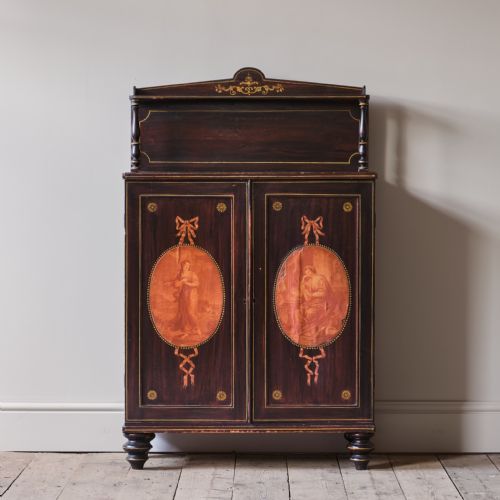
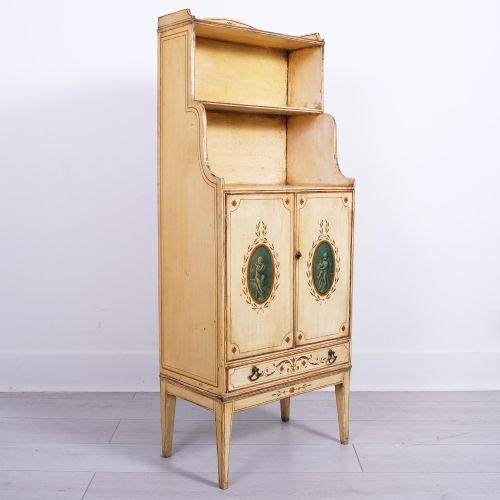
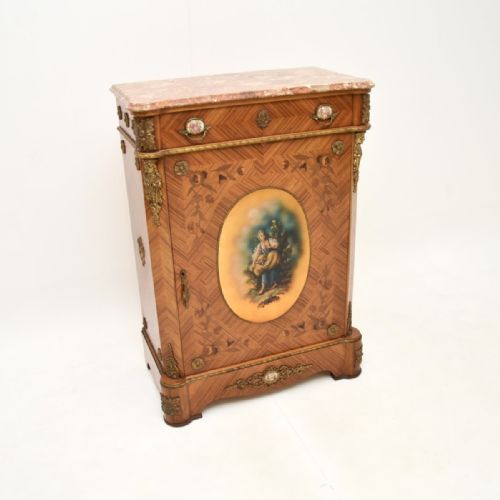
A painted chiffonier cabinet is a low storage piece or side cabinet that unites cupboard space with decorative painted finishes, appearing across Georgian, Regency, Victorian, and later periods. The selection here includes side cabinets, bookcases, and display cabinets that incorporate painted wood, simulated rosewood, and delicate panels.
Makers and workshops across the eighteenth, nineteenth, and early twentieth centuries applied paint, pen-work, and gilt highlights to timber frames such as pine, mahogany, and satinwood. These forms range from early George III waterfall bookcases to late Victorian Aesthetic ebonised furniture and French Revival pieces.
Buyers will find pieces that vary from chalk-painted Regency chiffoniers to serpentine-fronted satinwood cabinets with majolica inserts. Each example demonstrates how lower storage cabinets evolved from practical utility into canvases for decorative painting.
How they were made
Carpenters constructed these cabinets using timbers such as pine, mahogany, and satinwood, often applying paint directly to wood or utilising simulated finishes to mimic exotic grains like rosewood. Gilt highlights, brass fittings, and glass panels frequently completed the construction of these side cabinets and bookcases.
Surface decoration relied on hand painting, pen-work, and in some instances majolica ceramic panels inserted into the wooden structure. Artisans built these pieces to serve as functional furniture while providing a smooth ground for elaborate pictorial or faux-wood finishes.
Painted Chiffonier Cabinet Retail Price Guide 2026
Typical asking prices for painted chiffonier cabinet among the pieces listed under this phrase on Sellingantiques today, from the lower quarter to the upper quarter. They describe what is for sale here now, not the wider market.
Some nineteenth-century cabinet makers took a simple pine carcase and painted it so convincingly that guests spent all evening stroking it under the impression it was solid rosewood.
What varies in quality
The sophistication of the painted decoration distinguishes simpler utility furniture from more ambitious cabinet work, particularly where fine brushwork, simulated rosewood graining, or classical motifs are present. The integrity of the underlying timber construction, from satinwood frames to pine carcases, also sets individual pieces apart.
Hardware details such as original brass mounts, glass panes, and inset majolica panels contribute to a piece's completeness. The balance between the functional proportions of the cabinet and the execution of the surface paint dictates the overall character.
The Painted Chiffonier Cabinet Glossary
- Chiffonier
- A low sideboard or cabinet with drawers and shelves, typically used in a dining room or parlour for holding plate and small objects.
- Simulated rosewood
- A painted surface finish where an artisan uses brushes and pigments to mimic the rich, dark grain of genuine rosewood on a cheaper timber base.
- Majolica
- A type of colourful tin-glazed earthenware pottery, frequently incorporated as decorative panels into late nineteenth-century cabinet doors.
- Pen-work
- A decorative technique using fine ink or paint lines applied with a pen to create intricate geometric or pictorial designs on wood.
- Aesthetic Movement
- A late nineteenth-century design style that emphasised decorative art and visual beauty over moral or narrative purpose, often featuring ebonised wood with gilt details.
Painted Chiffonier Cabinet: Frequently Asked Questions
Where should I place a painted chiffonier cabinet?
These cabinets work well in dining rooms, hallways, or living spaces where low storage and a decorative surface are both useful.
Their proportions allow them to sit beneath mirrors or paintings without dominating the room's vertical space.
How do I care for the painted surface?
Dust the cabinet regularly with a soft, dry cloth and keep it away from direct sunlight to protect the painted details and simulated finishes.
Avoid using modern chemical polishes, which can damage aged varnish and paint layers.
Are these cabinets practical for daily storage?
Most pieces feature enclosed cupboards or drawers that offer useful space for tableware, linens, or household items.
Shelved interiors also allow for the display of books or small collections behind glass or open fronts.
How can I tell the period of a painted cabinet?
Construction methods, timber choices, and the style of the painted decoration help indicate when a piece was made, ranging from Georgian satinwood to Victorian ebonised finishes.
Examining the fixings, drawer linings, and backboards provides further clues to its age.