



Painted Ceramic Desk Light
A painted ceramic desk light brings distinct texture and colour to a workspace, drawing on centuries of converted porcelain and earthenware vessels.
Painted Ceramic Desk Light
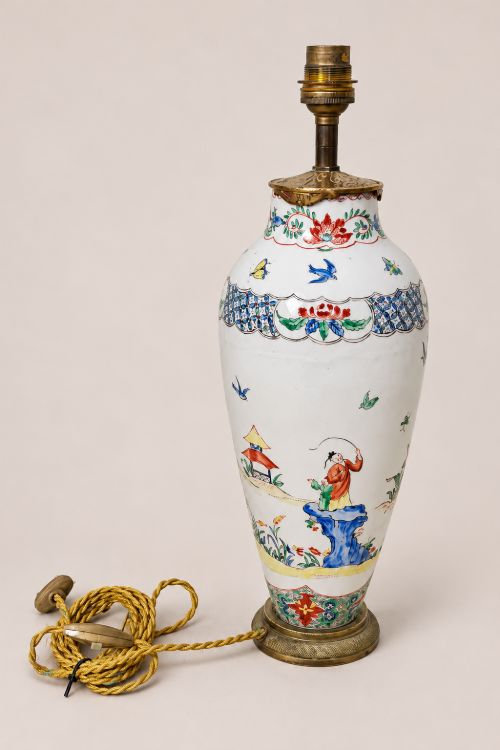
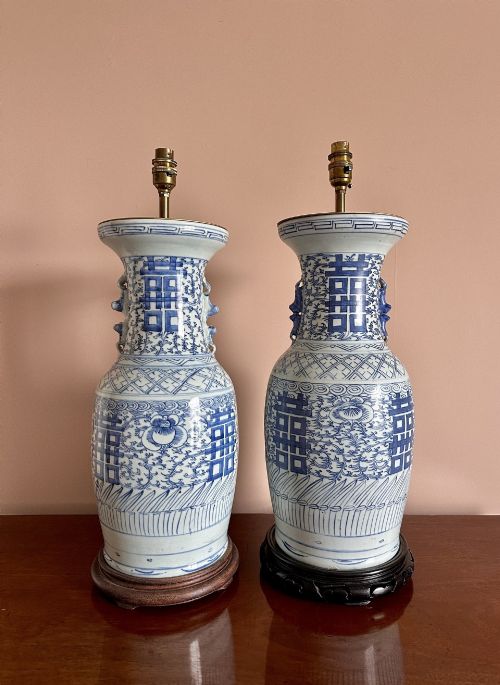
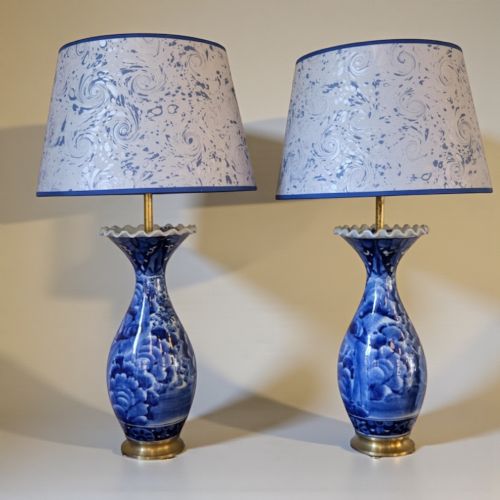
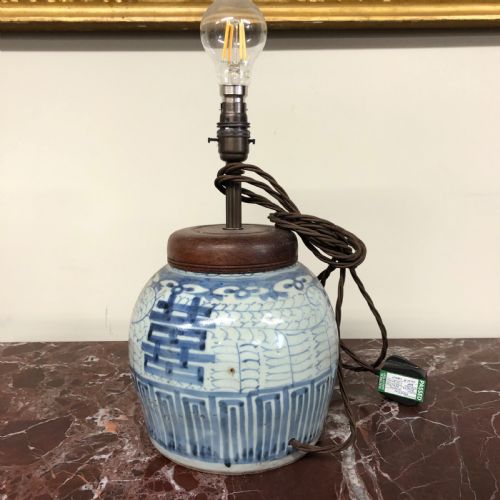
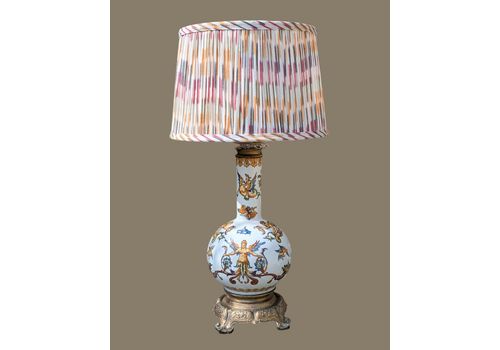
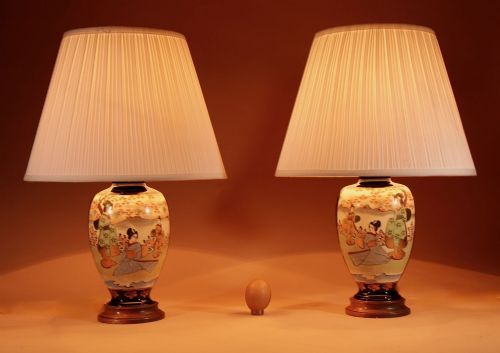
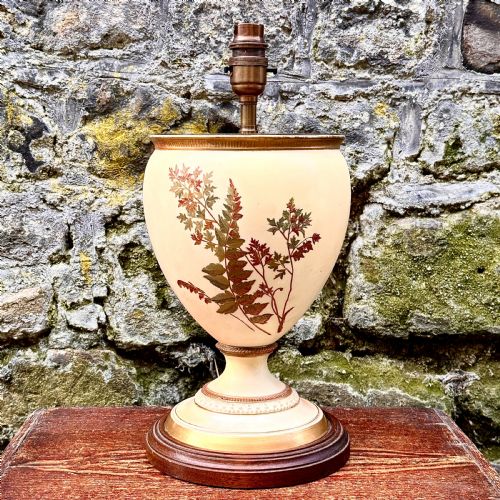
When you search for a painted ceramic desk light, you examine pieces created from converted vases, jars, and ewers mounted for illumination. The selection includes Chinese blue and white ginger jars, Japanese Satsuma and Kutani vessels, and European porcelain wares.
The common form on this page relies on Orientalist and European export vases adapted into table lamps. These pieces span periods from the eighteenth century through the Victorian era and the nineteen-twenties.
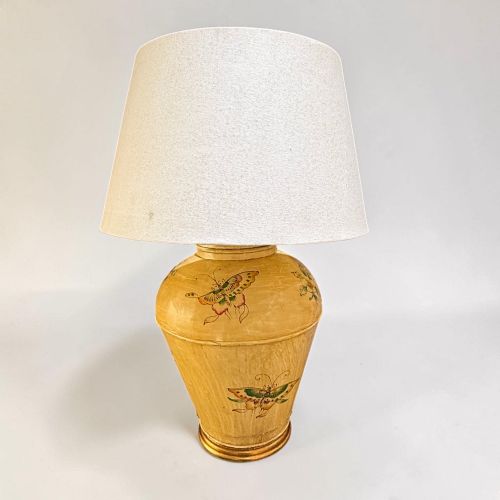
Makers utilise traditional ginger jars, baluster vases, and majolica bodies to provide structural weight and hand-painted surface detail. Each object combines historical ceramic production with domestic lighting utility.
How they were made
The primary bodies consist of porcelain, earthenware, and faience shaped on the wheel or in moulds before receiving hand-painted decoration in cobalt blue, famille verte, or polychrome enamels. Artisans then fitted these ceramic cylinders and jars with mounts in brass, gilt bronze, or ormolu.
Many examples represent later conversions where historical vases received electrical wiring and metal fittings while retaining their original glaze and painted schemes. The combination of ceramic bases with silk or fabric shades completes the construction.
Painted Ceramic Desk Light Retail Price Guide 2026
Typical asking prices for painted ceramic desk light among the pieces listed under this phrase on Sellingantiques today, from the lower quarter to the upper quarter. They describe what is for sale here now, not the wider market.
Listings feature materials including porcelain, earthenware, brass, and silk across periods spanning the eighteenth, nineteenth, and twentieth centuries.
What varies in quality
Quality rests in the crispness of the hand-painted brushwork and the preservation of the underlying ceramic glaze. Pieces with finely detailed Famille Rose or Imari patterns show superior artistic investment compared to simpler decorative bases.
The integration of the metal mounts, such as original brass or ormolu trim, separates standard conversions from finer decorative objects. The harmony between the antique vessel and its modern electrical fittings dictates the overall success of the piece.
Royal Worcester·Samuel Alcock
The Painted Ceramic Desk Light Glossary
- Imari
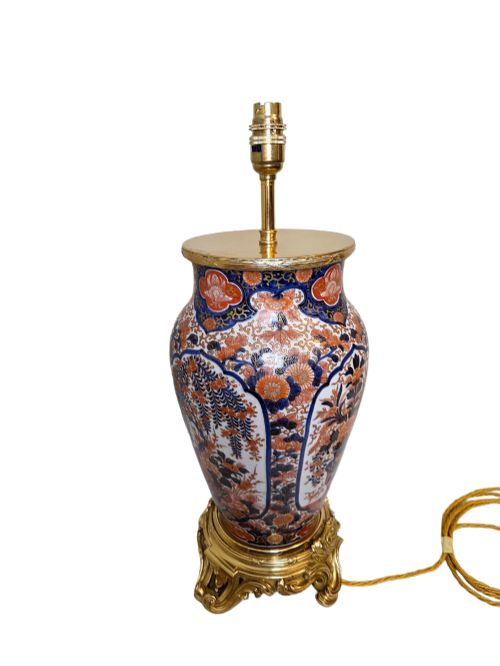
- A Japanese export style utilising underglaze blue and iron red with gilt highlights. These wares display complex panel designs.
- Ginger Jar
- A wide-mouthed storage vessel originally used for spices, frequently converted into lamp bases. Their stout proportions provide stability on a desk.
- Majolica
- Tin-glazed earthenware known for rich, opaque colours and moulded relief decoration. Victorian examples often adopt classical revival motifs.
- Kutani
- Japanese coloured porcelain characterised by bold pictorial designs. These pieces frequently employ reds, golds, and earth tones.
Painted Ceramic Desk Light: Frequently Asked Questions
Are these lamps converted from old vases?
Many painted ceramic desk lights originate as antique porcelain or earthenware vases, ginger jars, and ewers that later received electrical fittings. This method preserves historical ceramic forms while adapting them for modern interior illumination.
Mounters typically drill the base or fit the neck securely to support a lamp holder. The resulting objects maintain their original hand-painted surfaces intact.
How do I date a ceramic lamp base?
Dating relies on examining the ceramic body, glaze characteristics, and painting style rather than the electrical components. Pieces often correspond to eighteenth-century Qing dynasties, nineteenth-century Victorian production, or nineteen-twenties art deco designs.
Export marks, crackle-ware finishes, and stylistic cues like Satsuma or Famille Verte palettes offer further clues to the period of manufacture.
Where should I place a ceramic desk light?
These lamps suit study desks, side tables, and reading surfaces where their decorative hand-painted patterns can be appreciated at close range. The solid porcelain or earthenware base provides reliable weight for desktop placement.
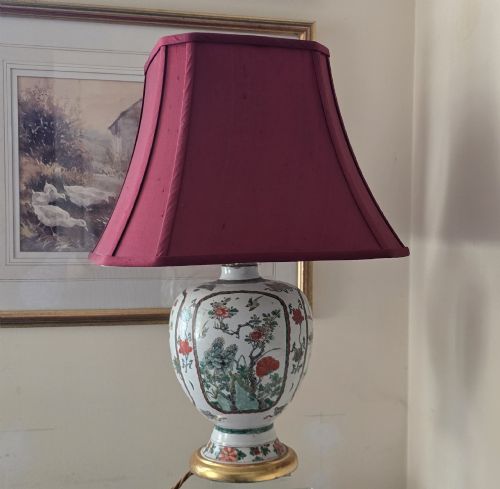
Pairing the lamp with an appropriate fabric or silk shade balances the visual weight of the ceramic body.
What styles of painted ceramic lamps are available?
The selection encompasses Chinese blue and white porcelain, Japanese Imari and Kutani wares, and European Sèvres style or Majolica pieces. These incorporate Chinoiserie, French Chateau, and Greek Revival aesthetic traditions.
Designs range from ginger jar silhouettes to baluster forms decorated with floral and figural motifs.