

Painted Carved Mirror
A painted carved mirror brings historical depth and colour to an interior, combining tactile woodwork with decorative pigment.
Painted Carved Mirror
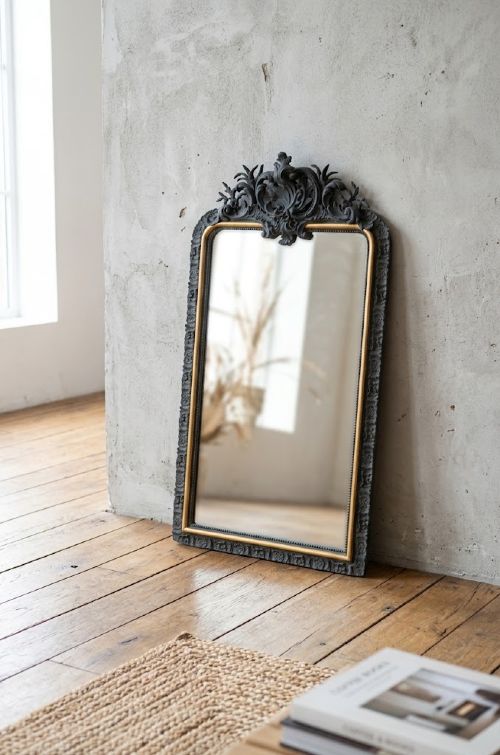
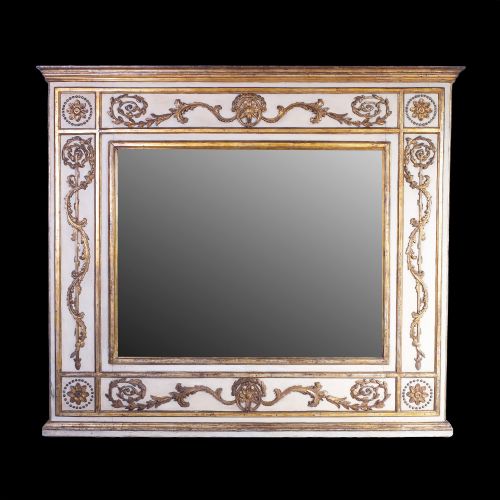
A painted carved mirror combines sculptural woodwork with decorative surface pigment, functioning as both a reflective object and a wall art piece.
Examples on this page span the eighteenth, nineteenth and early twentieth centuries, drawing on French, English and Italian workshop traditions.
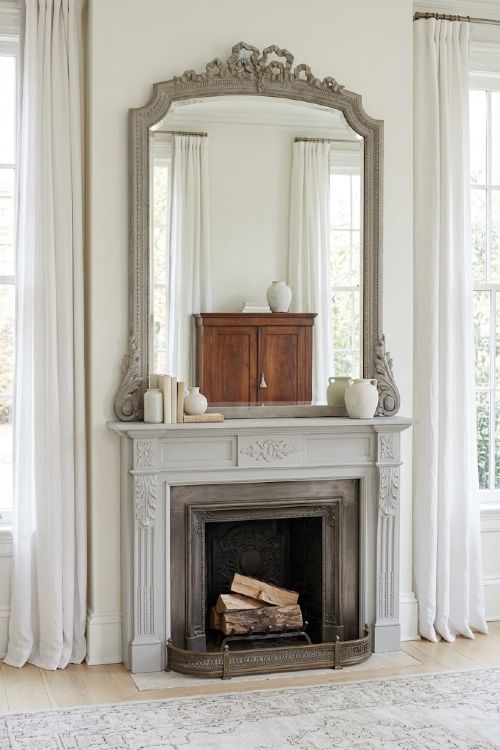
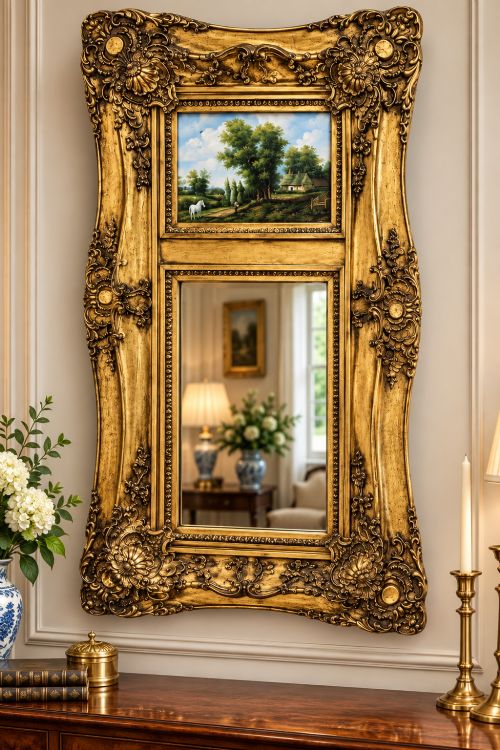
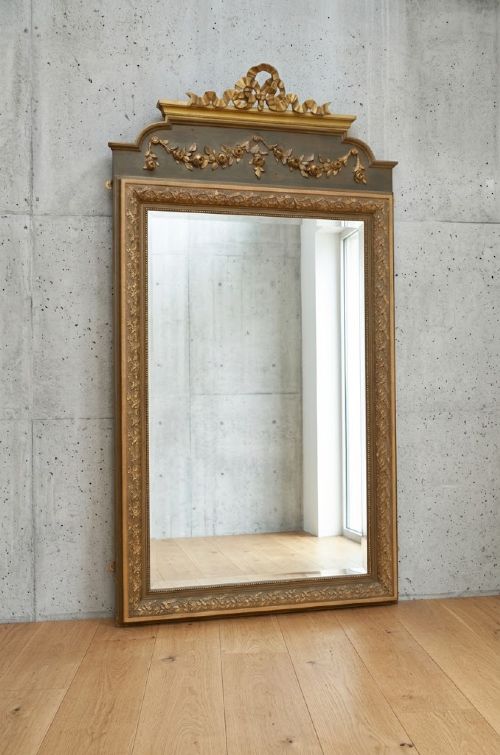
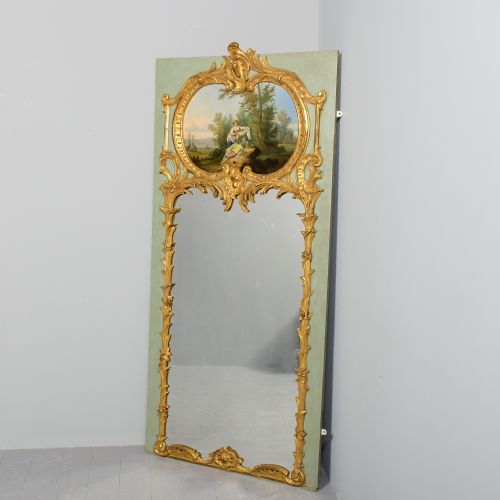
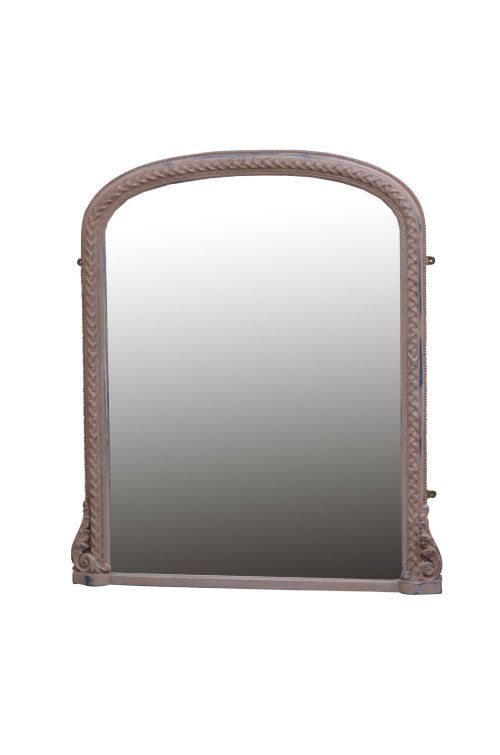
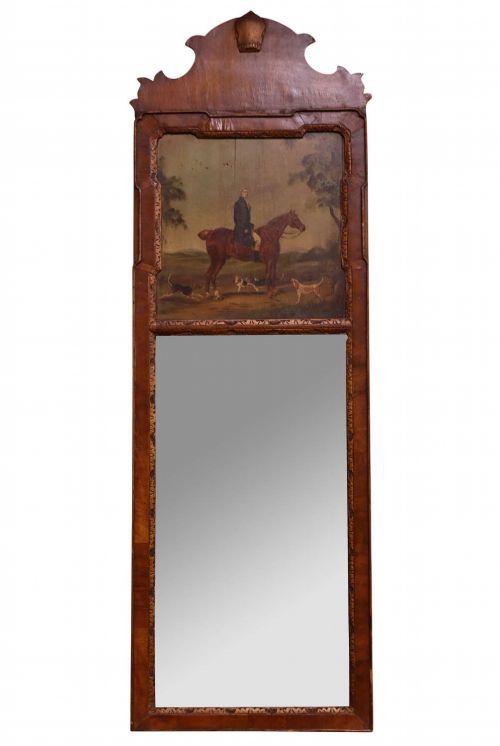
Common formats include grand overmantle glasses, tall pier mirrors, and trumeau panels incorporating integrated oil paintings.
Materials and Construction
Carvers shaped frames from timbers such as pine, oak, walnut and yew, often applying a layer of gesso to smooth the surface before detail work.
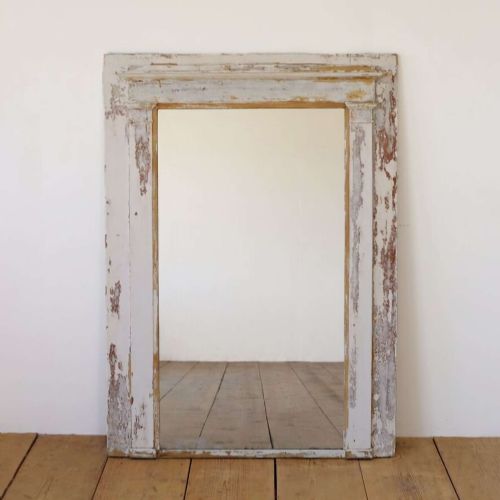
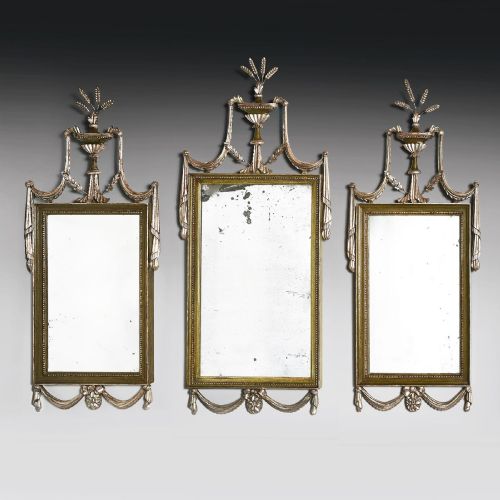
Painters and gilders finished the wood using oil paint, water gilding with gold leaf, or silvering, sometimes distressing the surface for decorative effect.
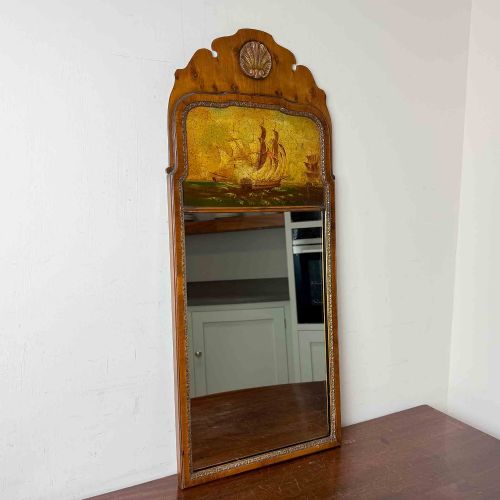
Some nineteenth-century mirrors feature maritime scenes of galleons at sea, giving sailors a chance to gaze into storms from dry land.
Craftsmanship and Preservation
Quality rests in the crispness of the hand-carved ornamentation and the integrity of the original paint or gilt surface rather than later overpainting.
Superior pieces retain their original mirrored glass, which may show natural oxidation and foxing consistent with age.
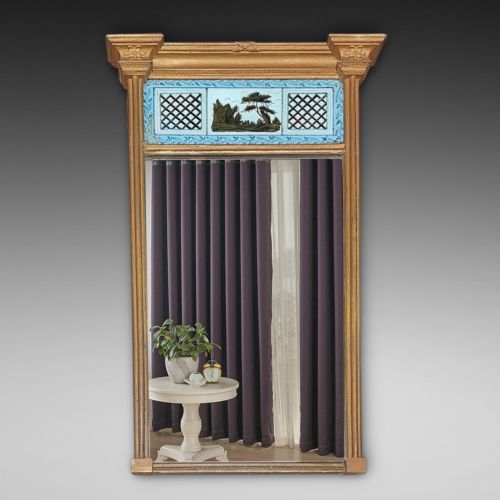
The sophistication of secondary elements, such as verre églomisé panels or integrated canvas oil paintings, distinguishes standard frames from exceptional works.
Gillows Of Lancaster·Maples of London and Paris·Pauly et Cie
The Painted Carved Mirror Glossary
- Trumeau
- An architectural wall panel containing a mirror or a painted scene, popular in eighteenth and nineteenth-century French interiors.
- Gesso
- A plaster-like mixture applied to carved wooden frames to create a smooth surface for subsequent gilding or painting.
- Verre églomisé
- A cold decoration technique where designs are painted and gilded on the rear face of glass.
- Pier glass
- A tall mirror designed to hang on the wall space between windows.
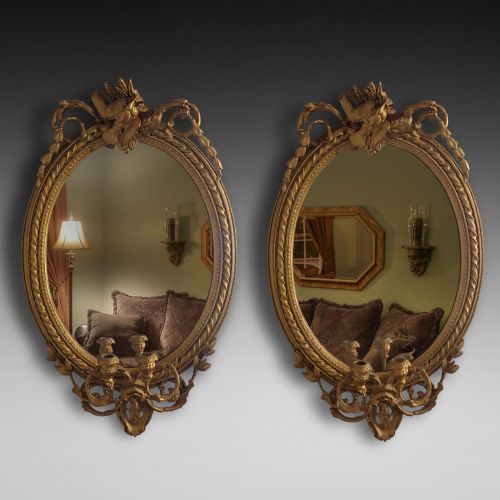
- Girandole
- A decorative wall-mounted mirror fitted with candle sconces to reflect and multiply candlelight.
Painted Carved Mirror: Frequently Asked Questions
What is a trumeau mirror?
A trumeau mirror combines a vertical glass plate with an upper decorative panel, often containing an oil painting or carved motif.
Originating in French neoclassical decoration, these pieces were designed to fit neatly between windows above low console tables.
How do I hang a heavy overmantle mirror?
Heavy overmantle mirrors require secure fixing directly into wall studs or masonry using heavy-duty brackets suited to the weight of the timber and glass.
Many period pieces were originally designed to rest upon a fireplace mantel while secured to the wall above with discreet anchors.
Should the mirror glass be original?
Original mirror glass often exhibits foxing, dark spots, and slight distortion, which collectors value as proof of age and authenticity.
Replacement glass offers a clearer reflection, but period glass preserves the historic character and visual depth of the frame.
How do I date these mirrors?
Dating relies on stylistic cues such as carved motifs, construction joints, and the composition of the gesso and paint layers beneath surface wear.
Nineteenth-century pieces frequently display revival styles like Rococo or Queen Anne, while earlier examples show the restrained proportions of the Georgian or Regency eras.