




Painted Bronze Dish
These painted bronze dish examples combine cast metalwork with applied colour, offering decorative forms for desks and display.
Painted Bronze Dish
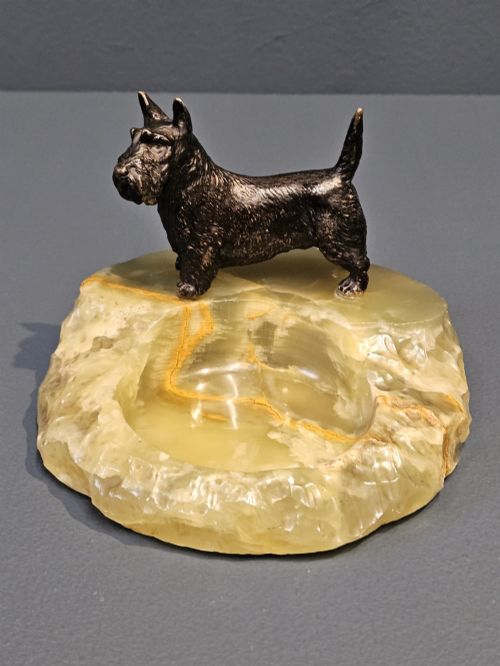
A painted bronze dish brings together cast metalwork and applied pigment, typically taking the form of desk tidies, pin trays, and small sculptural vessels. The most frequent iteration on this page is the Austrian cold painted bronze, often featuring animal studies mounted on onyx bases or integrated into desk accessories.
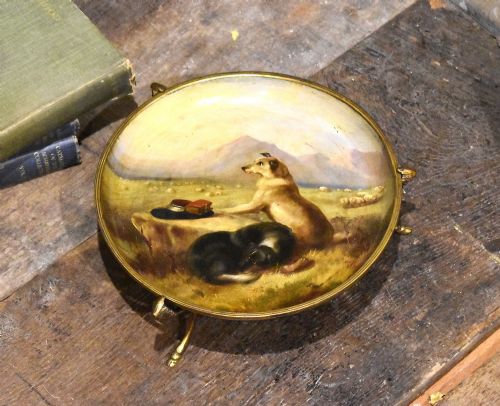
The category extends beyond simple metal trays to encompass pieces incorporating porcelain, cut crystal, and champleve enamel with gilt bronze mounts. These objects bridge the gap between utilitarian desk accessories and decorative centrepieces, spanning periods from the late nineteenth century into the twentieth century.
Origins cluster around Austrian workshops and French decorative arts, drawing on styles such as French Rococo Revival, Japonisme, and Art Deco. Buyers encounter everything from animal studies involving ducks, rabbits, and greyhounds to porcelain dishes set within gilt metal frames.
How they were made
Bronze and gilt bronze form the structural foundation of these pieces, shaped through casting and frequently enhanced with ormolu or gilt metal mounts. Artisans combined these metals with other media, mounting bronze figures onto onyx plinths or pairing metalwork with cut crystal and Limoges or Sevres style porcelain.
The characteristic cold painted finish involves applying pigment directly to the unheated cast bronze, a technique particularly associated with Austrian animalier subjects. Champleve enamel and intricate porcelain painting further augment the surface, requiring specialised firing and manual decoration techniques across the nineteenth and early twentieth centuries.
Painted Bronze Dish Retail Price Guide 2026
Typical asking prices for painted bronze dish among the pieces listed under this phrase on Sellingantiques today, from the lower quarter to the upper quarter. They describe what is for sale here now, not the wider market.
Periods represented span from the nineteenth century, including Edwardian examples, through to the 1930s.
What varies in quality
Quality rests in the crispness of the bronze casting and the preservation of the applied cold painted surface. Superior examples demonstrate fine anatomical detail in animal figures and secure integration with secondary materials like onyx and enamel.
The sophistication of the mounting and the quality of associated porcelain or crystal distinguish standard production from finer decorative pieces. Consistency in the hand-painted enamel and the weight of the gilt bronze or ormolu frame indicate the standing of the piece.
Louis Pierre Malpass
The Painted Bronze Dish Glossary
- Cold painted bronze
- Metalwork decorated with unfired paint applied over the cast surface. This technique requires careful handling to preserve the original pigment.
- Ormolu
- Gilded bronze typically associated with French decorative metalwork. It provides a bright, durable gold-coloured finish to mounts and frames.
- Champleve enamel
- A technique where troughs are dug into the metal surface and filled with vitreous enamel before firing. It creates vibrant decorative patterns within metal boundaries.
- Comport
- A decorative dish raised on a stem or foot, used for display or serving. These vessels often combine porcelain bowls with metal stands.
- Desk tidy
- A compartmentalised tray or dish designed to hold writing paraphernalia. These items were standard accessories for nineteenth-century writing desks.
Painted Bronze Dish: Frequently Asked Questions
What is a cold painted finish?
Cold painting involves applying paint directly to the metal without subsequent heat-firing. This technique was widely used on Austrian bronze animal studies and desk accessories.
Because the paint is not baked on, these surfaces require careful preservation to maintain their original colour and detail over time.
How are onyx and bronze combined?
Onyx frequently serves as a heavy, polished plinth or base for small bronze animal sculptures and desk tidies. The stone provides a stable foundation and a contrasting texture to the metal.
Such combinations gained popularity during the late nineteenth and early twentieth centuries for executive desk pieces.
What distinguishes a pin tray from a desk tidy?
A pin tray typically offers a simple, shallow basin intended for small items like pins or trinkets. Desk tidies often incorporate multiple sections or integrated figures for organising stationery.
Both forms utilise bronze, porcelain, and enamel to combine practical utility with decorative display.
How do I identify French Rococo Revival pieces?
French Rococo Revival items feature asymmetrical scrollwork, naturalistic floral motifs, and ornate gilt bronze mounts. These designs draw inspiration from eighteenth-century aesthetic forms.
They frequently pair cast metal frames with porcelain bowls or champleve enamel panels.