






Painted Breakfront Cupboard
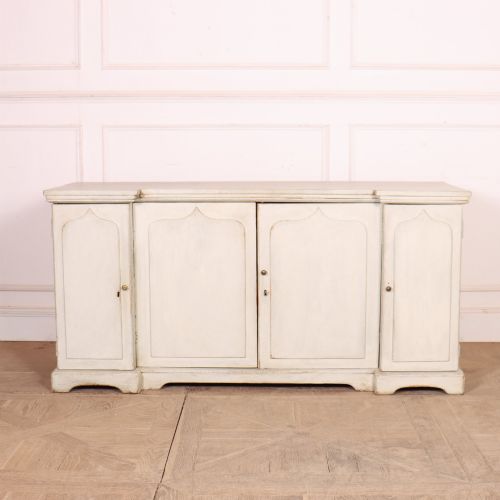
A painted breakfront cupboard offers substantial architectural presence and versatile storage, combining a stepped central section with painted surfaces.
Painted Breakfront Cupboard
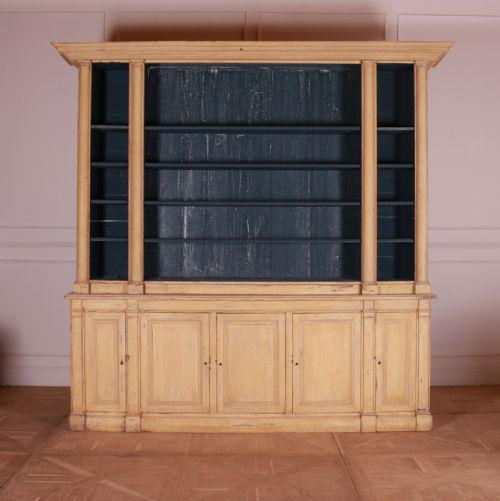
A painted breakfront cupboard presents a distinctive protruding central section flanked by recessed sides, creating a rhythm of depth across the front elevation. These pieces emerge in forms such as bookcases, housekeepers cupboards, library bookcases, and dresser bases, spanning periods from the eighteenth century through the nineteenth and twentieth centuries.
The aesthetic leans towards English, Irish, and French country traditions alongside revival styles including Sheraton, Gothic, and Louis XVI. Makers and workshops constructed these large storage items primarily for domestic utility in country houses, libraries, and sculleries, utilising pine, satinwood, and painted wood.
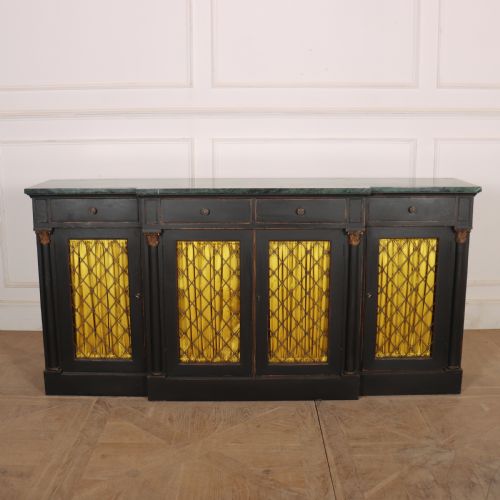
Buyers frequently encounter nineteenth-century English and continental interpretations, often finished with original painted decoration, glass doors, or wire mesh panels. The combination of structural breakfront geometry and painted finishes defines the category across all recorded examples.
Materials and construction methods
Carpenters and cabinetmakers utilised pine and satinwood as primary timbers for these large carcasses, applying paint directly to the wooden surfaces or incorporating delicate inlaid decoration. Structural integrity relied on robust joinery suited to housekeepers cupboards and library bookcases designed for heavy domestic use.
Glazing and hardware required specialist inputs, integrating glass panes, wire mesh panels, and brass fittings to secure doors on bookcases and side cabinets. Painted finishes varied from simple country schemes to elaborate decorative treatments featuring gilt work.
The documented pieces span the eighteenth, nineteenth, and early twentieth centuries, encompassing Irish, English, and French origins.
Distinctions in quality and finish
The hierarchy of quality rests upon the selection of timber and the sophistication of the painted decoration, moving from simple utilitarian pine scullery cupboards to refined satinwood breakfront bookcases. Original painted surfaces carry higher regard than later overpainting, preserving the authentic character developed across decades or centuries.
Proportion and architectural detailing separate standard domestic joinery from pieces influenced by Sheraton or Gothic revival styles. The integration of high-grade brass hardware, intact wire mesh, and clean breakfront lines distinguishes superior examples within the tradition.
The Painted Breakfront Cupboard Glossary
- Breakfront
- An architectural cabinet design where the central section projects forward from the flanking wings. This configuration creates visual depth and extra internal capacity.
- Housekeepers Cupboard
- A large utility storage piece traditionally used for linens and provisions in domestic service quarters. These items feature sturdy timber construction and ample shelving.
- Satinwood
- A durable, lustrous hardwood native to tropical regions, prized in revival furniture for its fine grain and pale yellow hue. It served as a smooth canvas for painted decoration.
- Wire Mesh
- Woven metal screening utilised in cabinet doors to allow ventilation while protecting contents. It appears frequently on library bookcases and food cupboards.
Painted Breakfront Cupboard: Frequently Asked Questions
What is a breakfront cupboard?
A breakfront cupboard is a large storage unit featuring a central section that extends further forward than the left and right sides. This architectural layout adds depth and visual interest to bookcases, dressers, and cabinets.
Historically constructed from timbers like pine and satinwood, these pieces provide substantial capacity for books, linen, or display items while serving as a primary focal point in a room.
Where were these cupboards used?
These cupboards served utilitarian and display functions across various domestic spaces, from country house sculleries and kitchens to formal libraries and drawing rooms. Housekeepers cupboards managed household provisions, whereas library bookcases housed bound volumes.
Painted finishes allowed these large architectural forms to integrate into diverse interior schemes, ranging from rustic country settings to refined period reception rooms.
How do I identify the period?
Period identification relies on examining the timber species, construction techniques, and stylistic influences evident in the carcass and decoration. Eighteenth-century pieces display simpler country proportions, while late nineteenth-century examples often incorporate Sheraton or Gothic revival details.
The presence of original painted surfaces, specific hardware types, and glass or wire mesh configurations also helps narrow the date of manufacture between the eighteenth and twentieth centuries.
Are the painted finishes original?
Many pieces retain their original painted decoration, which shows authentic wear, patination, and craquelure consistent with age. Some items exhibit later layers of paint applied during subsequent decades of domestic use.
Inspecting the paint layers around hinges, mouldings, and edges reveals whether the surface finish dates to the original construction period or represents a later decorative intervention.