


Off White Storage Cupboard
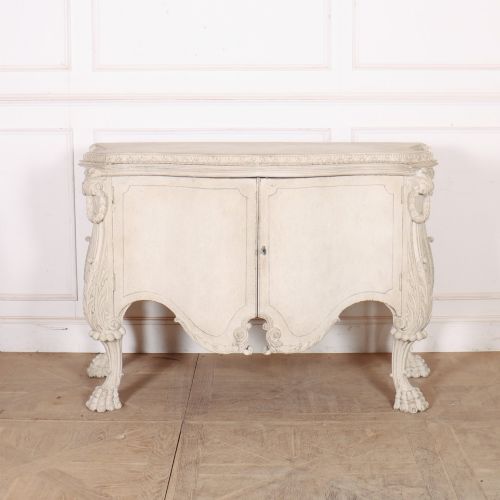
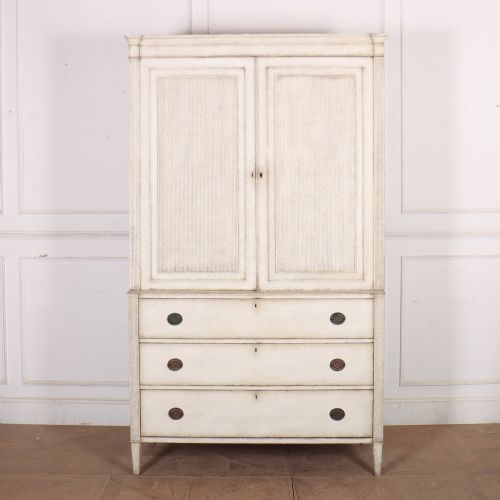
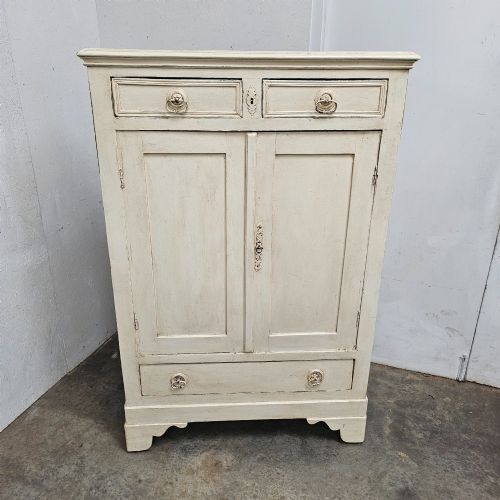
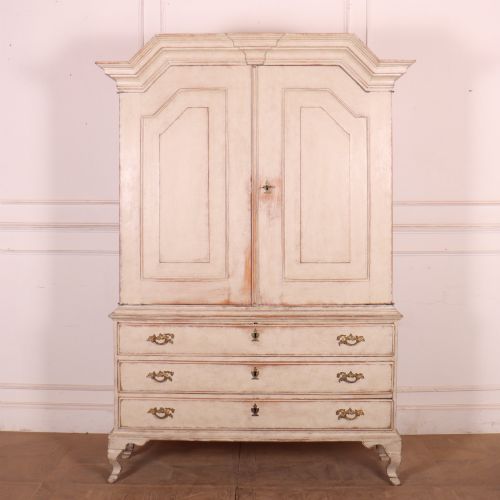
An off white storage cupboard brings pale, painted utility and understated regional charm into a room.
Off White Storage Cupboard
An off white storage cupboard is a practical wooden cabinet designed to hold housewares, linen, or provisions while displaying a pale painted finish. Buyers searching this phrase want substantial storage that softens a room with muted, aged tones rather than dark timber.
The pieces on this page span several centuries and regional traditions, ranging from English housekeepers cupboards to Scandinavian style linen presses. Most examples lean towards country house aesthetics, French provincial designs, or rustic Italian craftsmanship.
Forms vary from tall linen cupboards and side cabinets to lower dresser bases and scullery cupboards. The common thread is the painted wooden carcass, which brings historical utility together with a decorative neutral surface.
Materials and construction
Makers built these pieces primarily from pine, utilising solid timber construction to house heavy domestic stores. Workshops applied layers of paint over the wood, which has aged through decades of use to create characteristic off white tones.
Hardware details rely on iron and brass for hinges, escutcheons, and latches. These metal elements secure heavy doors on linen cupboards and side cabinets while adding functional contrast to the painted surfaces.
Scullery cupboards often retain traces of flour dust trapped deep within their nineteenth-century pine floorboards.
Judging quality and character
Quality rests in the integrity of the timber carcass and the authenticity of the painted finish. Pieces with original paint layers show a depth and weathering that later touch-ups cannot replicate.
Proportion and scale distinguish finer regional work from utilitarian workshop pieces. A well-proportioned Swedish or English cupboard balances practical storage depth with considered architectural mouldings and balanced door panels.
The Off White Storage Cupboard Glossary
- Linen cupboard
- A tall storage cabinet specifically compartmentalised for textiles and household linens. These pieces often feature internal shelving behind panelled doors.
- Housekeepers cupboard
- A large utilitarian storage piece traditionally used in country houses for provisions and domestic equipment. They combine generous internal capacity with robust wooden construction.
- Gustavian
- A Swedish neoclassical style popular in the late eighteenth and nineteenth centuries. It is characterised by lighter proportions, restrained ornamentation, and pale painted finishes.
- Dresser base
- A lower cabinet structure featuring drawers or cupboards beneath a flat top surface. These serve as versatile sideboards in contemporary interiors.
Off White Storage Cupboard: Frequently Asked Questions
What rooms suit an off white storage cupboard?
These cabinets suit kitchens, hallways, and bedrooms where practical storage is required without heavy dark wood dominating the floor plan. Their neutral painted surfaces blend easily with various interior backgrounds.
Larger linen presses and housekeepers cupboards work well in dining rooms or landings to house tableware and linens. Smaller side cabinets fit comfortably into alcoves or narrower corridors.
How do I care for painted wooden cupboards?
Dust surfaces regularly with a soft, dry cloth to protect the historic paint layers from abrasive particles. Avoid commercial cleaning sprays that can soften or damage aged finishes.
Keep wooden cupboards away from direct heat sources and severe moisture fluctuations. Stable environmental conditions prevent the pine carcass from shifting and protect the painted surface.
Are these cupboards fitted with shelves?
Most linen cupboards and side cabinets contain fixed or adjustable internal wooden shelving. These tiers were originally designed to stack folded textiles or kitchen stores.
Housekeepers cupboards often feature deep internal spaces that accommodate larger domestic items. Buyers should examine specific internal layouts to ensure the configuration matches their intended storage needs.
How do I identify a Gustavian piece?
Gustavian pieces display restrained neoclassical lines inspired by French courts but interpreted with Scandinavian restraint. Look for fluted columns, subtle carving, and pale grey or off white paint schemes.
These pieces originate from Sweden during the eighteenth and nineteenth centuries. Their lighter proportions distinguish them from heavier rustic country furniture.