
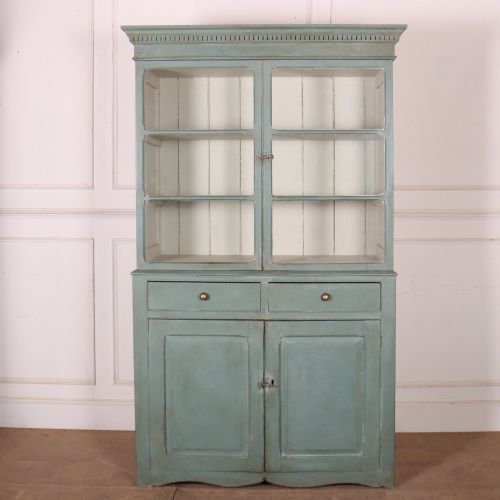
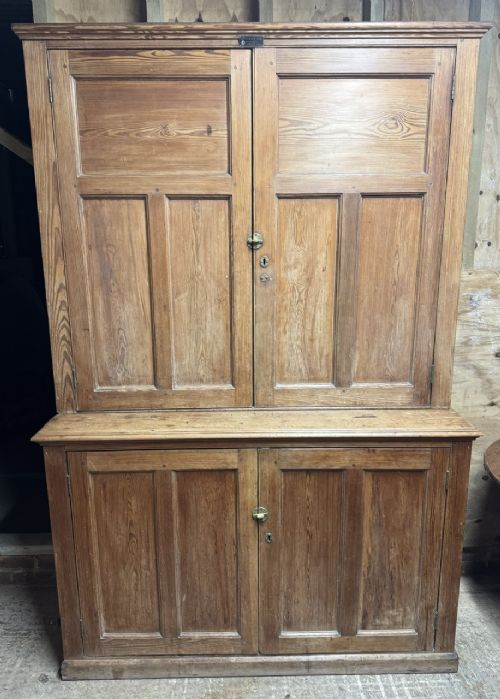
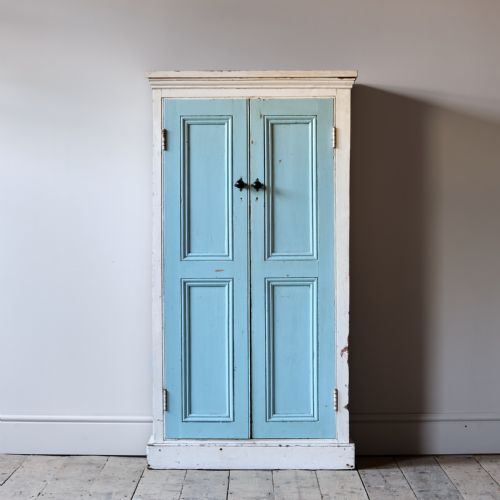
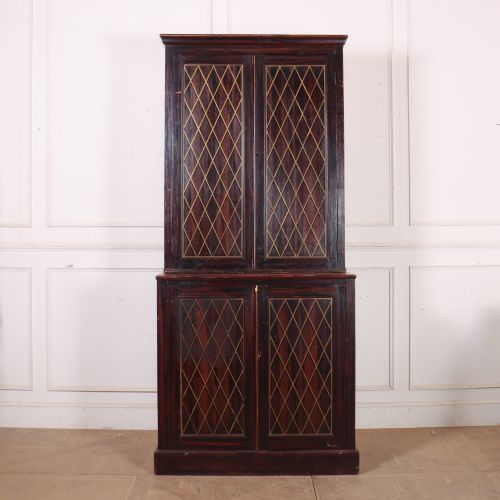
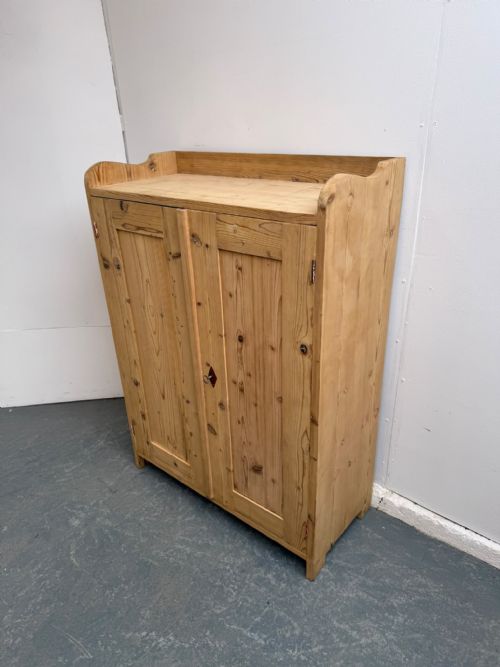


Country House Larder
A country house larder is a substantial utilitarian storage piece, bringing honest utility and period character to domestic spaces.
Country House Larder
When you search for a country house larder, you find large scale storage furniture designed for domestic provisions, originating primarily in the nineteenth and eighteenth centuries.
The pieces on this page span several regional styles including English, Scottish, Irish, and West Country traditions, taking forms such as housekeepers cupboards, kitchen dressers, and linen presses.
You are most likely to encounter painted pine and oak examples, ranging from early Georgian estates to later Victorian utility pieces and Edwardian cupboards.
How They Were Made
Construction relies heavily on sturdy timbers like pine and oak, often finished with historic paint layers or wax surfaces that show decades of domestic use.
Hardware such as brass hinges and iron latches provide functional integrity, while glazed doors appear on select kitchen cabinets for visible storage.
Many surviving cupboards still retain the faint, lingering aroma of dried herbs and decades of stored provisions.
What Varies in Quality
The distinction between pieces rests largely on the survival of original surface treatments, such as genuine early paint finishes versus later stripped surfaces.
Proportion and regional timber selection also set finer examples apart, distinguishing utilitarian school or scullery pieces from substantial estate housekeepers cupboards.
The Country House Larder Glossary
- Housekeeper's cupboard
- A large storage cabinet traditionally used in large homes for linen, dry goods, and provisions. These pieces typically feature multiple doors and internal shelving.
- Kitchen dresser
- A dual-purpose piece combining base cupboards with upper shelving or display cabinets. They served as the hardworking centre of rural kitchens.
- Pine
- A soft timber widely utilised for domestic furniture due to its availability and workability. It frequently took painted finishes in country settings.
- Original paint
- Historic surface pigment applied to the timber that has survived through generations. Collectors prize untouched layers for their visual depth.
- Linen press
- A tall cabinet specifically designed to store household linens, often featuring sliding trays or deep lower drawers.
Country House Larder: Frequently Asked Questions
What is a country house larder?
These pieces are large utilitarian storage cupboards originating from historic domestic settings. They were built to hold provisions, linens, and kitchen goods.
Today, they function as substantial focal points in modern kitchens and dining spaces, providing deep storage with distinct period presence.
How were these cupboards used?
Historically, domestic staff utilised these cabinets to organise and protect dry foods, tableware, and household linens from dust and damp.
Their generous internal shelving and compartmentalised doors made them indispensable for managing large household inventories before modern refrigeration.
How do I date a larder?
Dating relies on examining construction methods, timber types, and hardware like iron latches or brass hinges. Earlier Georgian pieces often use oak, while Victorian examples lean towards pine.
Surface treatments also provide clues, as surviving original paint finishes reflect the working aesthetic of specific nineteenth and eighteenth century periods.
Are these pieces made of pine?
Many examples on this page utilise pine, often finished with historic paint or wax. This timber was practical and readily available for regional cabinetmakers.
Other pieces are constructed from oak, particularly earlier eighteenth-century estate cupboards designed for heavy domestic service.