





Painted Bow Front Commode
A painted bow front commode brings curved fronts and decorative surfaces together to anchor a room with undeniable presence.

Painted Bow Front Commode
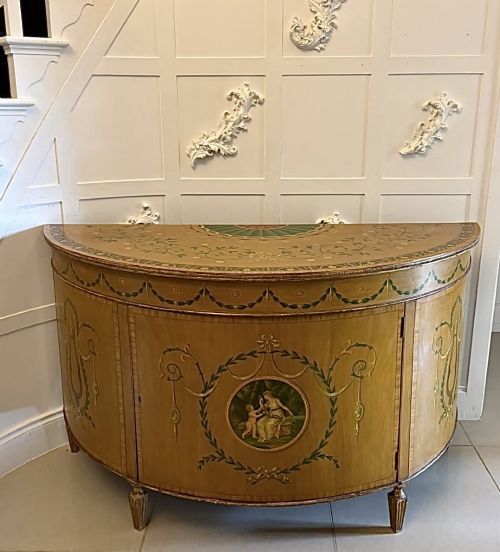
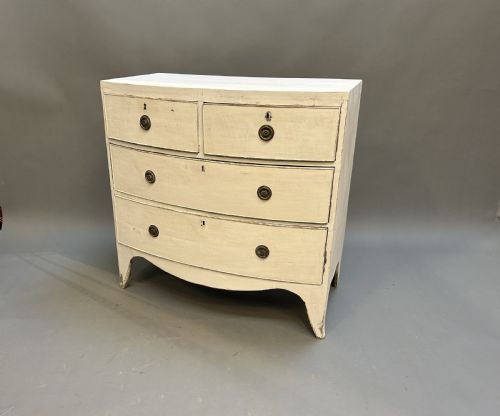
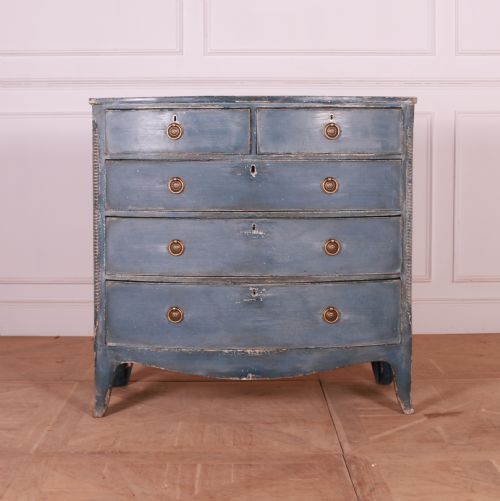
A painted bow front commode is a chest of drawers or side cabinet defined by its curved, convex front and finished with paint or decoration. These pieces arrive from various periods including the eighteenth century, nineteenth century, and twentieth century.
The selection here includes examples styled as Regency, Georgian, Sheraton Revival, French Chateau, and English Country. Forms range from traditional chests of drawers to compact side cabinets featuring burr walnut and other timbers alongside painted finishes.
How they were made
Construction relies on wood carcasses, utilising timbers such as mahogany and satinwood beneath decorative paintwork. Cabinetmakers shaped the bowed fronts by building up frames and applying veneers or solid wood panels.
Hardware details incorporate brass fittings and metal accents to complement the painted wood surfaces. Artisans applied hand-painted decoration directly onto the timber or primed surfaces to achieve the desired aesthetic.
Painted Bow Front Commode Retail Price Guide 2026
Typical asking prices for painted bow front commode among the pieces listed under this phrase on Sellingantiques today, from the lower quarter to the upper quarter. They describe what is for sale here now, not the wider market.
Object types on this page include traditional chests of drawers alongside bowed side cabinets and French commodes.
What varies in quality
Quality reveals itself in the crispness of the curved woodwork and the integrity of the painted surface over time. Superior examples display precise joinery along the bowed front and refined execution in any decorative motifs.
The choice of underlying timber, such as satinwood or burr walnut, influences the character and substance of each piece. Finer items balance the structural demands of a curving chest with harmonious proportions and well-chosen brass hardware.
The Painted Bow Front Commode Glossary
- Bow front
- A convex, outwardly curving front profile characteristic of these chests and commodes. This shape requires advanced cabinetmaking skill to construct successfully.
- Commode
- A low chest of drawers or cabinet originating from French furniture forms. In English usage, the term often describes decorative chests used in bedrooms or reception rooms.
- Regency
- A style period dating from the early nineteenth century known for classical restraint and elegant proportions. Pieces from this era often feature clean lines and dark or ebonised woods.
- Sheraton Revival
- A late nineteenth-century revival style inspired by the designs of Thomas Sheraton. These items frequently incorporate delicate painted decoration, satinwood, and classical motifs.
Painted Bow Front Commode: Frequently Asked Questions
Where should I place a painted commode?
A painted bow front commode suits reception rooms, hallways, or bedrooms where its curved profile softens straight architectural lines. The decorative surface allows it to function as a focal point against plain walls.
Ensure the dimensions match the available wall space, leaving sufficient room for drawers to open fully without obstruction.
How do I care for painted wooden surfaces?
Dust surfaces regularly with a soft, dry cloth to prevent the accumulation of grit that might scratch the paintwork. Avoid using abrasive household cleaners or excessive moisture on painted and decorated timber.
Keep the piece away from direct heat sources and strong sunlight to protect the wood and prevent the paint from fading or cracking over time.
What is the difference between a chest and a commode?
While both terms describe storage furniture with drawers, commode often implies a more decorative, French-inspired piece designed for formal rooms. A chest of drawers typically refers to standard English forms focused primarily on utility.
In modern usage, the descriptions often overlap, particularly when applied to revival pieces or continental imports.
How can I tell a revival piece from an earlier one?
Examinations of construction techniques, secondary woods, and the ageing of the paint layers provide clues to a piece's age. Revival items, such as those from the late nineteenth century, often display machine-sawn elements and specific stylistic markers unique to their period of manufacture.
Consulting the specific details listed for each item helps clarify whether a piece dates to the Georgian era or a later revival.