

Painted Bedroom Furniture
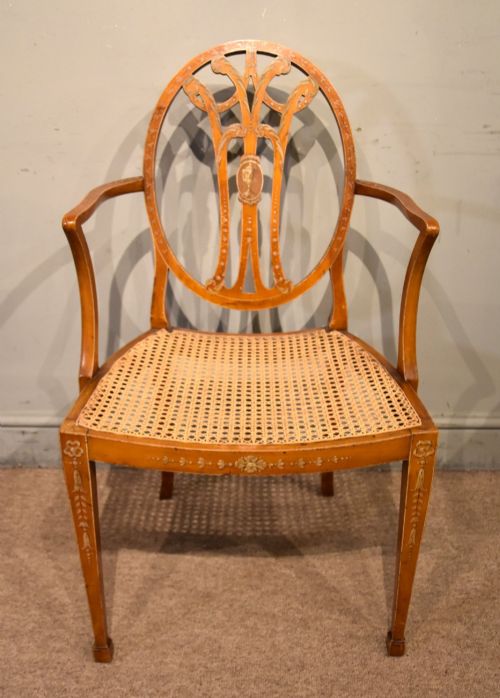
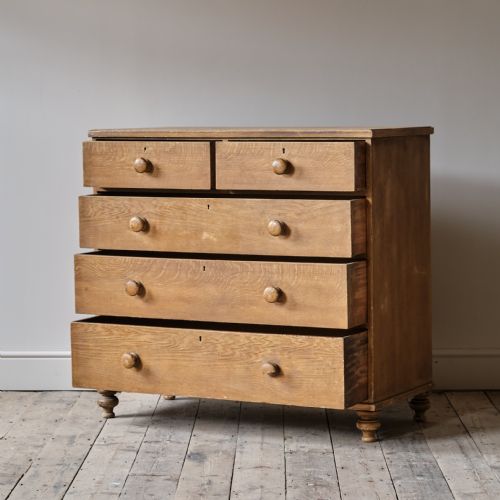
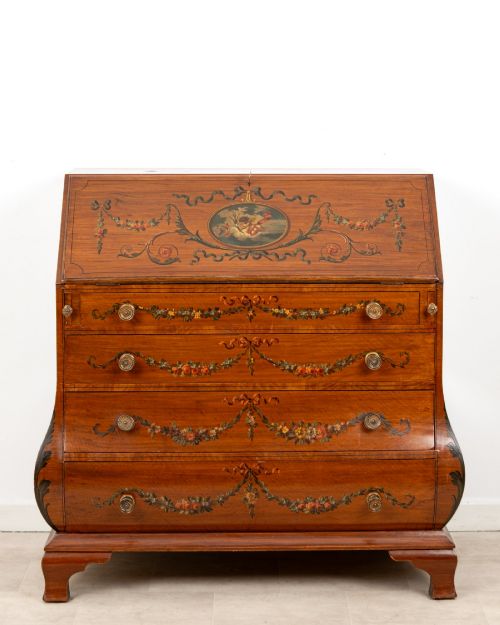
Painted bedroom furniture brings character and colour to a room, spanning rustic pine chests and refined satinwood wardrobes.
Painted Bedroom Furniture
Painted bedroom furniture encompasses practical storage pieces and seating built across several centuries, primarily focusing on chests of drawers, commodes, wardrobes, and bedside cabinets.
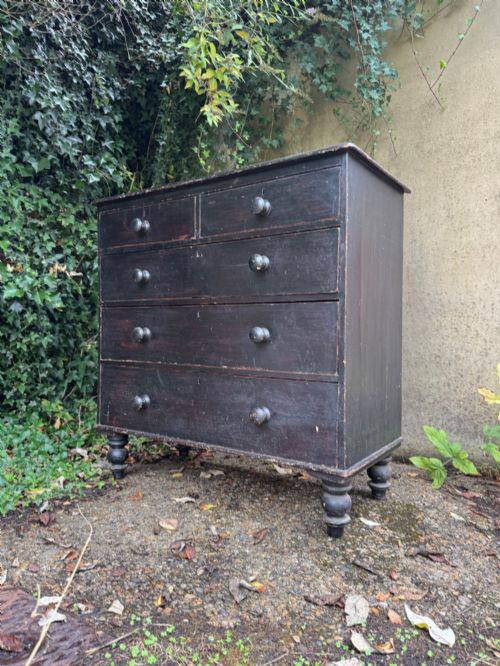
Buyers browsing this selection frequently encounter nineteenth-century pine and Victorian examples alongside Edwardian satinwood items and continental pieces.
Origins stretch from English country workshops to Swedish, French, and Hungarian makers, offering diverse regional interpretations of decorated timber surfaces.
Materials and technique
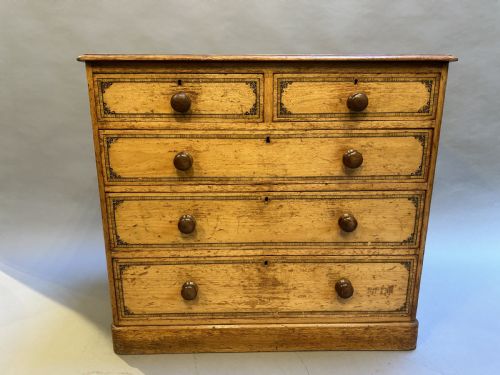
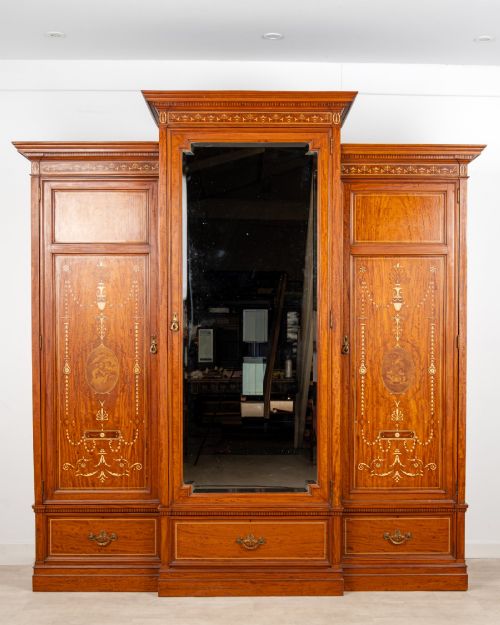
Carpenters typically constructed carcasses using solid timber such as pine and satinwood, occasionally incorporating brass hardware and iron details.
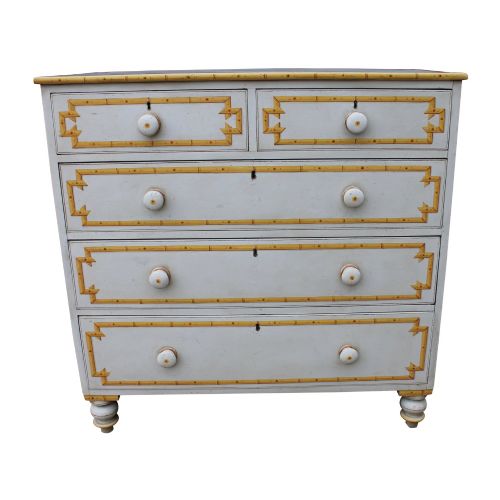
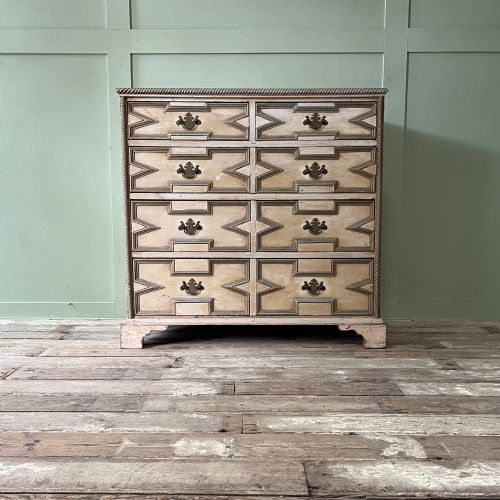
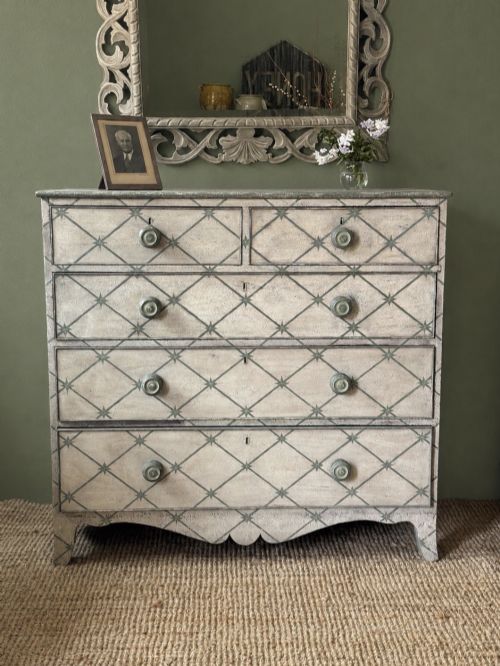
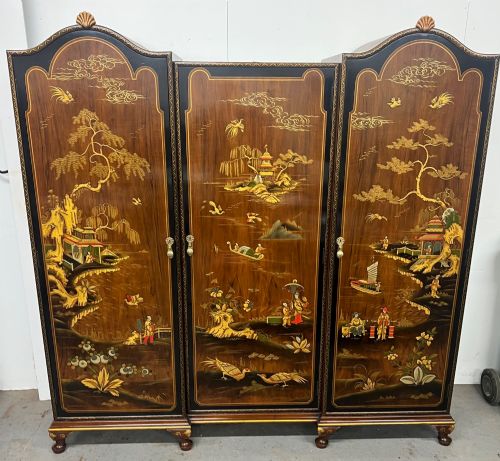
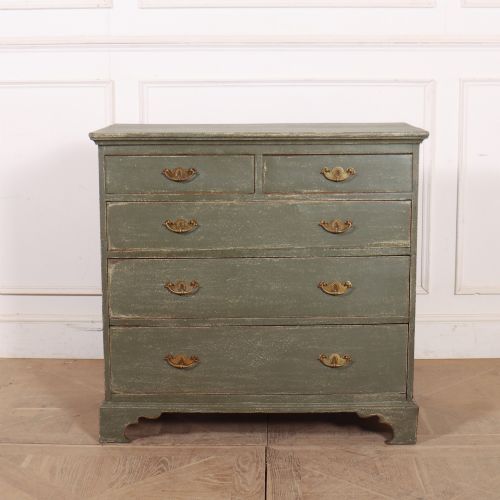
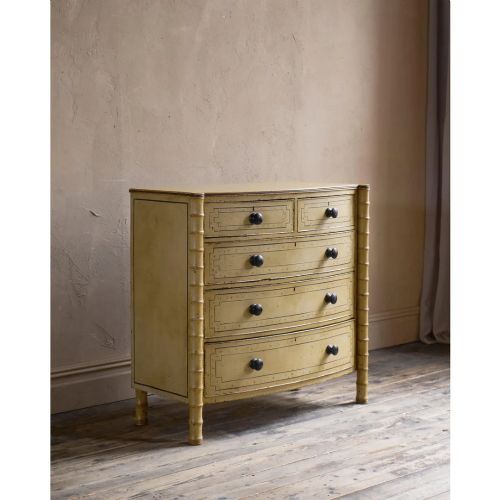
Surfaces received decorative coats of paint, stencilling, or faux bamboo detailing, often preserving original finishes applied decades or centuries prior.
Listings feature eighteenth-century Gustavian commodes alongside Victorian pine chests and Edwardian satinwood wardrobes.
Assessing craftsmanship
The distinction between standard utility items and superior examples lies in the integrity of the original paint surface and the refinement of hand-painted or stencilled decoration.
Proportion, timber selection, and the survival of untouched period hardware elevate certain wardrobes and chests above simpler vernacular equivalents.
Maples and Co·Sir Clough Williams Ellis
The Painted Bedroom Furniture Glossary
- Commode
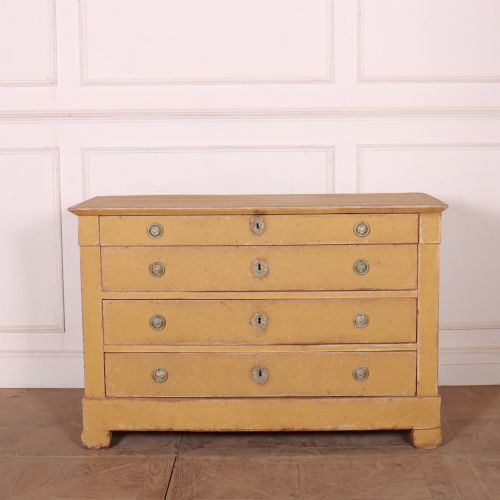
- A low chest of drawers or cabinet, frequently associated with French and Swedish eighteenth- and nineteenth-century designs. These pieces often feature decorative painted finishes.
- Faux bamboo
- A decorative technique where wood is carved and painted to resemble natural bamboo canes. This style gained popularity during the nineteenth century.
- Satinwood
- A durable, light-coloured tropical timber used extensively in fine Edwardian bedroom pieces. It provides a smooth base for hand-painted ornamentation.
- Washstand
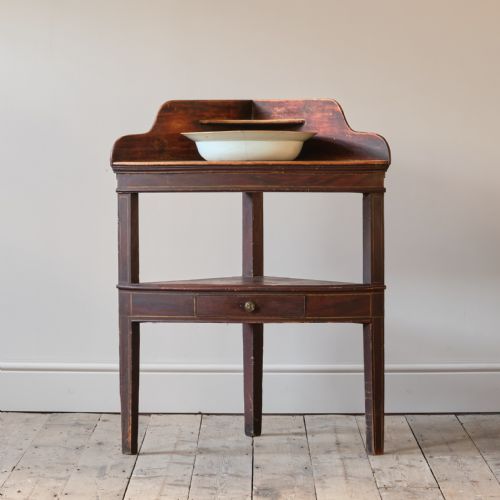
- A dedicated wooden piece designed to hold a basin and jug before plumbed bathrooms became standard. Many surviving examples retain their painted or tiled splashbacks.
- Gustavian
- The Swedish neoclassical style spanning the late eighteenth and early nineteenth centuries. It is characterised by pale painted surfaces and restrained classical detailing.
Painted Bedroom Furniture: Frequently Asked Questions
How do I care for original painted surfaces?
Original painted surfaces require gentle dusting with a dry cloth and protection from direct sunlight and excessive moisture. Avoid modern chemical cleaning products that might lift historic pigments.
Maintaining a stable room temperature helps prevent the underlying timber from expanding and contracting, which preserves the stability of the paint layer.
Are these pieces suitable for daily bedroom use?
Most items are robust enough for daily storage and practical bedroom placement. Drawers and doors generally remain functional after proper historical adjustment.
Buyers should check internal dimensions to ensure modern clothing fits comfortably inside older wardrobes and chests.
How can I tell if the paint is original?
Original paint exhibits natural wear patterns, craquelure, and patina accumulated over generations of use. Examination under magnification often reveals multiple underlying historic layers.
Modern repainting typically feels more uniform and lacks the subtle softening of edges found on authentic period surfaces.
What distinguishes Swedish pieces from English ones?
Swedish items from the eighteenth and nineteenth centuries frequently showcase lighter neoclassical palettes, including pale greys and off-whites. English equivalents often lean towards darker tones, stencilled pine, or decorative Chinoiserie.
Construction methods and local timber choices also reflect regional woodworking traditions of the period.