
Painted Bedroom Chest Drawers
These painted bedroom chest drawers bring colour and character to a room, offering practical storage finished in historic paint or decorative schemes.
Painted Bedroom Chest Drawers
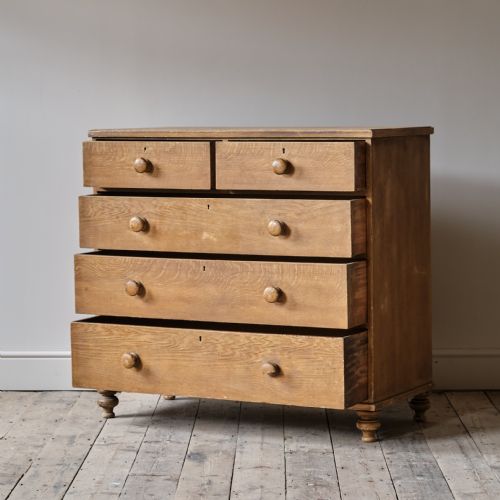
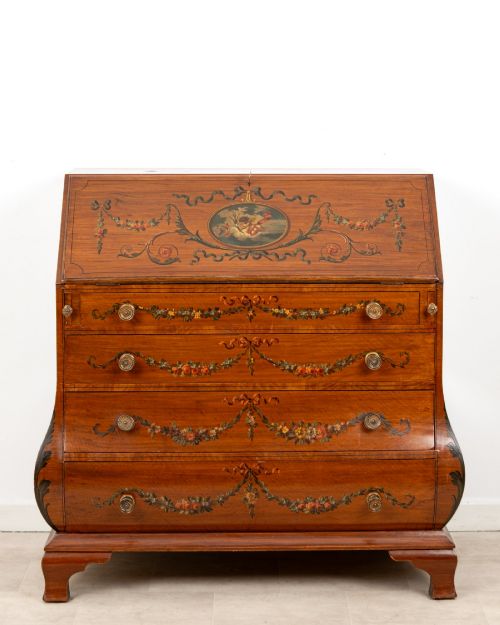
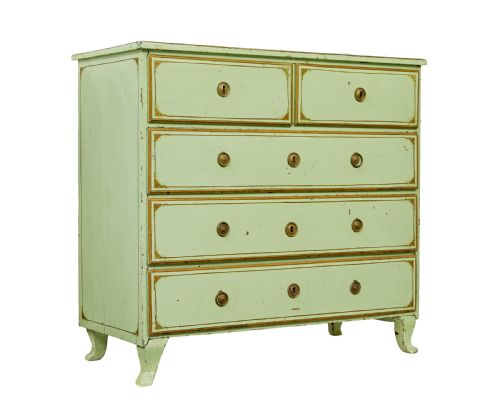
A painted bedroom chest drawers sits at the intersection of utilitarian storage and decorative craft, appearing across the 18th, 19th and early 20th centuries. The selection here spans simpler country pine pieces to more formal satinwood, mahogany and commode forms originating from English, French, Swedish, Spanish and Hungarian workshops.
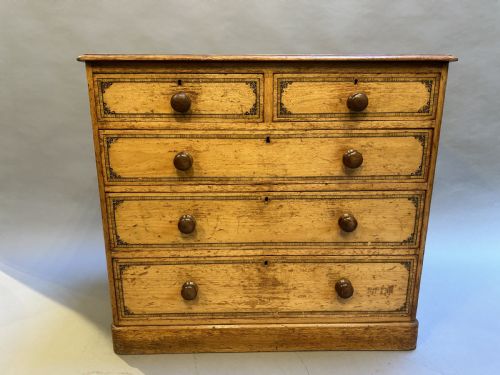
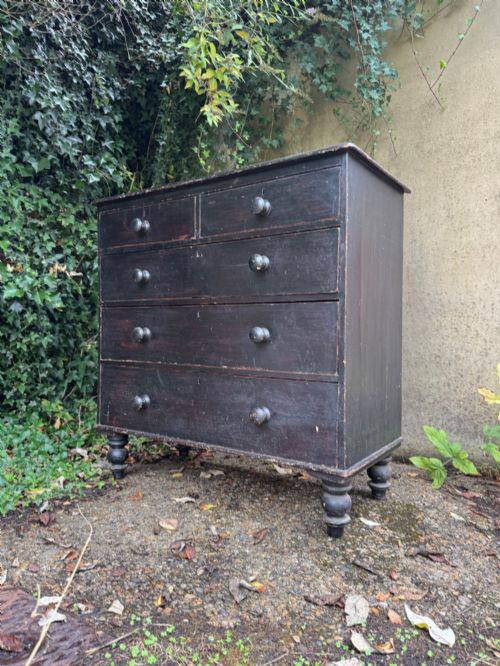
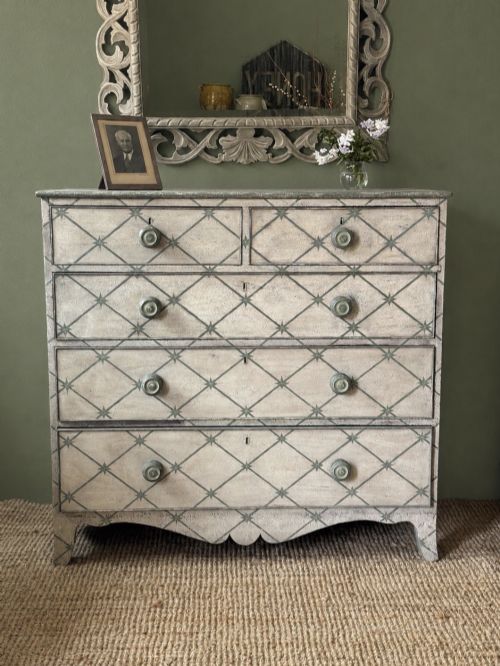
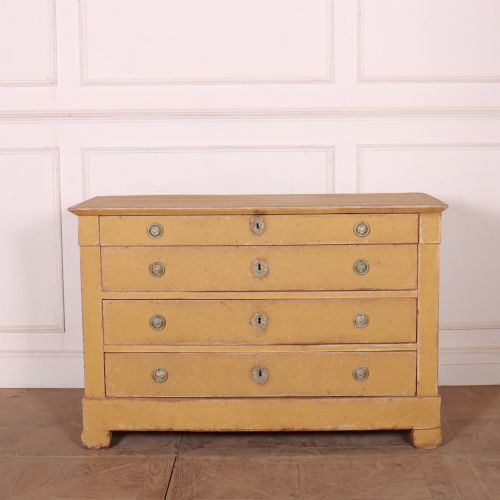
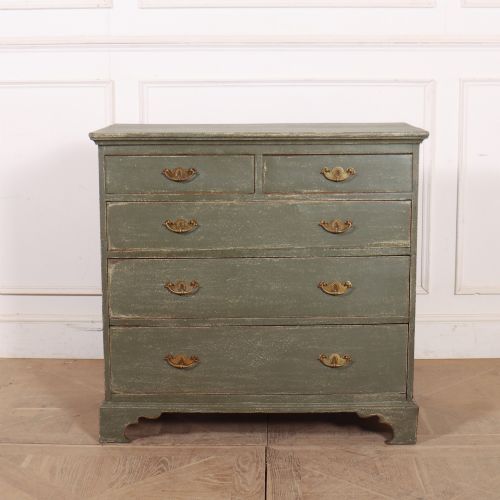
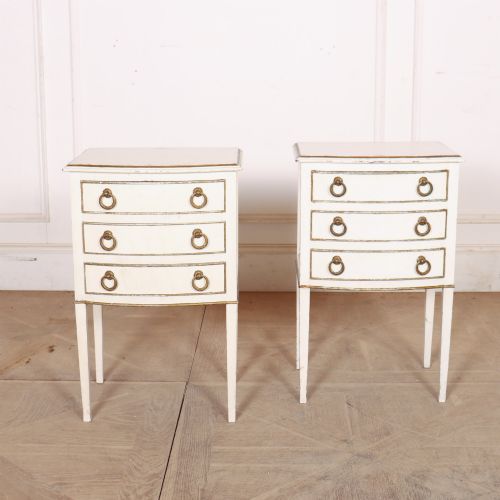
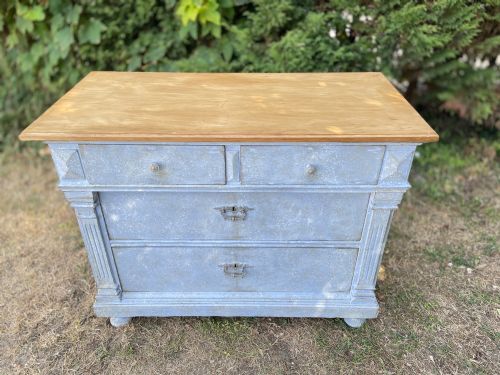
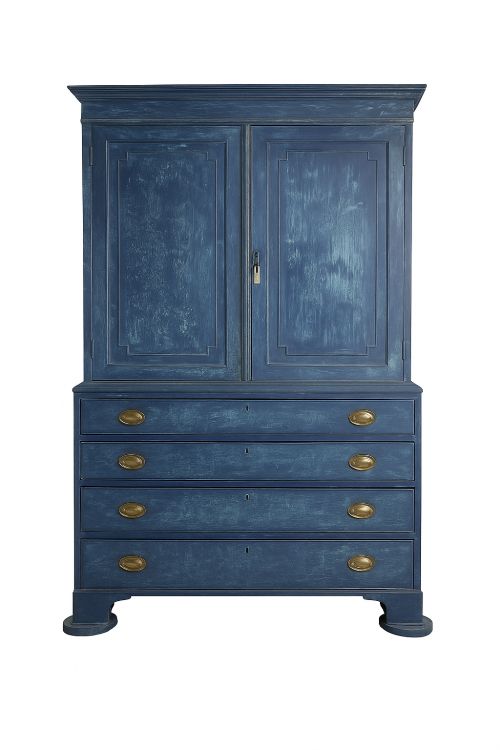
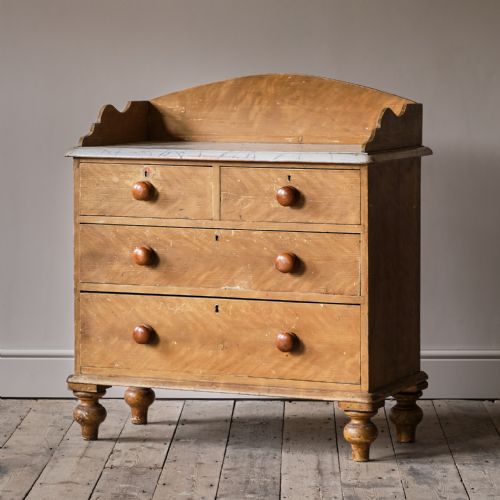
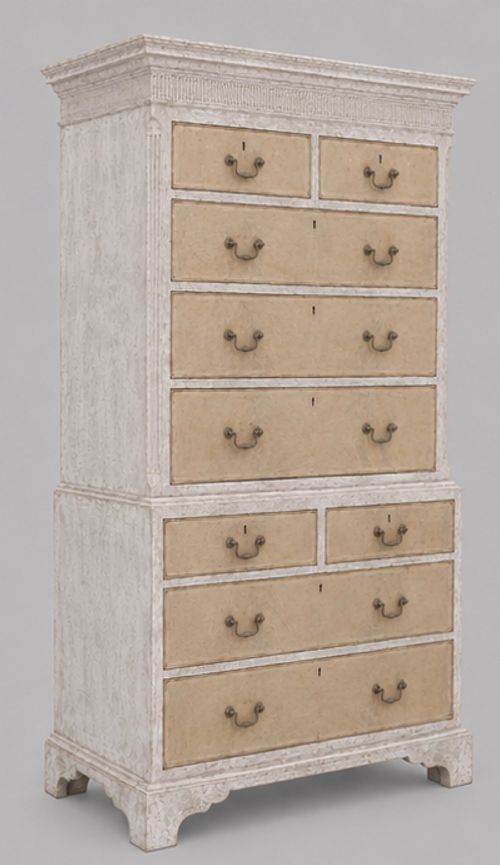
Buyers will encounter various formats including tallboys, linen presses, washstands, dressing tables and bedside chests. Many carry original paint surfaces, ranging from soft grey and blue tones to stencilled decoration and scumble finishes, while others show later decorative overpainting.
Materials and construction
Carpenters built these carcases primarily from timber such as pine and mahogany, often incorporating brass handles, iron hardware and occasionally marble tops. Wood construction methods varied from traditional multi-part carcases to pieces made in two separate sections for easier transport.
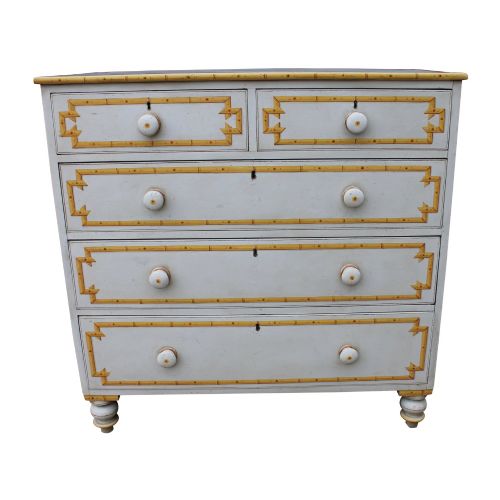
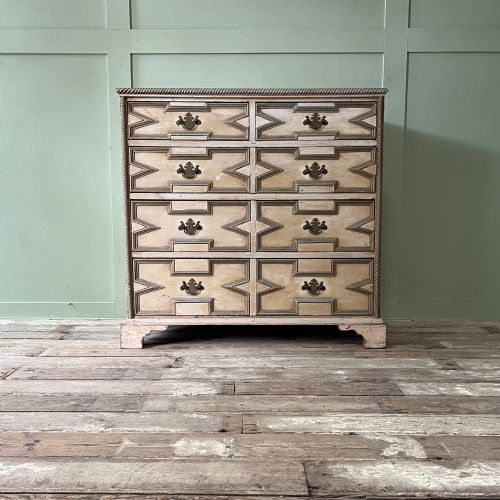
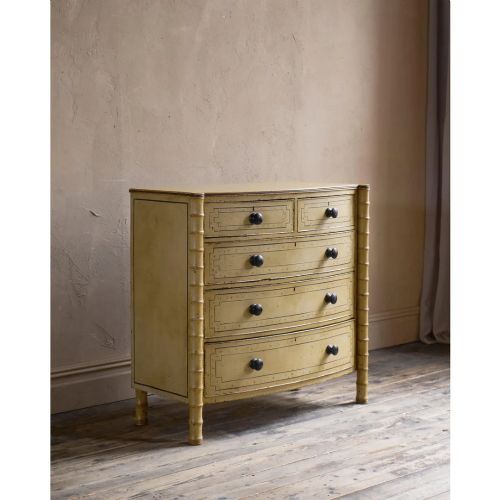
Surface decoration involved applying paint directly to timber, sometimes utilising specialist techniques like faux bamboo moulding, diamond-point carving or stencilling. Original finishes remain untouched on many surviving examples, recording decades of domestic use through layers of pigmented coatings.
Listings feature pieces built from pine, mahogany and satinwood, decorated with original paint, scumble finishes and faux bamboo turnings.
Quality and finish
The distinction between standard utility furniture and finer pieces rests in the integrity of the original painted surface and the precision of the cabinet work. Pieces retaining untouched historic paint schemes or specialist decorative motifs command greater attention from collectors than those with crude later overhauls.
Structural refinement also separates the output of provincial makers from established cabinet makers. Dovetailed drawer construction, well-proportioned cornices and balanced proportions indicate superior workshop standards regardless of whether the piece originates from an English country workshop or a continental salon.
Sir Clough Williams Ellis·Edwards and Roberts
The Painted Bedroom Chest Drawers Glossary
- Scumble paint
- A decorative glazing technique where a translucent darker paint layer is manipulated over a lighter base coat to imitate grain or texture. It appears frequently on Victorian pine furniture.
- Linen press
- A tall storage piece combining sliding trays for textiles in the upper section with drawer storage below. These pieces often feature panelled doors enclosing the internal shelving.
- Commode
- A low decorative chest of drawers, frequently associated with continental European cabinet making. French and Swedish examples often feature bombe shapes or marble tops.
- Faux bamboo
- A decorative turning style applied to wood to imitate natural bamboo stalks. Makers utilised this technique on 19th-century bedroom furniture to achieve an exotic aesthetic.
Painted Bedroom Chest Drawers: Frequently Asked Questions
How do I identify original paint?
Original paint surfaces show natural wear, micro-crazing and patination consistent with age rather than flat, uniform modern coverage. Traces of underlying timber grain often peek through worn areas.
Examining corners and drawer edges helps reveal whether decorative layers date to the period of manufacture or represent later embellishment.
Where were these chests made?
The pieces originate from domestic workshops and factories across Britain, France, Sweden, Spain and Hungary. Regional preferences shaped the choice of timber and decorative style.
English pieces often utilise local pine or mahogany, whilst Swedish and French examples frequently display lighter Gustavian palettes or bombe proportions.
How do I care for antique paint?
Historic painted surfaces require gentle maintenance using a dry or barely damp microfibre cloth to remove dust without introducing moisture. Avoid chemical cleaning products that might lift fragile pigment.
Keep wooden furniture away from direct heat sources and strong sunlight to prevent the timber from warping and the historic paint from flaking.