



Oval Tray Table
An oval tray table combines a removable serving surface with a folding or fixed stand, offering practical utility and refined display.
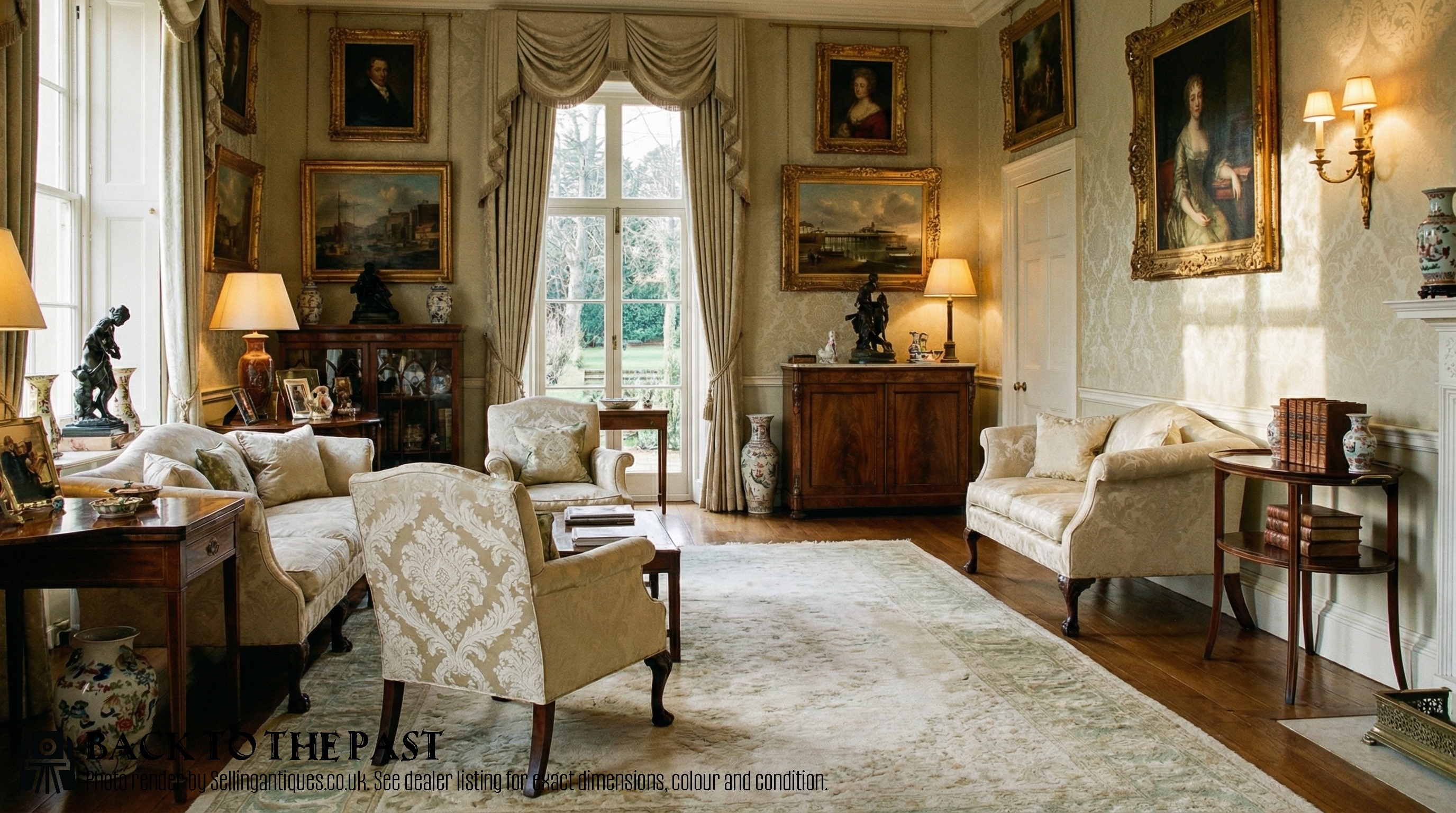
Oval Tray Table
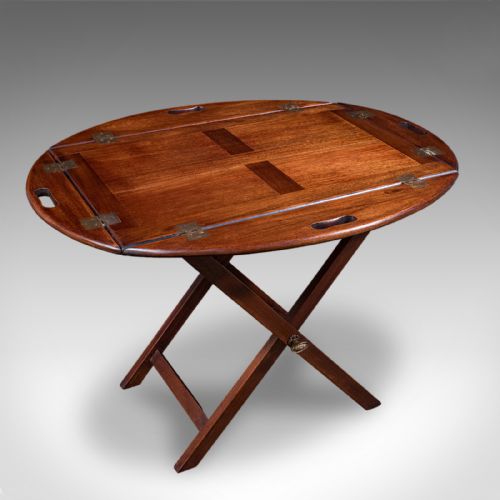
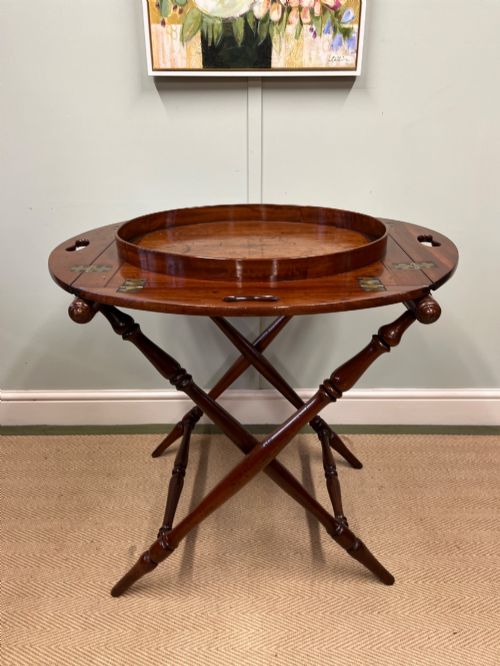
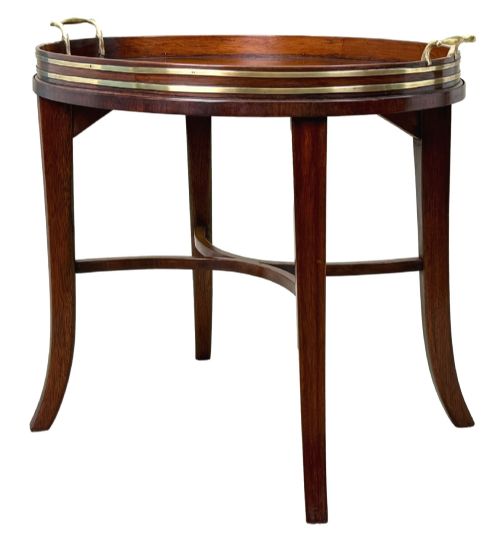
When you search for an oval tray table, you encounter versatile furniture pieces designed for serving and display across multiple historical periods. The form typically consists of a deep-rimmed tray resting on a separate folding or rigid stand.
The most common versions on this page are mahogany and satinwood pieces from the Georgian and Edwardian eras. These range from traditional butler's trays to lighter occasional tables and tiered étagères.
Makers adapted the form for various domestic uses, creating pieces that function equally well as coffee tables, side tables, or drinks stands. The combination of portability and sturdy framework defines the category.
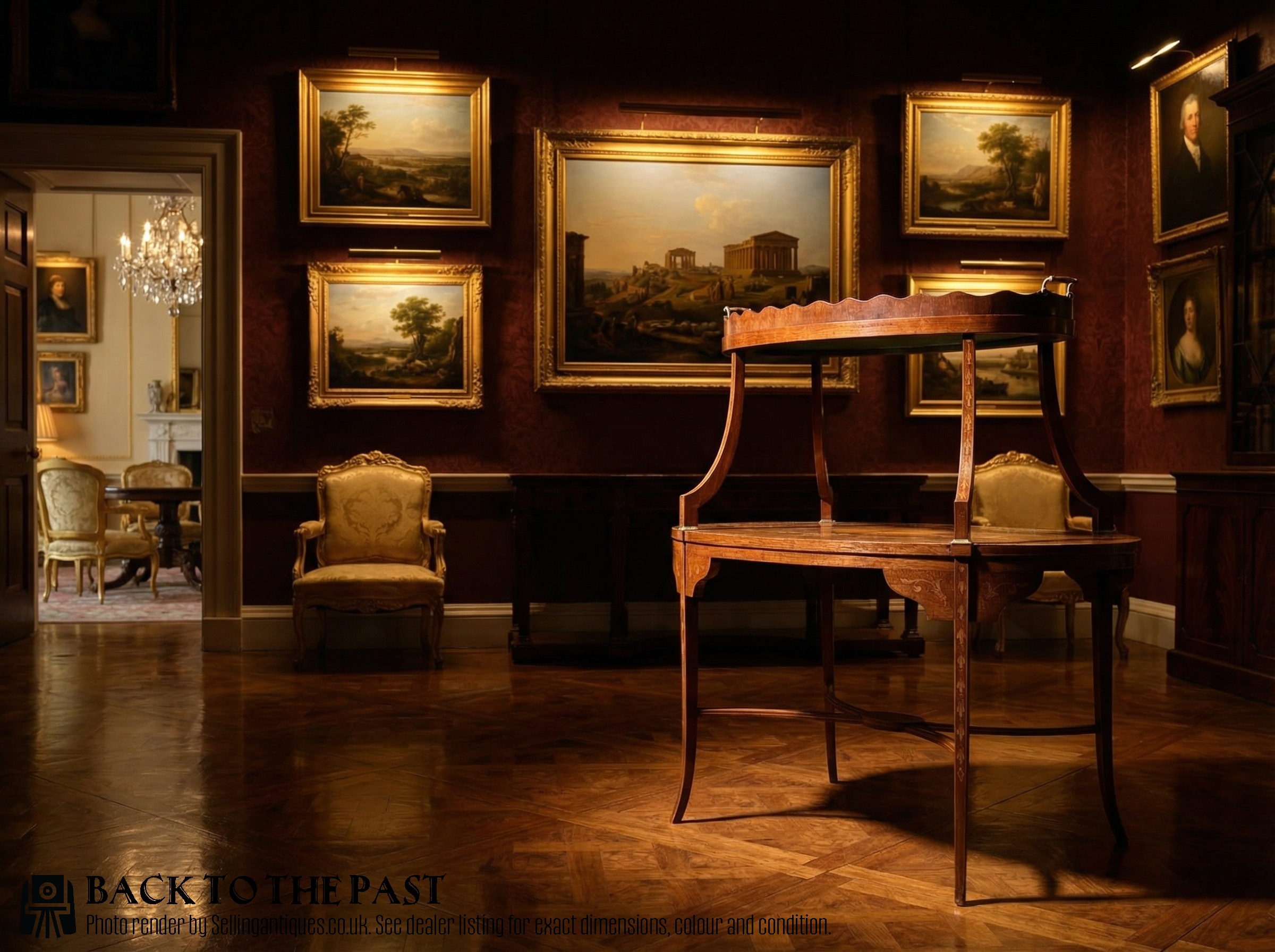
How they were made
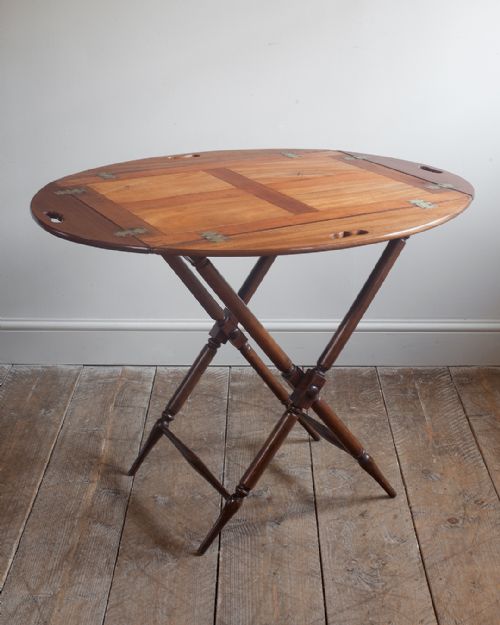
Craftsmen built the trays primarily using solid mahogany or framed panels with contrasting satinwood inlays, sometimes applying detailed brass bound decoration or gold leaf accents. The timber choice provided both structural strength for serving and rich grain patterns for visual appeal.
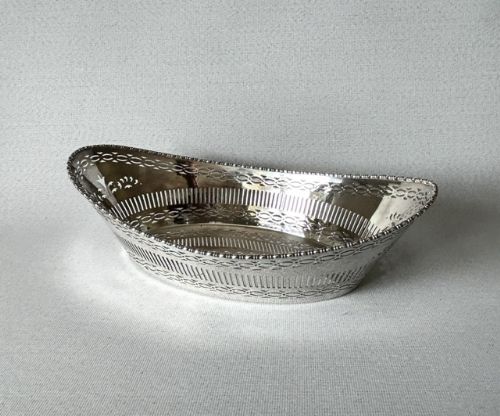
Stands were constructed to support the removable trays securely, utilising folding hinges for practical storage or tiered framework for additional display space. Papier-mâché and silver plate also appear in related serving pieces, showcasing diverse period manufacturing techniques.
Form variations include occasional tables, coffee tables, butler's trays, and multi-tiered étagères.
What varies in quality
Quality rests on the crispness of the cabinetwork and the selection of timber veneers. Superior examples display carefully matched grain patterns, precise inlay work, and robust joinery on both the tray rim and the supporting stand.
The integration between the removable tray and its base indicates the maker's skill. Finer pieces maintain a snug, secure fit on the stand while retaining smooth handles and unblemished surface finishes.
Henry Clay·Mappin & Webb
The Oval Tray Table Glossary
- Butler's tray
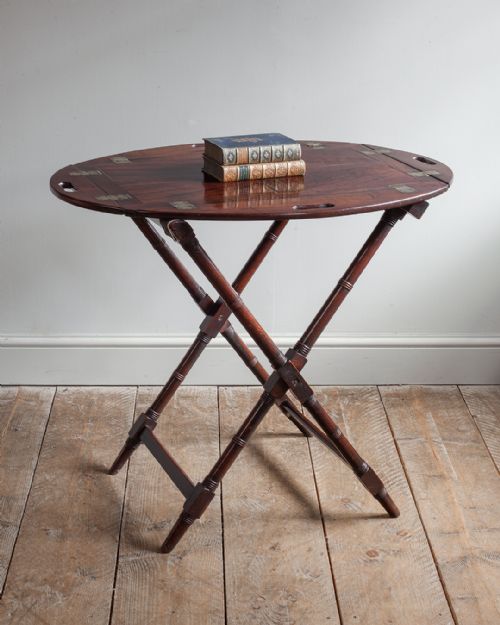
- A portable wooden tray with hinged or cutout sides designed for carrying food and drink. These trays traditionally lift off a folding wooden stand.
- Étagère
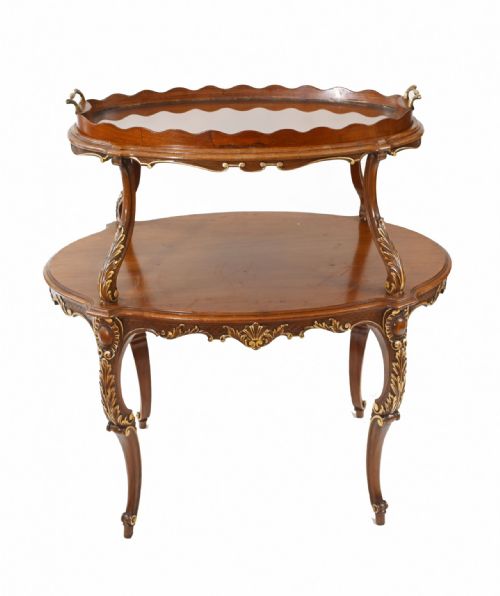
- A piece of furniture consisting of open shelves or tiers for displaying small objects or serving items. These tiered tables appear frequently in Edwardian examples.
- Satinwood
- A durable, lustrous timber native to India and Sri Lanka, known for its yellowish colour and fine grain. Cabinetmakers utilised it extensively for decorative banding and inlay.
- Papier-mâché
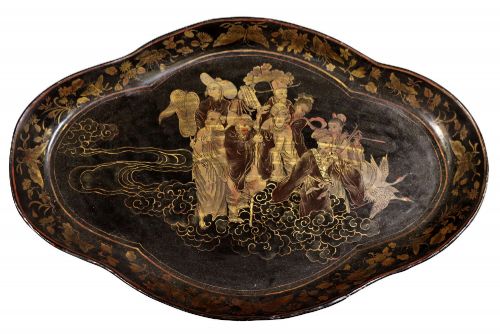
- A composite material made from paper pulp or layers of paper bound with glue, pressed and dried into shape. Manufacturers decorated these surfaces with lacquer and paint.
- Galleried tray
- A tray featuring a raised surrounding rim or perforated metal gallery to prevent items from sliding off. This protective border appears on various mahogany serving surfaces.
Oval Tray Table: Frequently Asked Questions
What is an oval tray table used for?
These pieces function primarily as versatile serving stands and occasional tables within living spaces. The removable top allows for carrying drinks or food before resting securely back on its stand.
Over time, many owners repurposed these tables as permanent coffee tables or side displays. Their dual nature makes them practical for modern entertaining as well as traditional room decoration.
How do I distinguish Georgian from Edwardian examples?
Georgian pieces generally display heavier solid mahogany construction, simpler lines, and functional brass carrying handles. They reflect the practical origins of the butler's tray.
Edwardian items often introduce delicate satinwood stringing, marquetry inlay, and lighter frames influenced by Sheraton revival styles. These later pieces prioritise decorative elegance alongside utility.
Are the trays always removable?
Traditional butler's tray tables feature a completely separate tray that lifts off a folding X-frame stand. This design allowed servants to clear rooms quickly.
Other variants incorporate fixed tiers or attached tops that do not separate from the base. Examining the underside reveals whether the tray sits loose on a frame or fastens permanently.
How do I care for a mahogany and satinwood surface?
Protect the polished timber by using coasters and avoiding placement near direct heat sources or strong sunlight. Regular dusting with a soft, dry cloth preserves the natural lustre of the wood.
Refrain from using harsh chemical polishes or excessive moisture, which can damage antique French polish or lifting veneer. Gentle wax maintenance keeps the timber nourished over time.