



Oval Silver Platter
An oval silver platter brings formal dining and drinks service to life, spanning centuries of craftsmanship in sterling and plate.
Oval Silver Platter
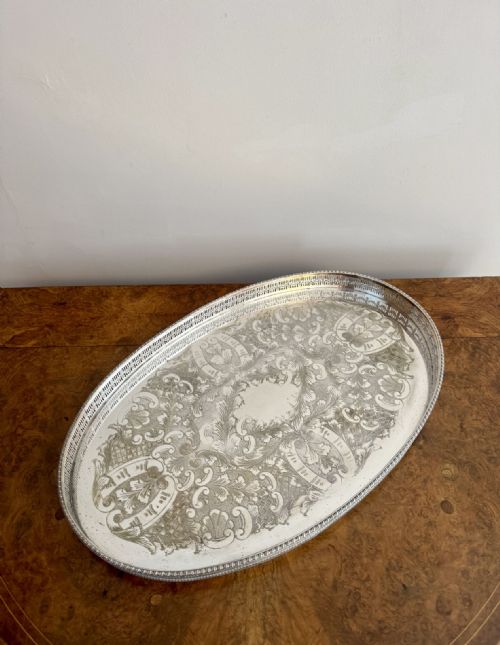
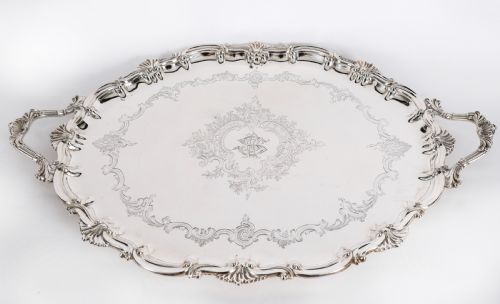
An oval silver platter serves as a centrepiece for hospitality, appearing across periods from the eighteenth century to the mid-twentieth century. Buyers searching for an oval silver platter encounter diverse forms including tea trays, cocktail trays, entree dishes, and meat platters. Edwardian and Victorian silver-plated examples dominate the selection, alongside solid sterling pieces from Georgian and later decades.
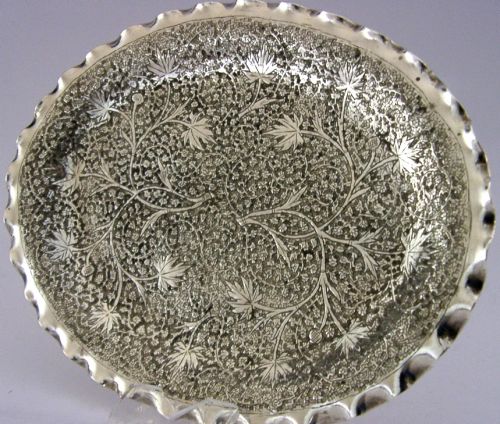
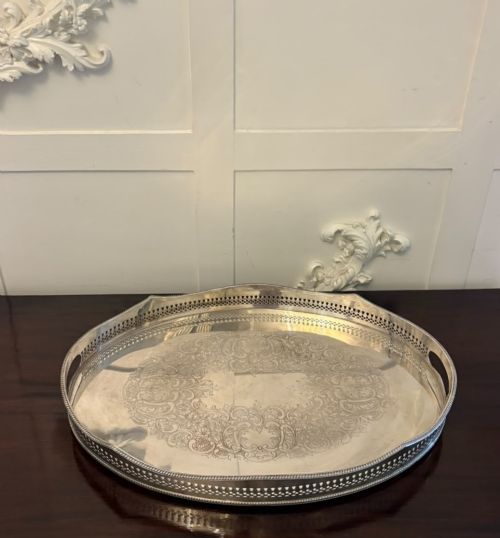
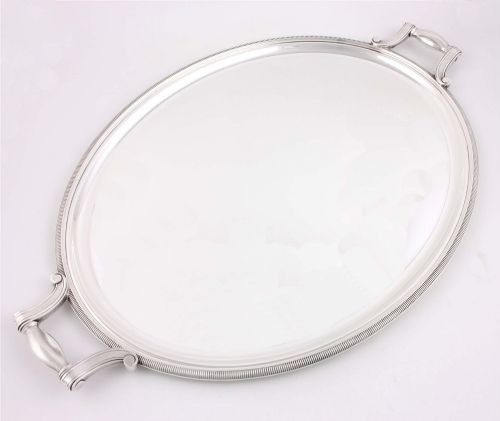
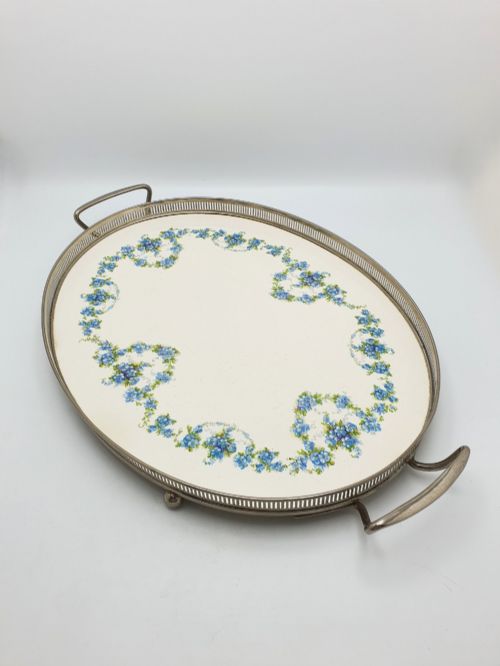
Makers ranged from notable English silversmiths to continental firms, often incorporating handles, galleries, or engraved floral centres. These pieces function historically for serving drinks, meats, or tea, maintaining utility alongside decorative appeal. The selection encompasses plain metallic surfaces as well as ornate embossed scrolls and blue floral ceramic centres.
Materials and technique
Manufacturing methods rely heavily on silver plating over base metal or copper, alongside solid sterling silver formations. Techniques such as electroplating, Sheffield plating, and silver-plated on copper provide durable metallic surfaces for daily use. Engraving, embossing, and applied galleries demand skilled manual labour by silversmiths and metalworkers.
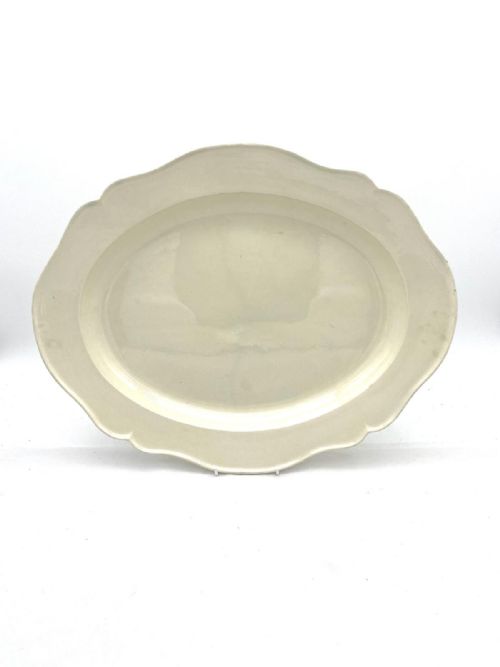
Additional materials like oak and ceramic integrate into specific platter designs, pairing wood or creamware with reflective metal borders. Makers utilised hallmarks and maker stamps to designate metal purity and workshop origins.
Oval Silver Platter Retail Price Guide 2026
Typical asking prices for oval silver platter among the pieces listed under this phrase on Sellingantiques today, from the lower quarter to the upper quarter. They describe what is for sale here now, not the wider market.
Listings feature items spanning the 18th Century through the 1940s, utilising sterling silver, silver plate, oak, and ceramic materials.
Distinctions in craftsmanship
Quality rests upon the weight of the metal, the crispness of chased or engraved floral motifs, and the structural integrity of applied handles and galleries. Substantial weight and solid construction separate exceptional domestic items from lighter commercial wares.
The preservation of the original silver plating or sterling surface determines visual appeal, alongside the clarity of maker marks and stamps. Pieces featuring specialised details like mazarine draining inserts or intricate scrollwork display superior artisan execution.
Mappin & Webb·Christofle·Thomas Bradbury & Sons·Henry Wilkinson·Walker & Hall·Robert Breading·Harrison Bros·Elkington & Co·Tiffany & Co·Asprey·Roberts & Belk
The Oval Silver Platter Glossary
- Silver Plate
- A thin layer of silver bonded to a base metal core such as copper or nickel silver. This technique offered the aesthetic of solid silver at a reduced cost.
- EPNS
- Electroplated Nickel Silver. A common base alloy coated in silver via an electrical bath process during the nineteenth and twentieth centuries.
- Old Sheffield Plate
- An early fusing method where a sheet of silver is fused to a copper ingot and rolled together. It creates a rich surface quality seen on older serving pieces.
- Mazarine
- A pierced draining insert placed inside a platter to keep meat elevated from juices. They are frequently found in nineteenth-century dining services.
- Gallery
- A pierced or pierced-and-engraved low metal railing fitted around the rim of a tray. It prevents decanters and glasses from sliding off during transit.
Oval Silver Platter: Frequently Asked Questions
How do I clean an oval silver platter?
Use a specialised silver polishing cloth or mild cream to remove tarnish gently. Avoid abrasive pads that scratch plated or solid surfaces.
Store the platter in a dry environment wrapped in tarnish-resistant cloth when not in daily use.
Can I use these platters for food service?
Most silver-plated and sterling pieces function safely for serving food and drinks. Ensure the piece is clean before presenting items directly on the metal.
Avoid leaving acidic foods on the surface for extended periods to protect the finish.
How do I distinguish sterling from silver plate?
Look closely for official hallmarks indicating silver purity, such as a lion passant for British sterling. Silver-plated items typically feature maker marks denoting EPNS or plate.
Weight and wear patterns also reveal underlying base metals where plating has thinned.
What is a gallery tray used for?
Gallery trays feature raised pierced borders designed to secure decanters, bottles, and glassware. They served as portable cocktail or drinks stations in Edwardian and Victorian homes.
The protective railing kept glassware stable while servants carried beverages between rooms.