


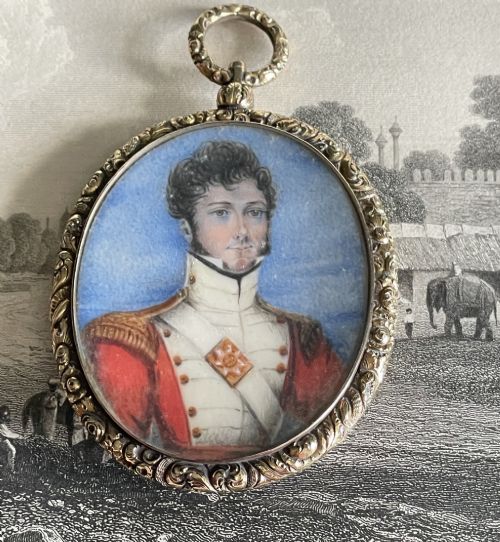
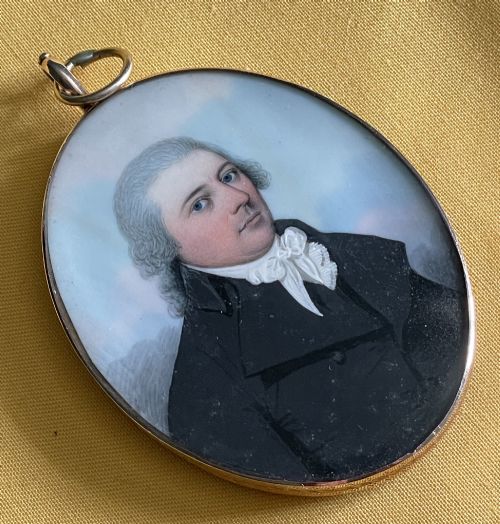
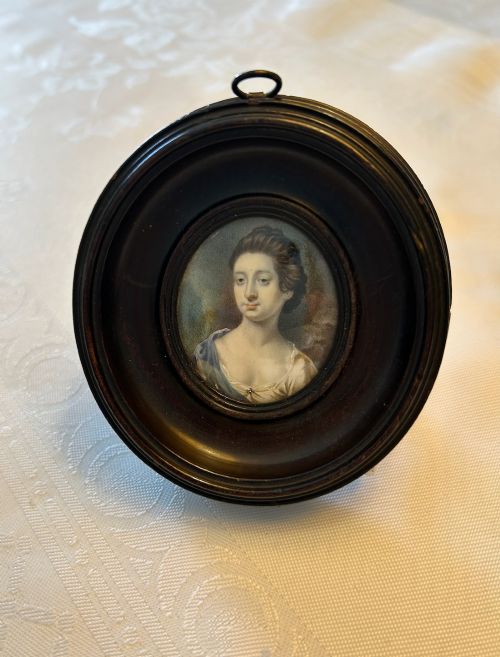


Oval Miniature Portrait Pendant
An oval miniature portrait pendant offers a personal likeness captured in delicate detail, framed to be worn close to the heart.
Oval Miniature Portrait Pendant
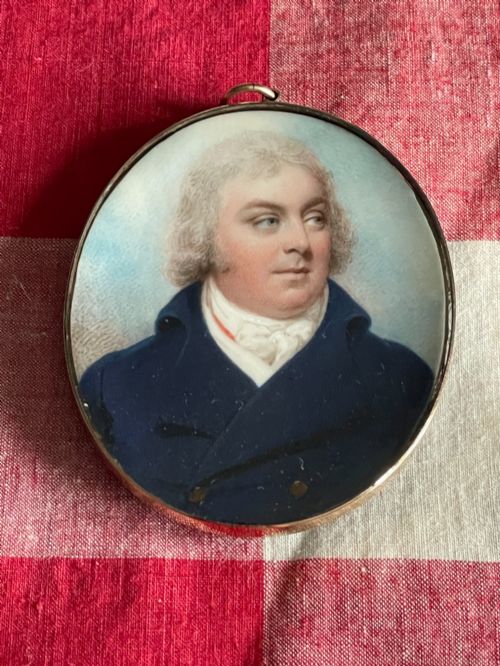
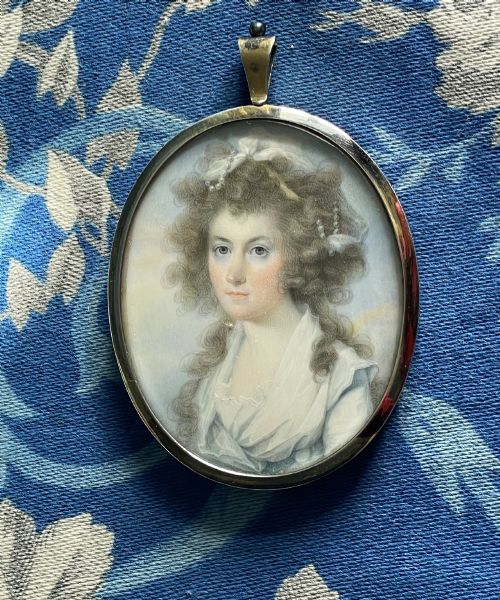
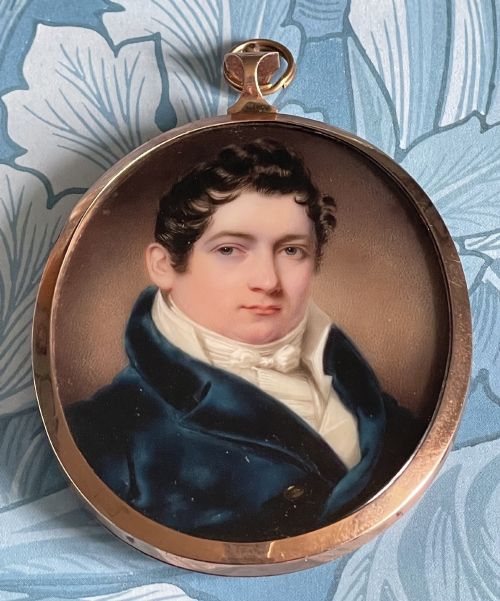
An oval miniature portrait pendant is a wearable piece of fine art depicting a specific sitter, most commonly encountered from the Georgian and Victorian eras. These objects combine portraiture with jewellery, functioning as both personal mementos and portable paintings.
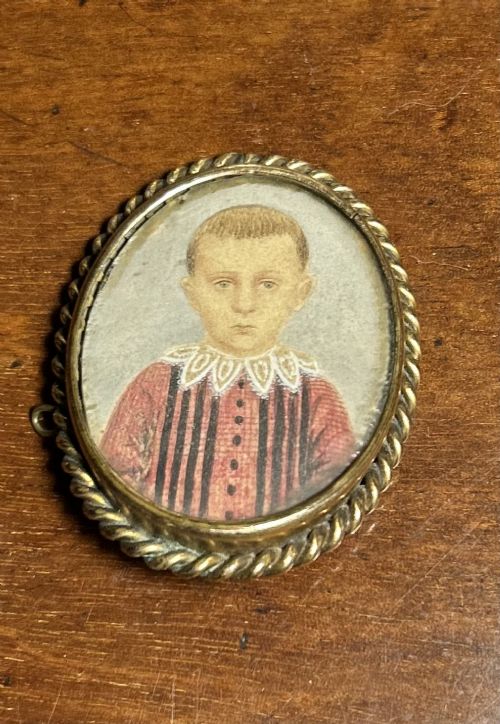
The pieces on this page span the eighteenth and nineteenth centuries, featuring subjects rendered in watercolour, enamel, and pigment. The formats range from dedicated pendants to convertible brooches designed to hang from a chain or pin to a garment.
Makers and schools represented include named British artists alongside works attributed to the broader British School. Sitters include naval officers, gentlemen, ladies in lace, and children, each captured within the characteristic vertical oval frame.
Materials and construction
Artists painted likenesses using watercolour, pigment, and enamel upon delicate supports such as ivory, glass, vellum, agate panels, and ceramic china. The application required precise brushwork on a very small scale to achieve facial definition and fabric textures.
Frames are constructed from precious metals including gold, gilt metal, and silver, occasionally paired with ebonised wood surrounds. These housings protected the fragile painted surface while providing loops or bezels for suspension.
Oval Miniature Portrait Pendant Retail Price Guide 2026
Typical asking prices for oval miniature portrait pendant among the pieces listed under this phrase on Sellingantiques today, from the lower quarter to the upper quarter. They describe what is for sale here now, not the wider market.
A naval officer stares out from an agate panel, perhaps keeping watch over a stormy eighteenth-century sea.
Assessing quality
Quality rests upon the skill of the brushwork and the psychological depth achieved in the sitter's expression. Master works capture lifelike proportions and character within miniature dimensions, whereas simpler pieces rely on standard formulae.
The sophistication of the framing contributes to the overall distinction of the object. Substantial gold settings and original bezels indicate higher production standards than lighter gilt metal or later replacement frames.
Henry Bone ARA·John C D Engleheart·Frederick Buck·Charles Hayter·William Naish·John Miers·George Engleheart·James Ferguson·William Grimaldi·John Inigo Wright·AE Chalon·John Barry
The Oval Miniature Portrait Pendant Glossary
- Miniature portrait
- A small-scale painting depicting a person, executed with fine detail. These works were typically commissioned to commemorate family members or public figures.
- Enamel
- A glassy substance fused to a metal backing through high-temperature firing. Enamel miniatures offer lasting brilliance and resistance to fading over centuries.
- Vellum
- A fine parchment prepared from calfskin, used as a smooth painting surface for detailed watercolours. It provides a luminous ground that enhances the pigments.
- Silhouette
- A dark profile portrait cut from paper or painted onto glass or card. These monochrome likenesses gained popularity for their directness and economy.
Oval Miniature Portrait Pendant: Frequently Asked Questions
How were oval miniature portrait pendants worn?
These pieces were worn suspended from ribbons or chains around the neck, or pinned directly to clothing as convertible brooches. They served as intimate reminders of absent family members, spouses, or children.
The dual function of hanging as a pendant or fastening as a brooch allowed owners to display their portraits in versatile ways during social occasions.
What materials are used in these portraits?
Paintings are executed in watercolour, enamel, and pigment upon supports such as ivory, glass, vellum, and agate panels. The surrounding frames are fashioned from gold, gilt metal, silver, and ebonised wood.
Precious metals and durable enamels helped preserve the fragile painted surfaces from physical damage and environmental moisture over hundreds of years.
How can I date a portrait miniature?
Dating relies on the costume, hairstyle, and framing style of the sitter, alongside signature research when an artist is known. Georgian pieces often feature powdered hair and specific lace collars, while Victorian examples show distinct mid-century aesthetics.
Matching the painting technique and the construction of the metal frame provides further clues to the decade of creation.
Are these miniatures signed by the artists?
Some pieces bear signatures, monograms, or inscriptions on the reverse or along the edge of the painted surface. Many works, however, remain unattributed or are assigned to specific schools based on stylistic comparison.
Signed examples by recognised miniaturists offer clearer provenance and insight into the working methods of period portrait painters.