
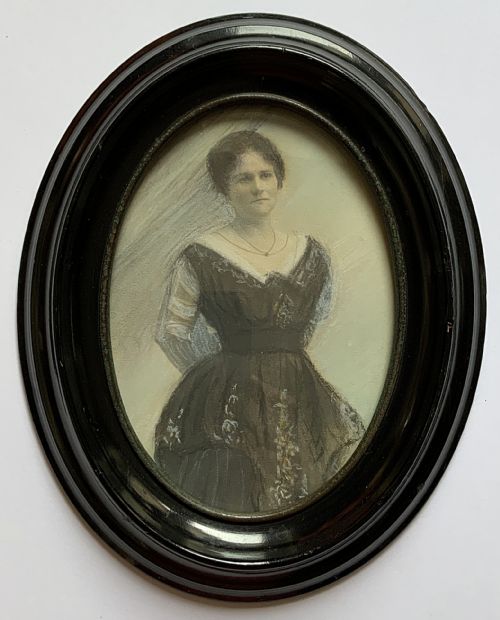


Oval Miniature Portrait Drawings
These oval miniature portrait drawings capture the intimate likenesses of past centuries in delicate graphite, watercolour, and pastel.
Oval Miniature Portrait Drawings
When you search for oval miniature portrait drawings, you encounter intimate likenesses executed on paper during the Georgian, Regency, and Victorian periods. These small-scale works capture individual sitters with striking precision, often housed behind protective glass in traditional frames.
The pieces on this page span the eighteenth and nineteenth centuries, ranging from delicate pencil and plumbago works to vibrant watercolour and pastel compositions. You will find single portraits alongside framed sets and pairs depicting family members and notable figures.
Object forms include miniature paintings, framed artwork, and cut-out profiles created within distinct stylistic movements such as Georgian Revival and eighteenth-century Rococo. Each piece offers a tangible connection to historical portraiture traditions.
How they were made
Artists utilised graphite, plumbago, pastel, and watercolour applied to paper sheets, capturing fine facial details within compact oval formats. Plumbago drawings relied on hard lead to achieve precise, monochromatic line work that resembled fine engravings.
Watercolour and pastel applications introduced colour and softness, while specialised techniques incorporated cut-out paper profiles layered against contrasting grounds. Finished works were sealed beneath glass and mounted within wooden or brass frames to preserve the fragile media.
Several portraits preserve the exact likenesses of family friends who sat patiently while artists captured their expressions in miniature.
What varies in quality
Quality rests upon the delicacy of the draughtsmanship and the artist's ability to render expression and proportion within a restricted scale. Finer examples display meticulous control of line in graphite or plumbago, whereas simpler works rely on heavier, less nuanced strokes.
The preservation of the paper support and the vibrancy of the original watercolour or pastel pigments influence the visual impact of each piece. Original framing, including period brass mounts and wood housings, enhances the historical integrity of the artwork.
John Taylor·J Bizo·James Ferguson·George Atkinson·Ozias Humphry·Nathaniel Bermingham·Richard Cosway
The Oval Miniature Portrait Drawings Glossary
- Plumbago
- A drawing executed in graphite, taking its name from the Latin word for lead ore. These monochromatic works were highly fashionable during the eighteenth century.
- Miniature painting
- A small-scale artwork executed with fine brushes on paper or vellum. These pieces demand exceptional control due to their diminutive dimensions.
- Pastel
- A dry medium composed of powdered pigment and a binder, used to achieve soft colour and blended tones. It requires protection behind glass to prevent smudging.
- Rococo
- An ornate artistic style characterised by asymmetry and delicate curves. In portrait frames and compositions, it reflects the aesthetics of the eighteenth century.
Oval Miniature Portrait Drawings: Frequently Asked Questions
How should I display them?
Keep these delicate paper works away from direct sunlight to prevent the watercolour and pastel pigments from fading over time.
Mount them on interior walls with stable humidity levels to protect both the paper and the original wooden or brass frames.
What is plumbago?
Plumbago refers to early graphite drawing, prized for its fine grey tones and precise illustrative quality.
Artists utilised this medium extensively during the eighteenth century to create highly detailed miniature portraits of family groups and individuals.
How do I date a piece?
Examine the costume, hairstyle, and framing style, which typically reflect the prevailing fashions of the Georgian, Regency, or Victorian eras.
Written inscriptions on the reverse often record the sitter's identity and the year the portrait was drawn.
Are frames original?
Many pieces retain their period wooden or brass frames, which provide vital clues to the date and origin of the artwork.
Check for signs of age such as minor tarnishing on brass elements and traditional joinery on the wood.