


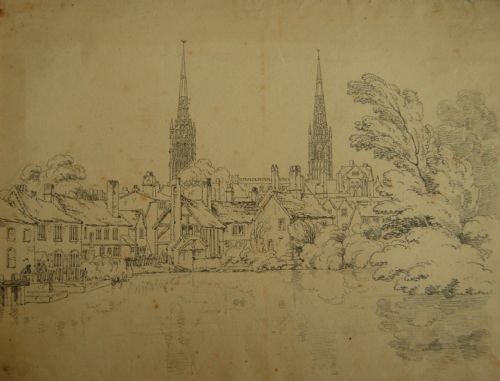
18th Century Graphite Art
These pieces of 18th century graphite art bring intense, monochrome character to a room through delicate graphite and plumbago technique on paper.
18th Century Graphite Art
When you search for 18th century graphite art, you encounter delicate works on paper and vellum that capture likenesses and scenes with remarkable precision. The selection spans single portrait drawings, framed sets of miniature portraits, and collected sketches from the Georgian era.
The version you are most likely to meet on this page is the plumbago portrait, executed with finely sharpened graphite to achieve crisp lines and subtle tonal shading. These works often arrive in period frames of wood and brass, frequently retaining their original glass protection.
Beyond formal portraiture, the category includes narrative sketches and topographical views that reveal the everyday observation skills of artists working around the seventeen-hundreds. Each piece acts as a direct window into Georgian portraiture and Neoclassical draftsmanship.
How they were made
Artists relied primarily on graphite and plumbago pencils applied directly to prepared paper or vellum surfaces. This medium allowed for immense detail, enabling draughtsmen to render lace collars, hair strands, and facial expressions with microscopic care.
Finishing touches occasionally incorporated gold leaf highlights to accentuate specific elements of a portrait or frame. The completed drawings were commonly secured behind glass within wooden frames, sometimes featuring brass mounts that protected the delicate work from atmospheric damage.
The listings span the eighteenth century and the year 1800, utilising materials such as graphite, paper, wood, glass, gold leaf, brass, and vellum.
What varies in quality
The distinction between ordinary and exceptional works lies in the draughtsmanship and the sureness of the pencil line. Master artists achieved depth and luminosity through shading alone, whereas lesser examples appear flat and heavy-handed.
Condition and presentation also dictate the standing of a piece, particularly the survival of the original paper surface without excessive foxing or fading. The integration of period framing elements, such as original wood surrounds and glass, preserves the integrity of the object.
John Taylor·James Ferguson·Ozias Humphry·Sir Nathaniel Dance Holland·Henry Edridge
The 18th Century Graphite Art Glossary
- Plumbago
- An early term for graphite, derived from the Latin for lead ore. Artists used plumbago sticks to create highly detailed, monochromatic portrait drawings on paper or vellum.
- Vellum
- A fine parchment made from calfskin, prized for its smooth surface. It provided an exceptionally stable base for crisp graphite and ink work during the Georgian period.
- Neoclassical
- A style dominating late eighteenth-century art and architecture, drawing inspiration from classical antiquity. It prioritised clean lines, symmetry, and restrained elegance in portraiture.
- Miniature
- A small-scale painting or drawing executed with meticulous detail. In this period, graphite miniatures required a magnifying glass and immense steady control from the artist.
- Georgian
- The period spanning the reigns of the four King Georges, encompassing much of the eighteenth century. Art from this era reflects evolving tastes in portraiture and domestic decoration.
18th Century Graphite Art: Frequently Asked Questions
What is plumbago art?
Plumbago art refers to detailed drawings made using early graphite pencils, which were named after the mineral plumbago. These works are predominantly monochromatic portraits created on paper or vellum during the eighteenth century.
The medium allowed artists to achieve remarkable tonal gradation and fine lines, resulting in lifelike likenesses that predated widespread photography.
How should I display graphite art?
Graphite drawings on paper require careful placement away from direct sunlight to prevent fading of the delicate carbon lines and yellowing of the paper. Keeping them behind glass in stable indoor humidity protects the surface from airborne moisture and dust.
Most pieces from this era arrive within period frames that complement their aesthetic, making them straightforward to hang in studies, drawing rooms, or hallways.
How do I identify a Georgian portrait?
Georgian portraits typically feature sitters in period attire, such as powdered wigs, cravats, or high-collared coats, rendered in a realistic or Neoclassical style. The costume and hairstyle provide the clearest initial indicator of the era in which the work was produced.
Additionally, the paper stock, framing materials, and handwriting on any accompanying labels or inscriptions help confirm the eighteenth-century origin.
Are these works original or copies?
The pieces listed here are original hand-drawn artworks executed by period artists rather than modern reproductions or prints. Each drawing displays the physical impressions of the pencil and the subtle variations inherent in direct handwork.
Examining the surface under magnification reveals the individual graphite strokes and the texture of the original paper or vellum.