


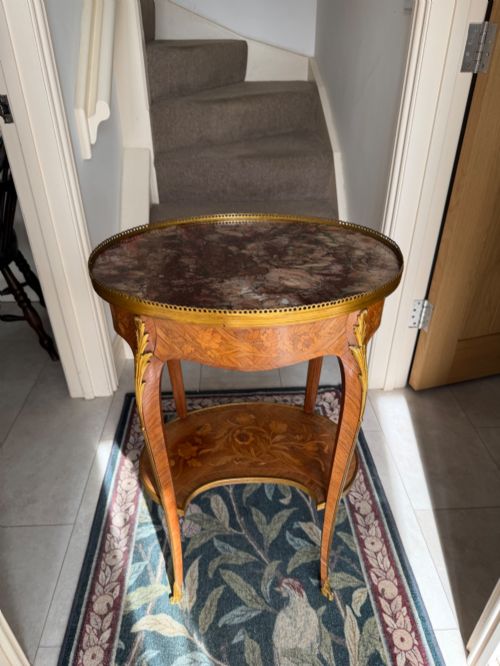


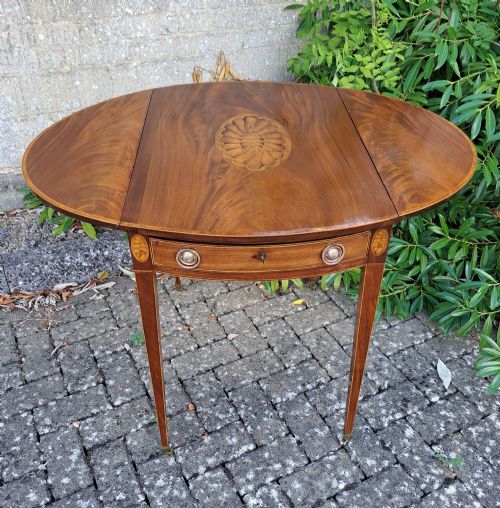
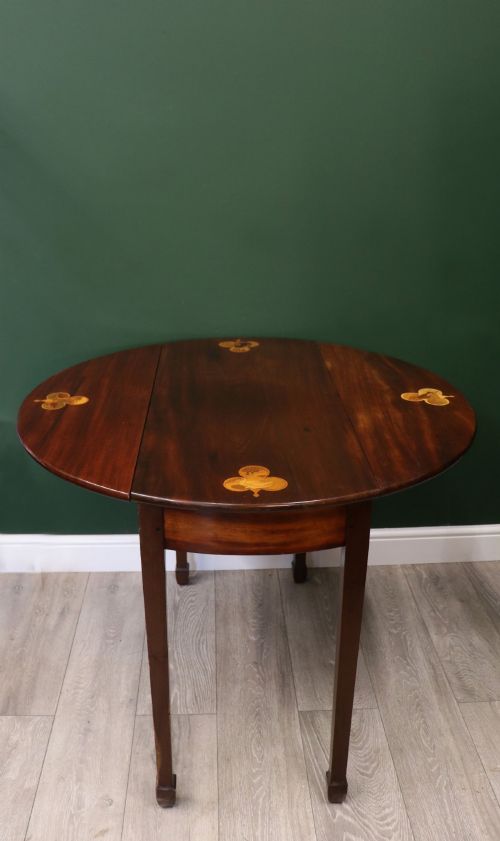

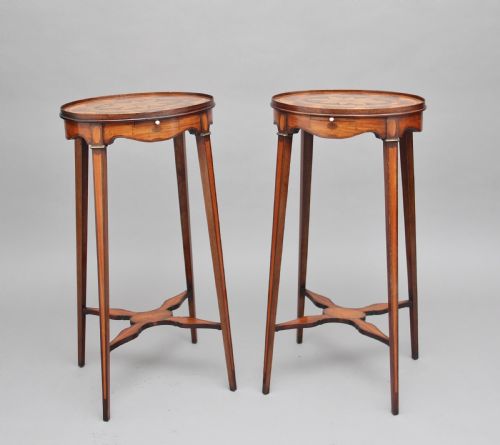


Oval Marquetry Accent Table
An oval marquetry accent table brings refined floral imagery and figured timber into a room without dominating the floor space.
Oval Marquetry Accent Table
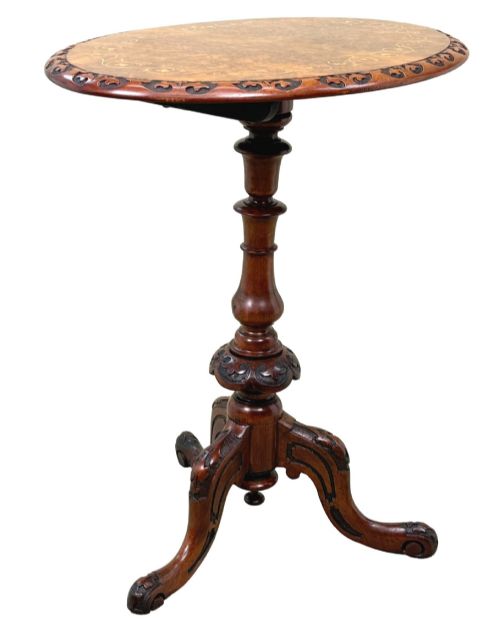
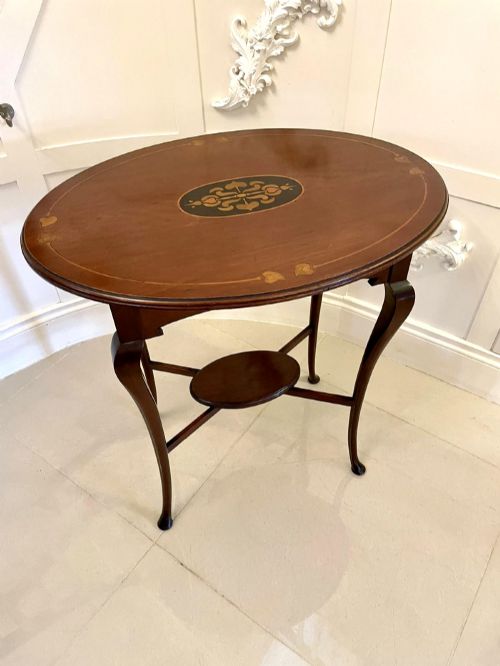
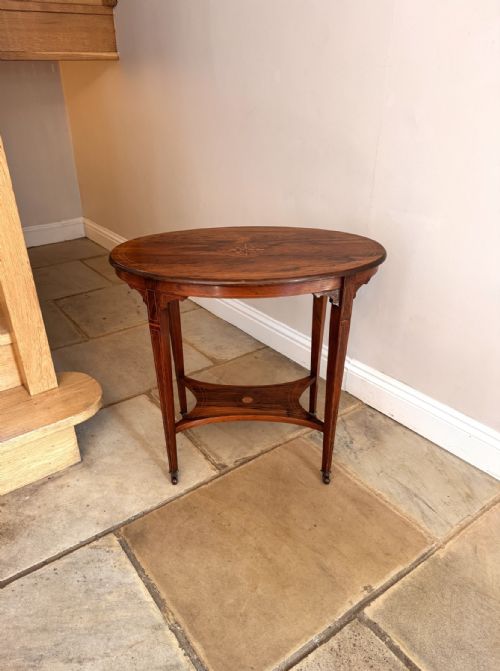
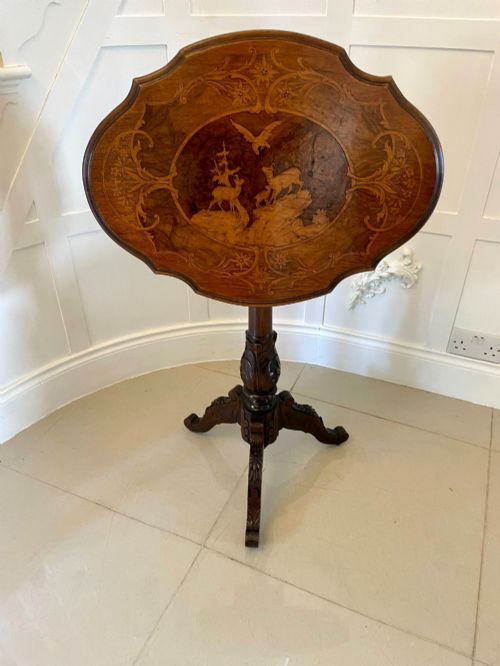
When you search for an oval marquetry accent table, you encounter portable occasional furniture designed for nineteenth and early twentieth century sitting rooms. The selection includes Pembroke tables with drop leaves, tiered stands, centre tables, and lamp tables, all sharing a curved top.
Victorian and Edwardian workshops dominate the choices, alongside French Louis style pieces and Sheraton revival examples. Walnut, burr walnut, and mahogany form the primary carcasses, augmented by satinwood and exotic timbers.
The oval shape softens the geometry of a room, fitting neatly beside chairs or in windows where a rectangular table feels too heavy.
Materials and construction
Cabinet makers built the structural frames using solid mahogany, walnut, or satinwood, applying thin veneers of burr walnut, kingwood, or rosewood to the top surfaces. This allowed them to utilise highly figured grains that would crack or warp if used as solid timber.
Marquetry decoration relies on hand-cut pieces of boxwood, fruitwoods, and lighter contrasting veneers assembled into floral or geometric motifs and pressed into the wood surface. Brass mounts, gilt bronze details, and delicate stringing lines complete the ornamentation on French and revival pieces.
Oval Marquetry Accent Table Retail Price Guide 2026
Typical asking prices for oval marquetry accent table among the pieces listed under this phrase on Sellingantiques today, from the lower quarter to the upper quarter. They describe what is for sale here now, not the wider market.
Materials recur across multiple decades, pairing mahogany and walnut with boxwood inlay, kingwood, and satinwood.
Judging the standard of execution
The distinction between ordinary and superior pieces rests on the crispness of the marquetry cutting and the choice of underlying timber. Tables featuring richly figured burr walnut or dense satinwood display greater ambition from the maker.
Attention to structural details, such as stable stretcher rails, well-fitted drop leaves on Pembroke models, and clean brass mounts, separates workshop production from standard commercial output.
Haentgos Freres Paris·Edwards and Roberts of London
The Oval Marquetry Accent Table Glossary
- Marquetry
- A decorative technique where small pieces of contrasting veneer are fitted together to form pictorial designs or floral patterns on a wooden ground.
- Pembroke table
- A small drop-leaf table with hinged flaps on opposing sides, developed in the eighteenth century and revived in later decades.
- Burr walnut
- A prized timber cut from the knotty growths of walnut trees, producing a swirling, highly decorative grain pattern used on table tops.
- Satinwood
- A luminous, hard yellowish timber native to India and Ceylon, frequently employed in Sheraton revival pieces for contrasting borders and panels.
- Stringing
- Thin inlaid lines of contrasting wood, such as boxwood, used to edge table tops and drawer fronts.
Oval Marquetry Accent Table: Frequently Asked Questions
How do I use an accent table?
These small tables suit spaces beside armchairs or sofas to hold lamps, books, or decorative objects. Their compact footprints allow them to move easily around a room as needed.
Tiered versions and étagères offer vertical display space for small collections without claiming extra floor area.
What is the difference between a centre table and a lamp table?
Centre tables typically stand on a central pillar with tripod feet or a robust stretcher base, designed to sit freestanding in the middle of a room. Lamp tables tend to have four slender legs and scale down for perching beside seating.
Both formats employ oval tops in the listings here, though centre tables generally present a larger surface area.
How do I distinguish Edwardian pieces from Victorian ones?
Victorian examples often utilise heavy burr walnut and deep mahogany with bold floral marquetry and robust turnings. Edwardian and Sheraton revival pieces lean towards lighter satinwood, delicate stringing, and neoclassical restraint.
The listings show Victorian production spanning from 1860 onwards, while Edwardian examples cluster around the turn of the twentieth century.
Are drop-leaf Pembroke tables stable?
Pembroke tables feature hinged flaps supported by swing brackets underneath the top. When the brackets are properly adjusted, the leaves lock firmly into place for daily use.
They offer flexibility, folding down to a narrow profile when space requires a smaller footprint.