

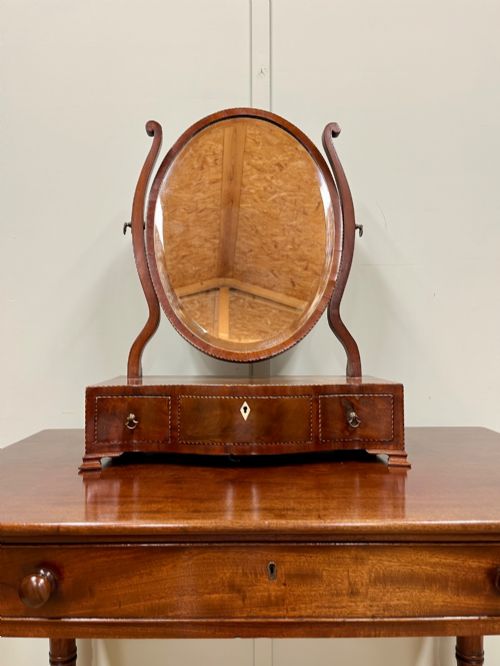
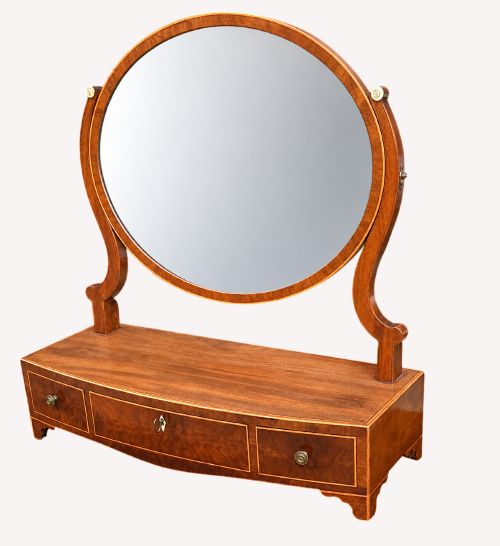
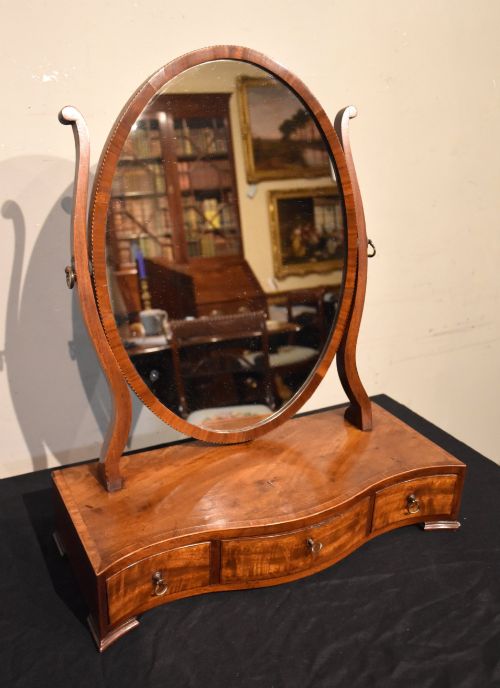
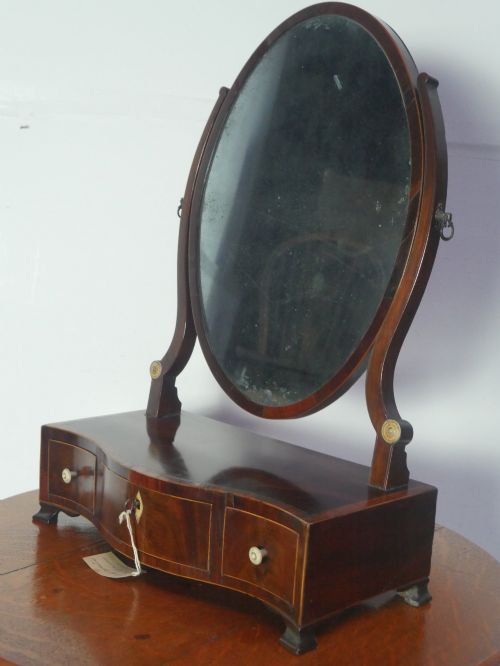
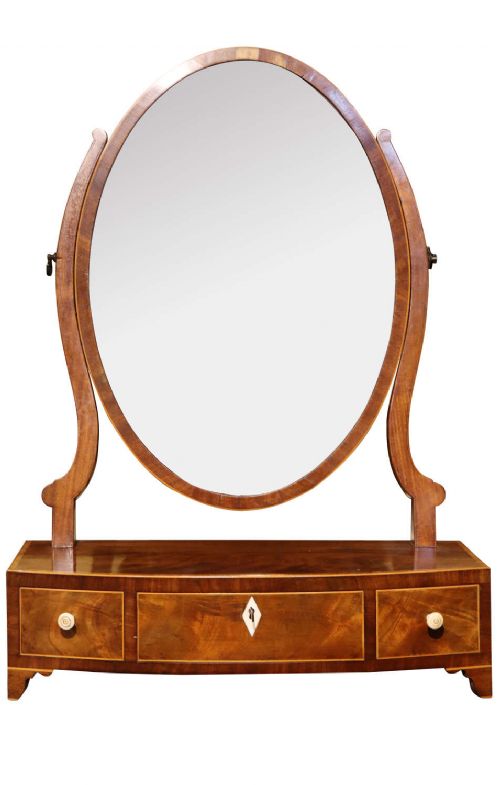


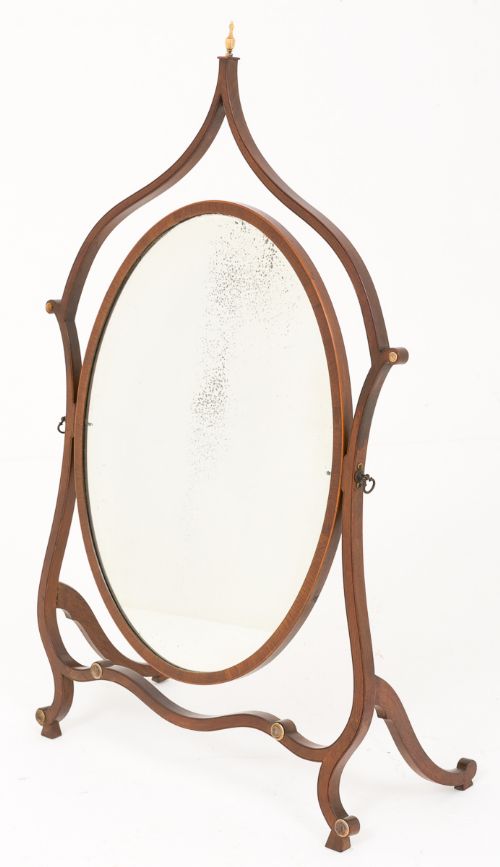


Oval Mahogany Swing Mirror
An oval mahogany swing mirror is a tabletop dressing glass that pivots between upright supports, bringing warmth and polished movement to a bedroom or chest.
Oval Mahogany Swing Mirror
The oval mahogany swing mirror appears across the Georgian, Victorian and Edwardian eras, predominantly taking the form of a toilet mirror or dressing table mirror designed to sit upon a surface. These pieces span the eighteenth, nineteenth and early twentieth centuries, maintaining a traditional pivoting glass held within upright arms.
Many examples incorporate a small box base fitted with drawers, particularly serpentine or bow-fronted shapes set on bracket feet or bun feet. The records show variations from simple tabletop versions up to larger cheval mirrors and dressing tables equipped with mirrors.
Indicators of refinement
Quality rests in the selection of timber figures, where rich flame mahogany and crisp satinwood inlay elevate the visual depth of the base. The sharpness of carved details on the upright supports and the precision of serpentine or bow-fronted drawer construction distinguish finer pieces.
Proportion and structural integrity of the pivoting mechanism dictate the overall success of the design. The integration of well-fitted small drawers with original brass hardware adds considerable character to the piece.
Oval Mahogany Swing Mirror Retail Price Guide 2026
Typical asking prices for oval mahogany swing mirror among the pieces listed under this phrase on Sellingantiques today, from the lower quarter to the upper quarter. They describe what is for sale here now, not the wider market.
Listings demonstrate cabinetmaking traditions spanning the Georgian, Victorian and Edwardian periods using mahogany, glass, brass and boxwood inlay.
The Oval Mahogany Swing Mirror Glossary
- Swing mirror
- A glass plate mounted on pivots between two upright posts that allows the angle of reflection to tilt.
- Toilet mirror
- A smaller dressing glass historically used for grooming at a washstand or table, often incorporating small drawers beneath.
- Serpentine front
- A furniture front curving outward in the centre and inward at the sides, creating a gentle undulating shape.
- Crossbanding
- A narrow strip of veneer applied across the grain of the primary timber to create a decorative border.
- Flame mahogany
- A figured wood grain resembling flickering flames, prized for its distinctive swirling pattern.
Oval Mahogany Swing Mirror: Frequently Asked Questions
Where should I place an oval mahogany swing mirror?
These mirrors sit comfortably on top of chests of drawers, sideboards or dedicated dressing tables where the pivoting glass provides a practical height for daily use.
Because they require only a modest footprint, they work well in bedrooms or hallways to add reflective light and traditional warmth to a surface.
How do I date a mahogany swing mirror?
Dating relies on observing the secondary woods, cabinet construction methods, and stylistic cues such as Georgian serpentine bases or Edwardian stringing.
Earlier pieces from the eighteenth century often display hand-cut dovetails and simpler joinery, whereas nineteenth-century variants may introduce heavier carved details or turned bun feet.
What is the difference between a toilet mirror and a cheval mirror?
A toilet mirror is designed to rest upon a table or chest, typically featuring a small box base with drawers.
A cheval mirror is a much larger, full-length glass supported by a freestanding frame that stands directly on the floor.
Are the mirror plates original?
Many older pieces have replacement mirror plates because historic glass silvering naturally degrades or foxing accumulates over centuries.
Original glass often shows minor distortion, tiny specks or age marks, whilst clearer modern replacements provide a sharper reflection.