

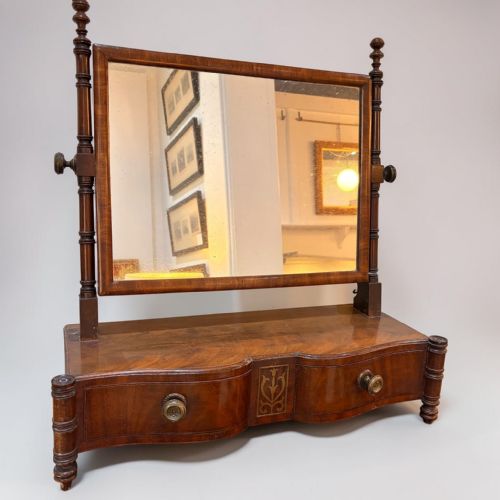
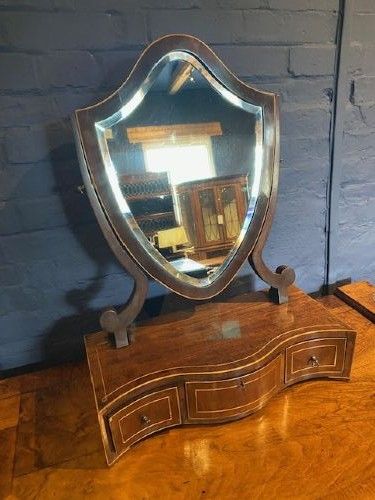
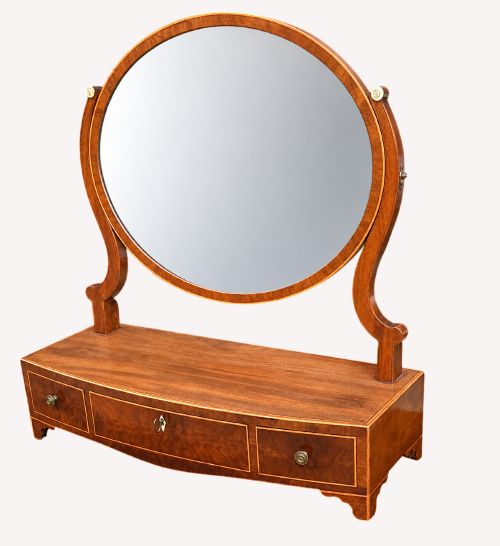
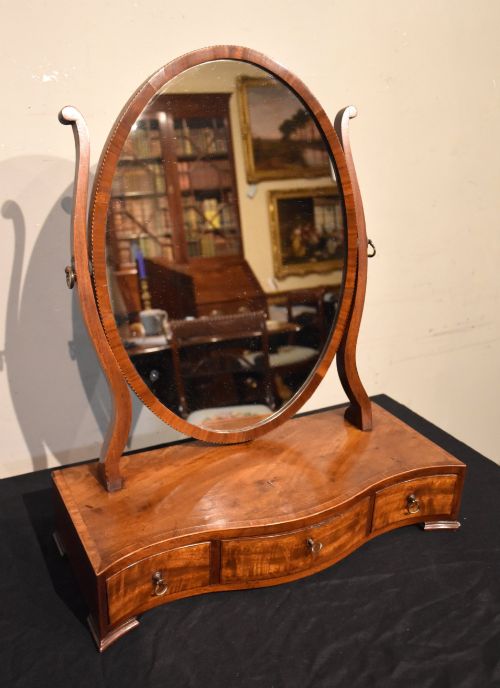
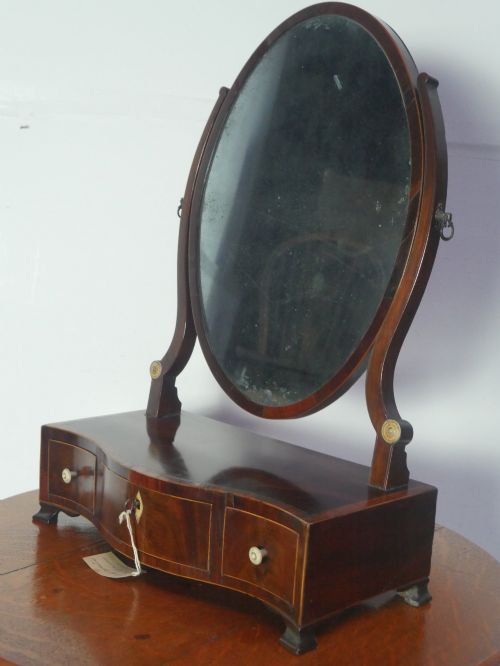
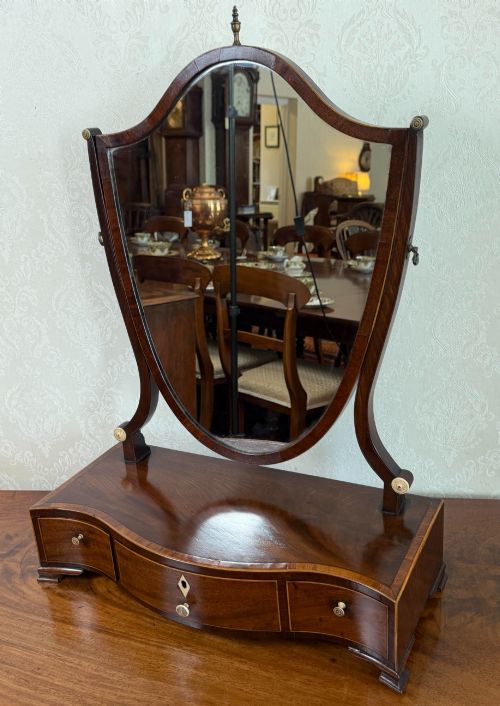
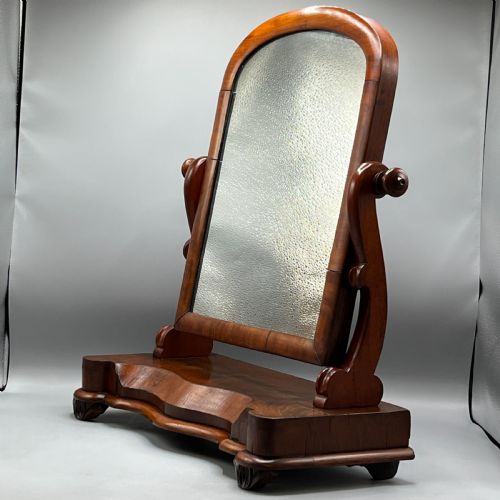


Mahogany Serpentine Toilet Mirror
A mahogany serpentine toilet mirror combines rich timber grain and sweeping curved drawers, offering a functional dressing piece with genuine Georgian character.
Mahogany Serpentine Toilet Mirror
A mahogany serpentine toilet mirror is a tabletop dressing glass designed for chest placement, featuring a base with a curved, undulating front profile. These pieces appear most frequently in Georgian and Victorian forms, encompassing both rectangular plates and shield-shaped swing mirrors.
Makers constructed these dressing mirrors with small drawers built into the serpentine base for holding personal items. The survival of pieces from the eighteenth and nineteenth centuries shows how deeply integrated this form was into period domestic dressing routines.
Buyers encounter examples ranging from plain, upright table mirrors to larger versions equipped with three drawers beneath the swing frame. The combination of figured timber and curved joinery defines the visual appeal of these surviving examples.
Materials and Construction Techniques
Cabinetmakers built these mirrors primarily using solid and veneered mahogany, often selecting timber with rich grain patterns. Workshops integrated secondary woods alongside decorative elements such as boxwood inlay, satinwood banding, and bone escutcheons.
The distinctive curved base required skilled sawing and shaping of the timber to achieve the undulating serpentine line. Brass hinges, arm pivots, and sometimes small knobs or pulls completed the mechanical assembly of the swing frame.
Original mirror glass plates were silvered and held within rebated wooden frames supported by upright arms. The survival of these components alongside subtle details like hand-cut dovetails in the base drawers demonstrates period joinery standards.
Mahogany Serpentine Toilet Mirror Retail Price Guide 2026
Typical asking prices for mahogany serpentine toilet mirror among the pieces listed under this phrase on Sellingantiques today, from the lower quarter to the upper quarter. They describe what is for sale here now, not the wider market.
Distinctions in Quality and Execution
Quality in a mahogany serpentine toilet mirror rests upon the crispness of the curved woodwork and the proportion of the base to the glass frame. Superior pieces display well-figured mahogany veneers that follow the serpentine contour without distortion or clumsy patching.
The refinement of the drawer construction, including slender linings and hand-cut dovetails, separates standard workshop production from finer cabinet work. Original brass hardware and undisturbed mirror plates further elevate the integrity of a surviving piece.
The Mahogany Serpentine Toilet Mirror Glossary
- Serpentine
- A curved architectural and furniture line that curves outward at the centre and inward at the sides. This undulating shape creates movement across the front of the mirror base.
- Toilet Mirror
- A small dressing glass designed to sit upon a table or chest of drawers. These pieces were essential items for personal grooming in period bedchambers.
- Swing Mirror
- A mirror plate hung on pivots between two upright arms, allowing the glass to tilt. This mechanism lets the user adjust the angle of reflection.
- Shield Glass Plate
- A mirror plate cut into the shape of a heraldic shield. This style appears frequently on eighteenth-century oval dressing mirrors.
- Boxwood Inlay
- Contrasting light wood inserted into recesses within the darker mahogany surface. Craftsmen used this technique to create fine decorative borders.
Mahogany Serpentine Toilet Mirror: Frequently Asked Questions
Where were these mirrors placed?
These dressing mirrors sat atop large chests of drawers or dedicated dressing tables within bedchambers and dressing rooms. Their elevated tabletop position brought the glass to a convenient height for grooming.
Because they were portable rather than fixed furniture, owners could move them around the room to catch the best natural light from windows.
How do I distinguish Georgian from Victorian examples?
Georgian pieces typically display lighter timber framing, finer dovetailing in the base drawers, and often incorporate boxwood inlay or shield-shaped plates. The overall proportions tend to be restrained and elegant.
Victorian mirrors generally present heavier framing, larger overall dimensions, and denser mahogany stock without the delicate stringing found on eighteenth-century work.
Are the mirror plates original?
Many surviving pieces retain their original mercury or early silvered glass plates, which often exhibit characteristic light specking, oxidation, or minor foxing. These age marks confirm the antiquity of the glass.
Replacement glass plates appear frequently in older frames because the original silvering degraded over centuries of exposure to light and moisture.
What were the small drawers used for?
The drawers built into the serpentine base held small personal valuables, pins, cosmetics, and trinkets used during daily dressing routines. Their curved fronts followed the undulating line of the base structure.
These compartments added practical storage to the dressing surface without requiring a larger standalone cabinet.