




Oval Giltwood Framed Artwork
Oval giltwood framed artwork brings together curved portrait paintings, pastels and prints enclosed in carved and gilded wooden surrounds.
Oval Giltwood Framed Artwork
When you search for oval giltwood framed artwork, you encounter portrait paintings, pastels, watercolours and prints enclosed in curved wooden surrounds. These pieces span from the seventeenth century through the Georgian and Victorian periods into the early twentieth century.
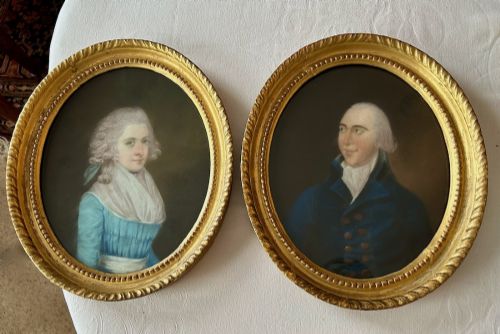
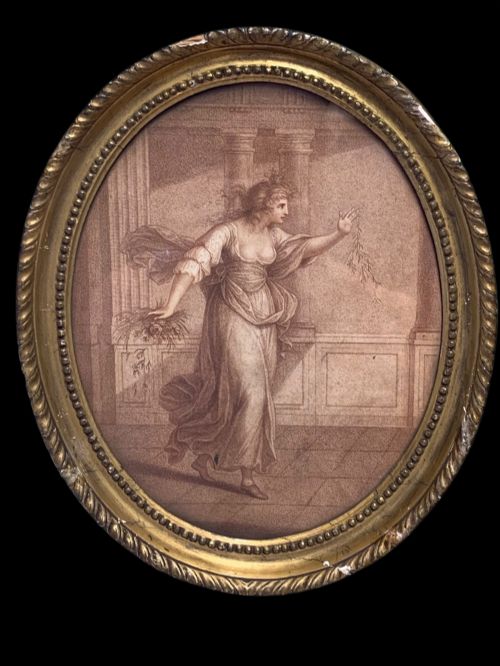
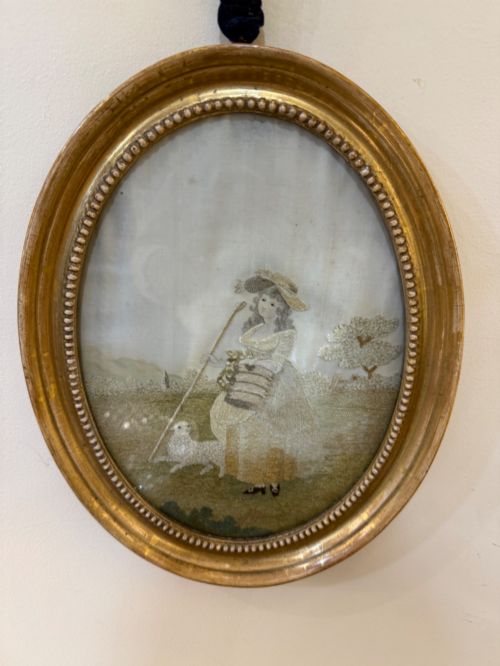
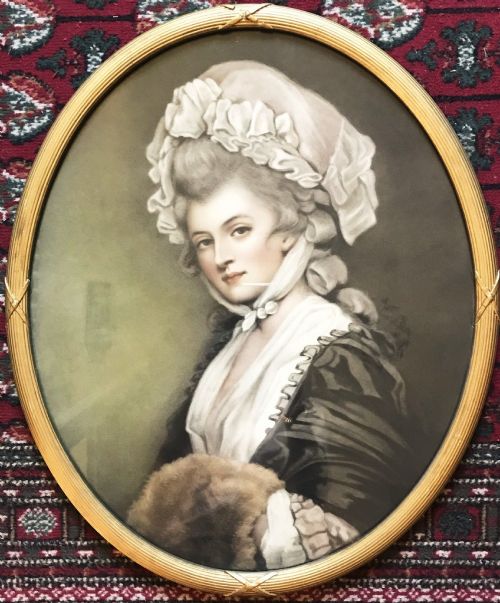
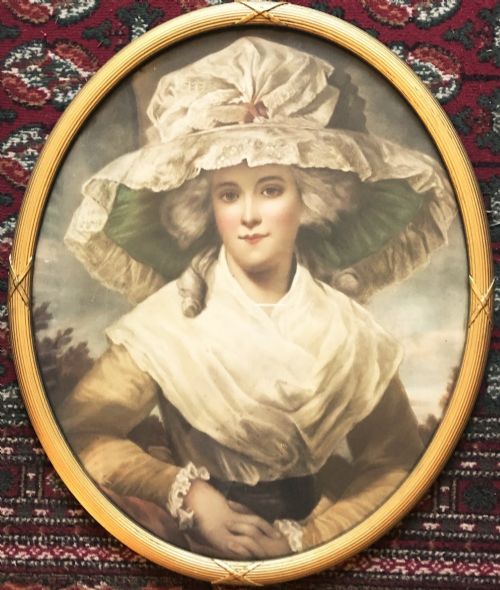
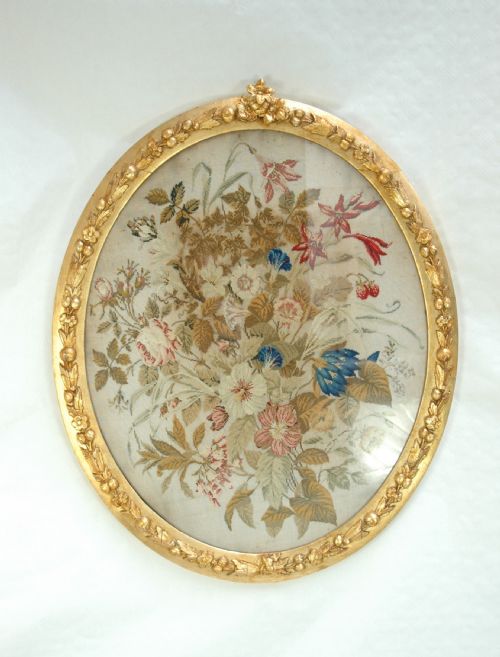
The selection on this page centres primarily on portraits, featuring subjects ranging from eighteenth-century children and elegant ladies to seventeenth-century gentlemen. Works include original oil on canvas, pastel portraits, stipple engravings and Berlin silk pictures.
Originating from English, European and French schools, these pieces demonstrate how portraiture adapted to curved formats over successive centuries. The combination of painted subjects and ornate surrounds creates a distinct wall art display.
Materials and construction
Frames utilise giltwood and gesso applied over wood, creating the characteristic metallic sheen and raised ornamentation. Artisans carved wooden bases and layered gold leaf to achieve the reflective surfaces surrounding the artwork.
The internal works comprise oil on canvas, pastel on paper, watercolour, glass and needlework. Portrait subjects were rendered using traditional pigments on canvas or paper, often protected behind dome fronted or flat glass.
Listings feature oil paintings, pastels, watercolours, stipple engravings and needlework pictures housed within giltwood frames.
Quality factors in framing and portraiture
The refinement of the gesso work and the depth of the carving separate standard frames from superior examples. Crisp detailing in the giltwood surrounds indicates skilled handcrafting during periods such as the Georgian and Victorian eras.
Artistic execution within the oval aperture dictates the overall merit of the piece. Fine brushwork in oil paintings or delicate handling in pastel portraits and stipple engravings reflects the capability of the artist or school involved.
William Edward Frost·Robert Kemp·Enoch Seeman·Frans van der Mijn·Robert Byng·John Riley·Andrea Soldi·Arnold van Boonen·Richard Cosway·Michael Dahl·Sir Godfrey Kneller·Arthur H Buckland
The Oval Giltwood Framed Artwork Glossary
- Giltwood
- Wood that has been covered with a thin layer of gold leaf or gold paint. This technique gives frames a bright, reflective metallic finish that catches interior light.
- Gesso
- A plaster mixture applied to wood frames as a base for gilding. Artisans carved intricate decorative motifs directly into this dried substance.
- Stipple engraving
- A printmaking method using dots of varying density to create tonal shadows and highlights. It was frequently employed for reproducing portraits.
- Berlin silk work
- Embroidery executed on canvas using wool or silk threads following a charted grid pattern. These pieces often depicted domestic or portrait subjects.
Oval Giltwood Framed Artwork: Frequently Asked Questions
What periods do these pieces date from?
The pieces span from the seventeenth century through the Georgian and Victorian eras up to the early twentieth century. Examples include works dated around sixteen seventy, seventeen hundred and the nineteenth century.
This broad timeline incorporates seventeenth-century portraits, eighteenth-century pastel works and later Victorian or Edwardian prints.
How were these artworks displayed?
These pieces served as wall art in domestic interiors, designed to be hung singly or in matching pairs. The curved frames provided a focal point distinct from standard rectangular canvases.
Many incorporate glass fronting, including dome fronted glass, to protect delicate pastels, prints and watercolours from atmospheric dust.
What subjects appear in the artwork?
Subjects are predominantly portraits of named individuals, gentlemen, ladies and children. Pieces depict figures such as Sir Francis Seymour, George Lee and Lady Sarah Cowper.
Additional subjects include mythological figures like a Nereid, alongside generic portraits of elegant female beauties and young ladies wearing bonnets.
How do I identify different frame types?
Frames are primarily constructed from giltwood and gesso over a wooden base, reflecting Georgian and Victorian stylistic preferences. Ornate designs distinguish the heavier Victorian mouldings from earlier Georgian neoclassical examples.
The integration of the oval aperture requires specialised framing techniques to fit canvas, paper or needlework into the curved perimeter.