
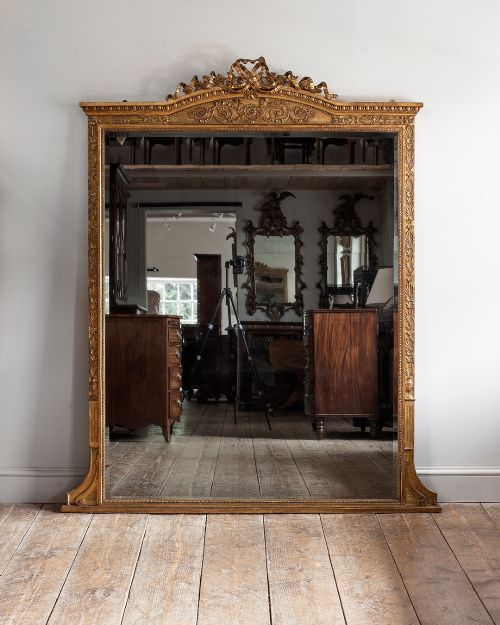
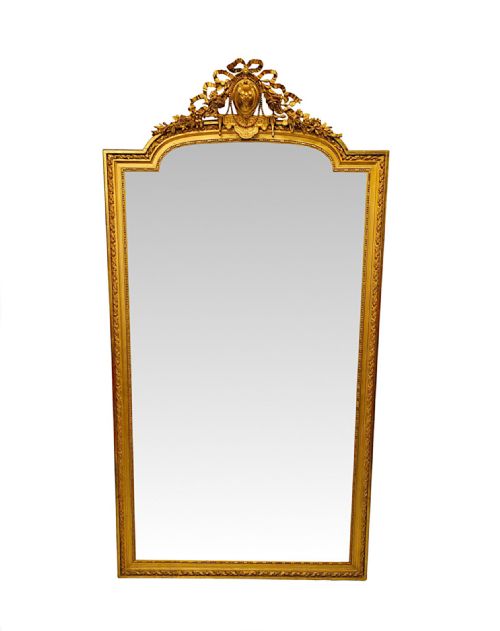
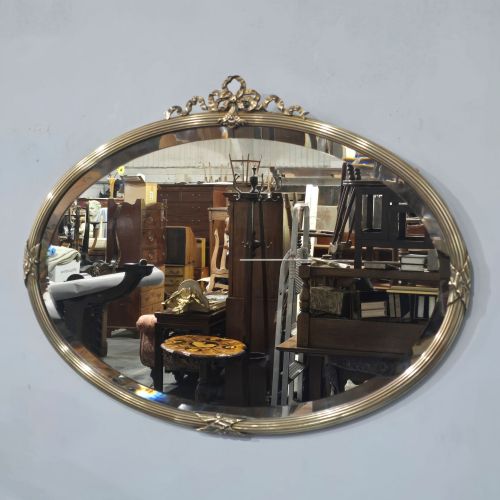
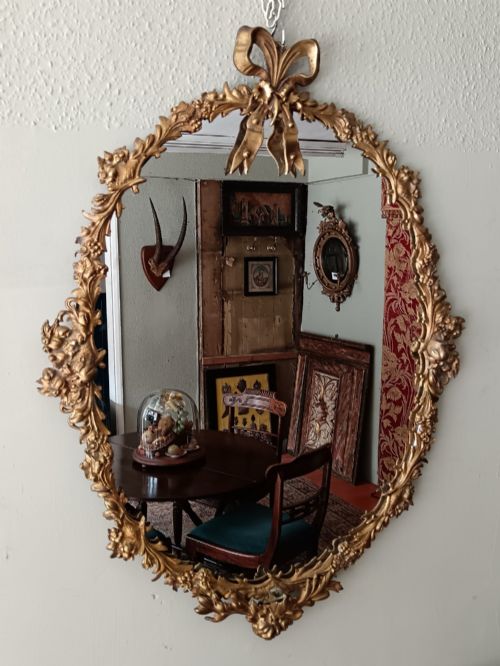


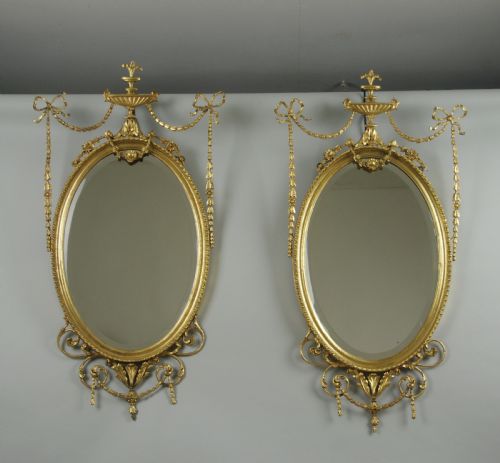


Ribbon Crest Gilt Frame
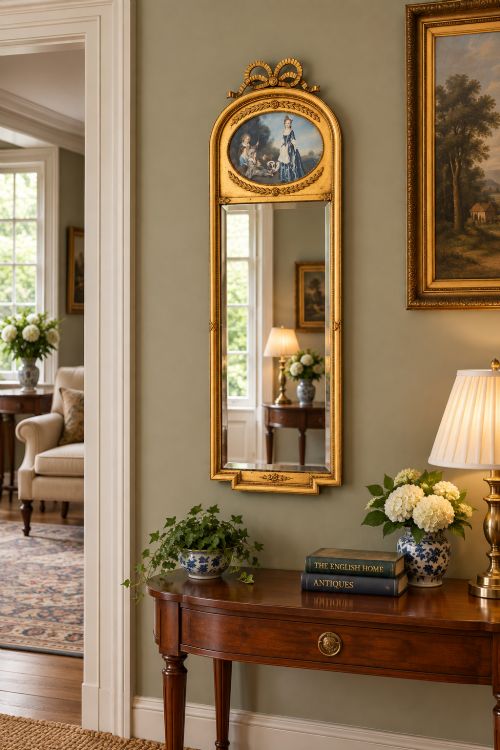
A ribbon crest gilt frame brings an ornamental flourish to walls, combining classic gilt finishes with delicate carved crestings.
Ribbon Crest Gilt Frame
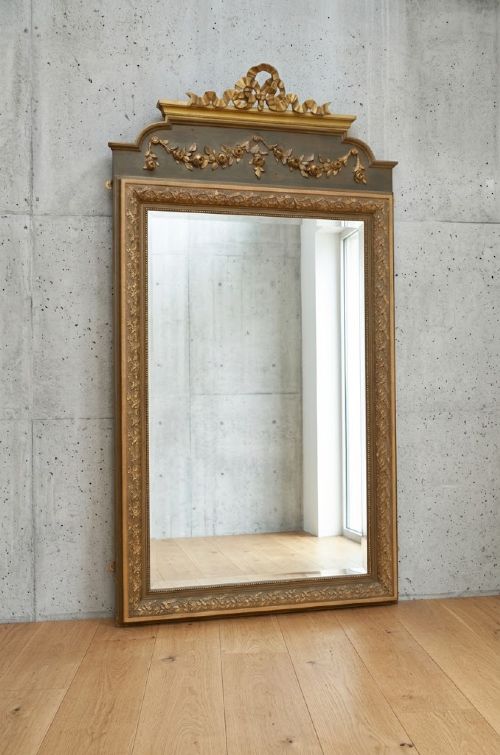
A ribbon crest gilt frame frames mirrors, portraits, and miniature paintings with distinctive decorative ribbon motifs at the top. These pieces emerge predominantly from nineteenth-century workshops, spanning Victorian and Edwardian periods with strong Louis XVI revival influences.
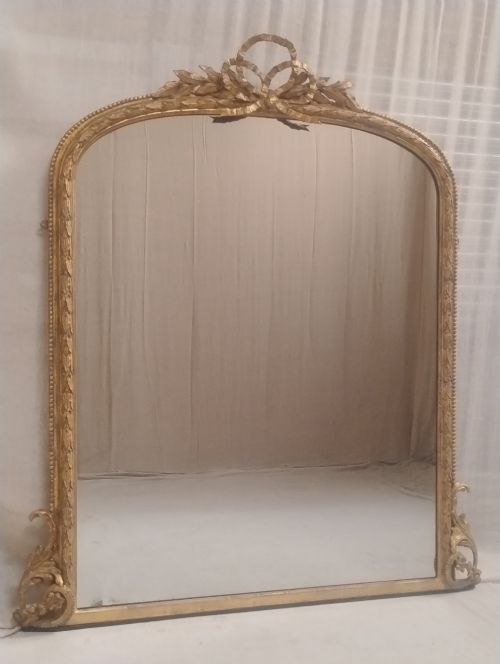
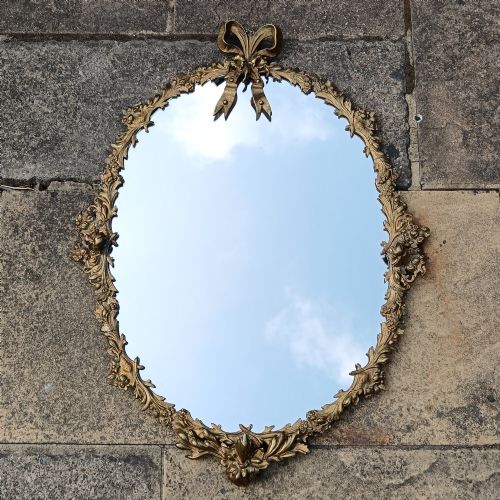
Buyers encounter wall mirrors, overmantel mirrors, and photo frames in oval and rectangular formats. The surviving examples rely heavily on giltwood, gesso, and gilt bronze, often incorporating original glass or delicate watercolour portraits.
How they were made
Carvers shaped wooden substrates from giltwood or applied moulded gesso and composition details to create the ornate relief work. Guilders then applied gold leaf to the prepared surfaces to achieve the characteristic metallic sheen.
Ormolu and gilt bronze components feature on smaller items like photo frames and wall mirrors, cast with fine chased detail. Original mirror plates commonly display bevelled edges set within these decorative surrounds.
The listed pieces span the nineteenth and early twentieth centuries, including Victorian, Edwardian, and Regency periods.
What varies in quality
The crispness of the modelled ribbon crest and surrounding ornamentation distinguishes finer examples from simpler production. Hand-carved giltwood and finely chased gilt bronze display sharper definition than moulded composition ornaments.
The preservation of the original gilt surface and glass plates determines the integrity of the piece. Superior items retain their original gilding without heavy overpainting, while secondary pieces show more extensive restoration to the delicate crest work.
The Ribbon Crest Gilt Frame Glossary
- Giltwood
- Wood that has been coated with gold leaf or gold dust. This finish provides the bright metallic surface seen on period frames.
- Gesso
- A plaster-like mixture applied to wood substrates to create a smooth surface for gilding. It allows for intricate moulded details around the frame edges.
- Ormolu
- Finely chased gilt bronze used for decorative mounts and small frames. The technique produces a rich golden appearance on metalwork.
- Overmantel mirror
- A large mirror designed to hang above a fireplace mantel. These pieces often feature extended frames suited to period drawing rooms.
- Louis XVI Revival
- A nineteenth-century decorative style drawing on neoclassical French motifs. Frames from this design tradition frequently incorporate symmetrical ribbons and floral swags.
Ribbon Crest Gilt Frame: Frequently Asked Questions
How do I date a ribbon crest gilt frame?
Dating relies on examining the construction materials, backing boards, and glass characteristics. Nineteenth-century examples often use hand-cut timber frames and original bevelled glass plates.
Stylistic cues also help narrow the period. Pieces showing Louis XVI revival details typically date from the latter half of the nineteenth century into the Edwardian era.
Where should I hang an overmantel mirror?
Overmantel mirrors are traditionally positioned directly above a fireplace mantelpiece to reflect light around the room. Their scale makes them suitable as a primary focal point on a main wall.
Ensure the wall fixings match the substantial weight of these large gilt frames. Secure mounting into structural studs or masonry is essential for safety.
How do I clean a giltwood frame?
Dust the carved surfaces gently with a soft dry brush to remove accumulated debris. Avoid using liquid cleaners or abrasive cloths on the delicate gold leaf.
Moisture can damage both gesso and underlying wood substrates. Professional conservation is recommended for any deeper cleaning or repair work.
What is the difference between giltwood and gilt metal?
Giltwood consists of a wooden base covered in gold leaf, whereas gilt metal or ormolu uses a metallic alloy substrate. Wooden frames tend to be lighter and feature carved or moulded ornamentation.
Metal frames appear more frequently in smaller items like photo frames and wall sconces. Both materials achieve a similar golden decorative effect.