



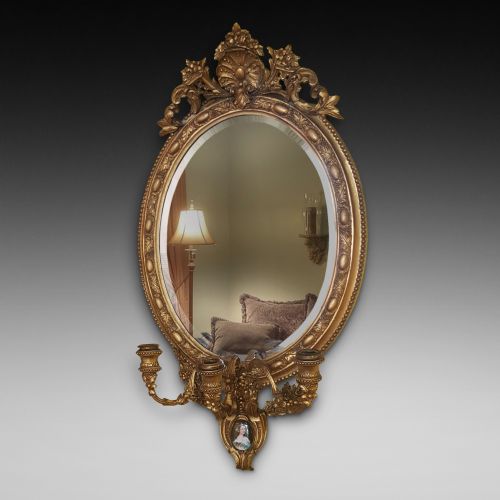

Oval Gilt Wall Sconce
These oval gilt wall sconce pieces combine reflective glass with gilded woodwork or metal, adding both light and elegance to a room.
Oval Gilt Wall Sconce
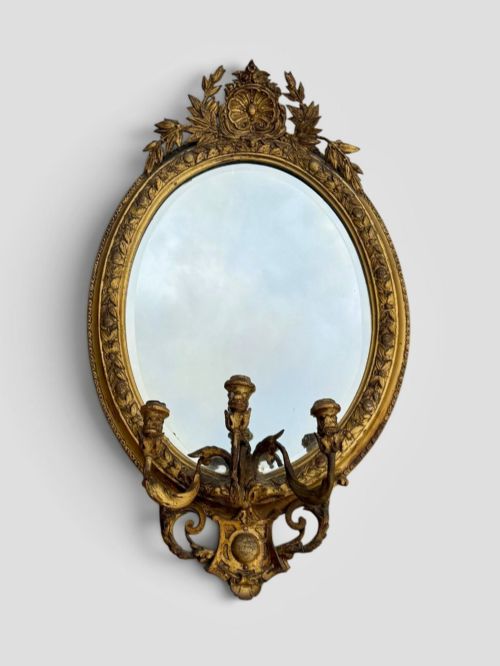
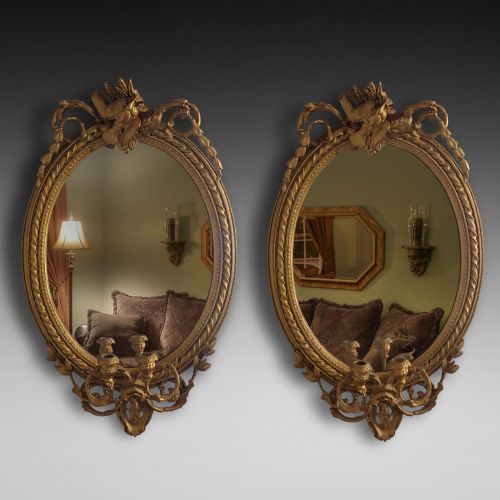
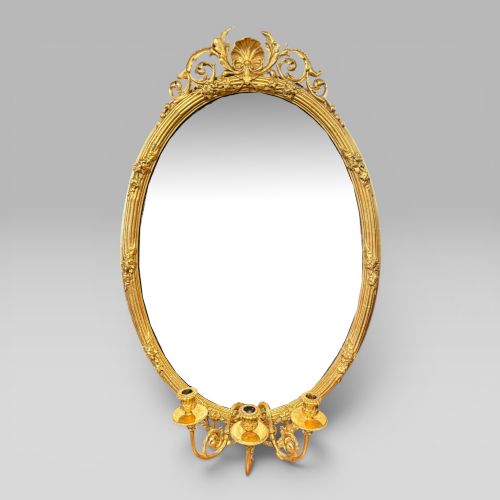
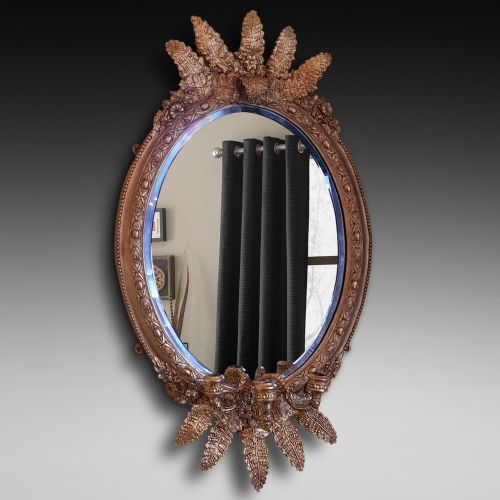
An oval gilt wall sconce brings together a reflective mirror plate with candle arms or wall-hanging architecture, framed in gleaming surfaces. When buyers search for an oval gilt wall sconce, they encounter decorative forms designed to catch and multiply candlelight or daylight in interior spaces.
The most common examples on this page date from the Victorian era and the nineteenth century, often taking the form of girandoles with integrated candle branches. These pieces span styles from Rococo Revival and Neoclassical to Belle Epoque and French Chateau, reflecting diverse historical tastes.
Materials and construction
Maker construction methods rely heavily on carved giltwood, gesso, and plaster built over a supportive core, alongside metal, brass, and gilt brass components. Artisans applied gold leaf or gilt paint to these surfaces to achieve a luminous finish that catches the eye.
Glass forms the central reflective element in mirrors and girandole configurations, often paired with structural metalwork or timber frames. Rope twist carvings and ornate ornamentation appear across the wooden and gesso elements, showing traditional workshop techniques of the eighteenth, nineteenth, and early twentieth centuries.
Many of these mirrors spent centuries stubbornly refusing to show anyone their best side until somebody finally dusted off the candle branches.
Factors that distinguish quality
The sophistication of the carving and the depth of the gesso relief set finer examples apart from simpler production pieces. Crisp details in rope twists and revival motifs demonstrate the skill of the original maker.
The application and preservation of the gilding further define the character of each piece. Intact gilt surfaces with harmonious ageing retain a visual richness that lesser finishes lack.
The Oval Gilt Wall Sconce Glossary
- Girandole
- A wall mirror featuring integrated candle branches or sconces designed to reflect light into a room. These dual-purpose objects combined illumination with decorative display.
- Gesso
- A plaster-like material applied to wood frames and carved before gilding. It provided a smooth, responsive surface for intricate ornamentation.
- Giltwood
- Timber coated with gold leaf or gold paint for a lustrous metallic appearance. It served as a primary framing material for high-status mirrors.
- Rococo Revival
- A nineteenth-century design style drawing on eighteenth-century asymmetrical scrollwork and natural motifs. It appears frequently in Victorian decorative arts.
Oval Gilt Wall Sconce: Frequently Asked Questions
What is an oval gilt wall sconce?
An oval gilt wall sconce is a decorative wall-mounted mirror, often incorporating candle holders, framed in gilded wood, gesso, or metal. These items functioned historically to brighten dark rooms by reflecting candlelight from multiple angles.
They combine practical illumination with ornamental display, serving as focal points on panelled or papered walls.
How were these sconces used?
Historically, these pieces hung between windows or above mantelpieces to maximise ambient light from candles before electricity became common. The reflective glass amplified the flicker of the flames to illuminate evening gatherings.
Today, they serve primarily as decorative wall ornaments that bring historical character and warmth to modern interiors.
How do I date a gilt mirror?
Dating relies on examining the materials, framing styles, and construction techniques visible in the woodwork and gesso. Victorian and nineteenth-century pieces often feature revival styles like Rococo or Neoclassical, while eighteenth-century examples display earlier carving characteristics.
Looking at the backboards, fixings, and glass bevelling can also offer clues to the period of manufacture.
What is a girandole?
A girandole is a specific type of wall mirror fitted with one or more candle arms branching out from the frame. The term distinguishes standard wall mirrors from those designed explicitly to hold candles.
These versatile fixtures added both functional lighting and decorative splendour to period drawing rooms and parlours.