

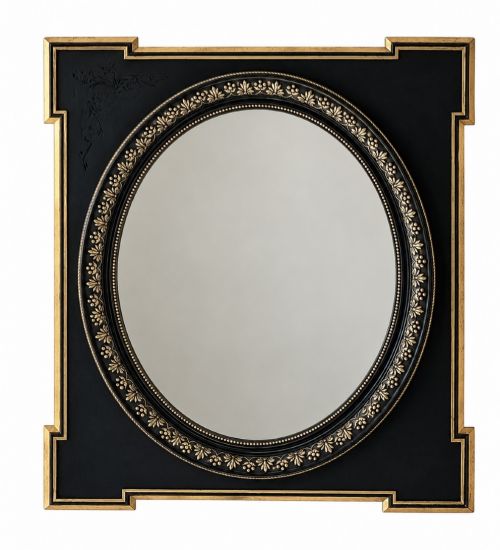
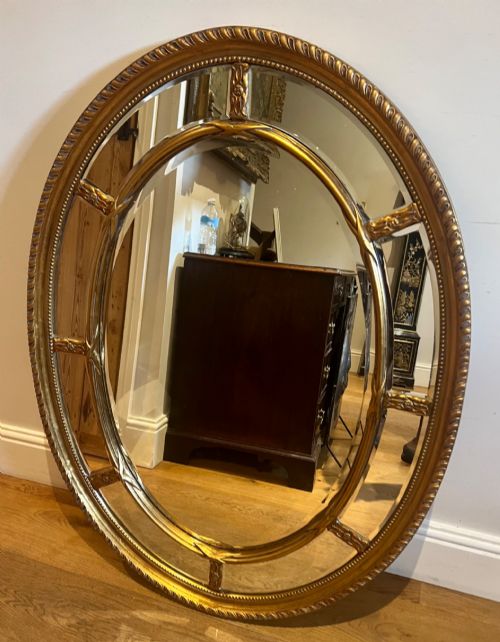
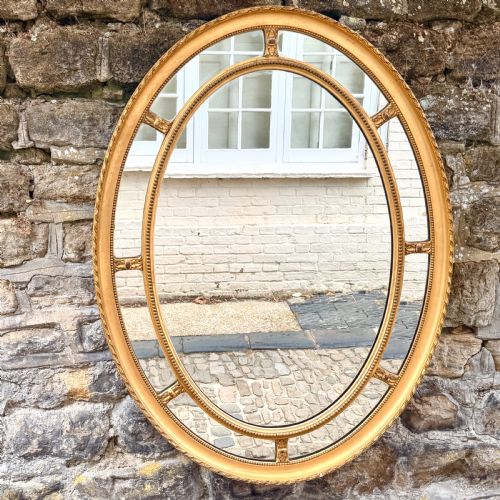
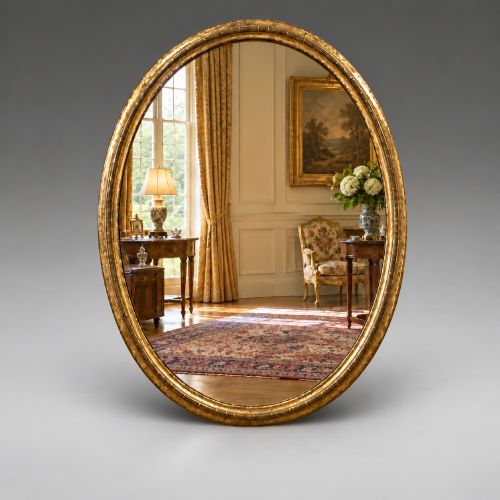
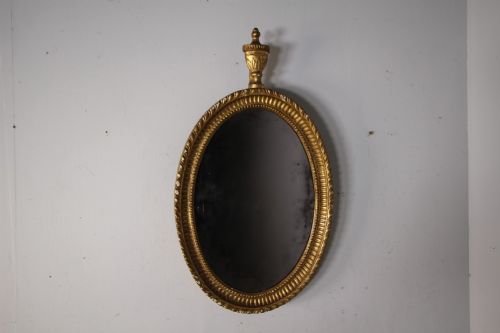
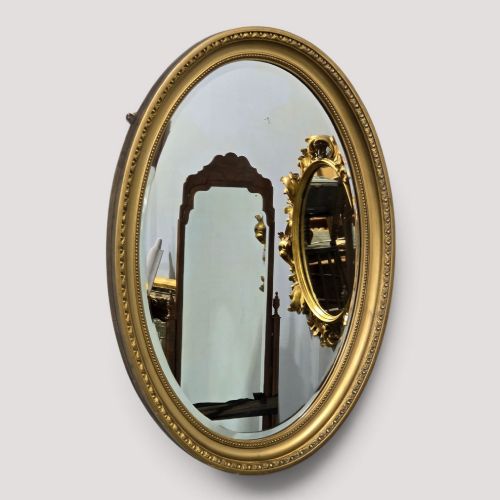
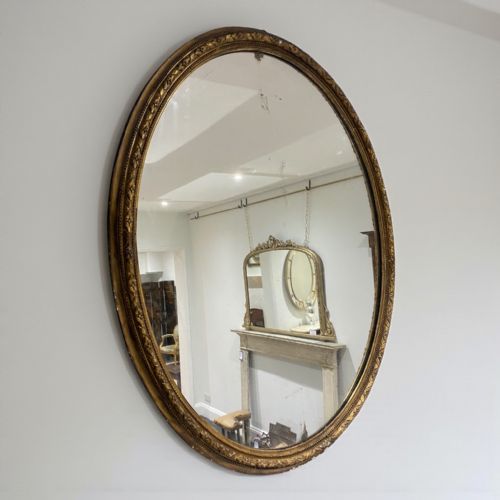
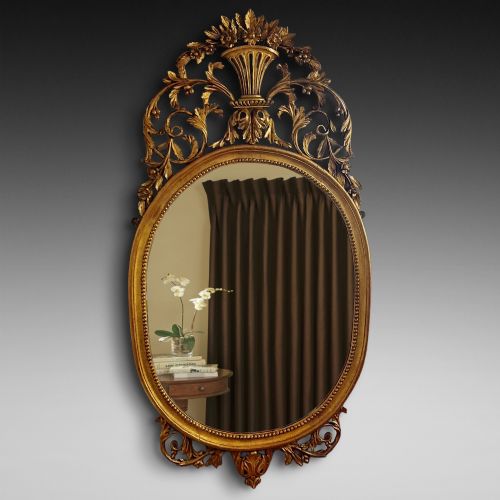
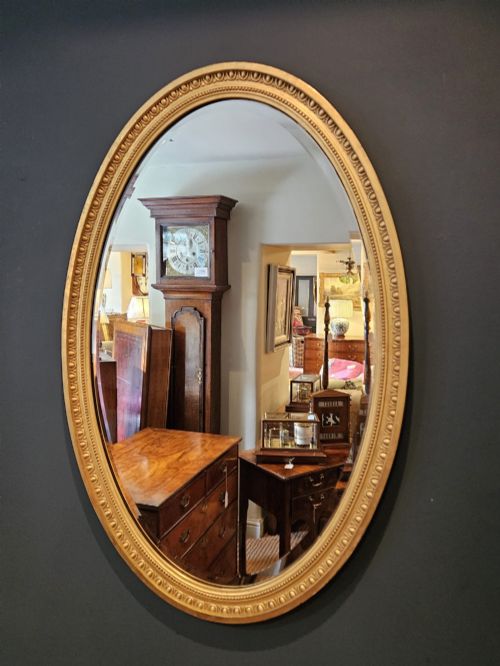
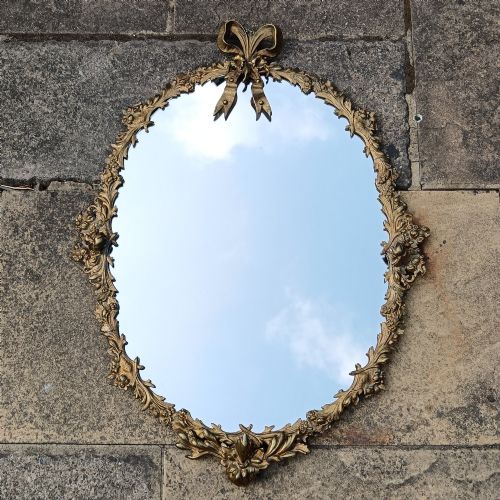
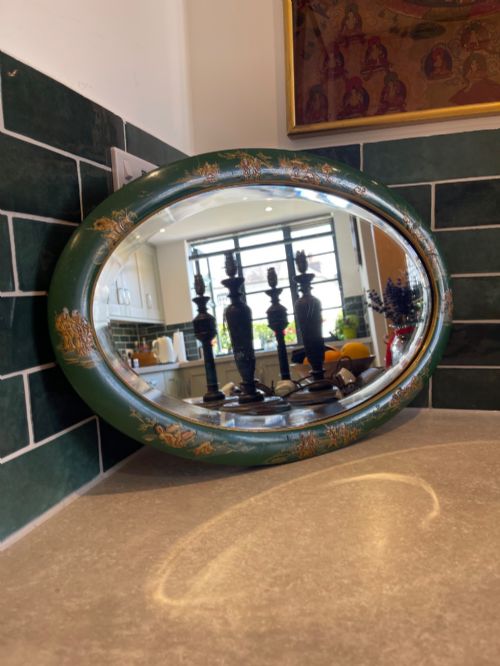


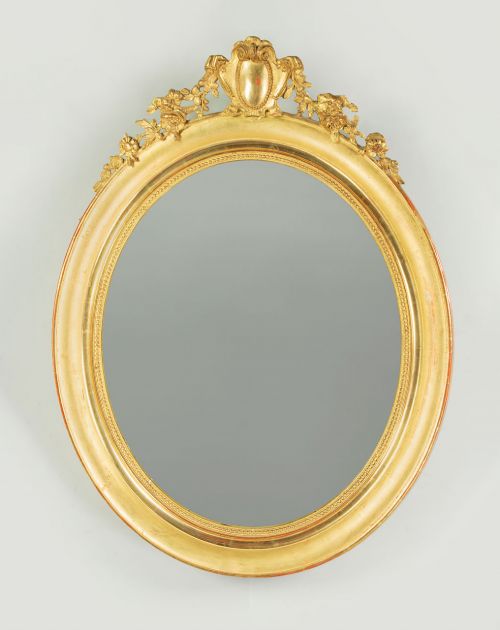
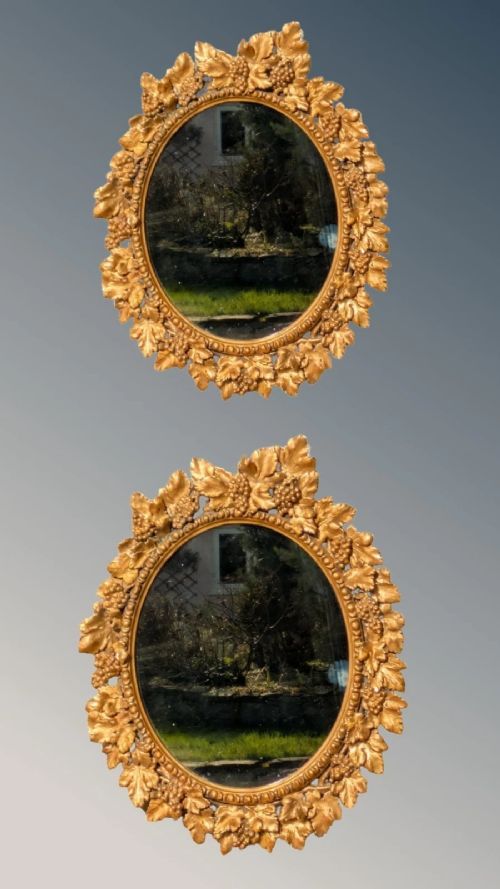
Oval Gilded Framed Mirror
An oval gilded framed mirror brings instant depth and reflective light to a room, spanning styles from Georgian elegance to Victorian ornamentation.
Oval Gilded Framed Mirror
An oval gilded framed mirror functions primarily as a wall-hung decorative piece designed to bounce light across a hall, drawing-room or boudoir. You encounter these most frequently from the nineteenth century, with Victorian examples showing heavy ornamentation and regional English or French origins.
The physical form relies on a curved wooden or composite carcass shaped into a vertical or horizontal ellipse. Surviving pieces range from miniature domestic items to enormous pier mirrors intended for grand spaces.
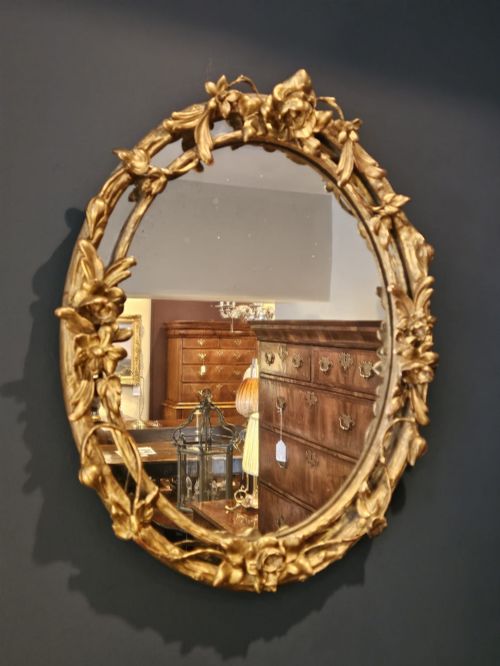
Makers drew on established decorative repertoires, producing items that align with Georgian, Victorian, Rococo Revival and Neoclassical tastes. These variations determine whether the frame displays restrained carved mouldings or elaborate vine leaves and floral motifs.
Materials and construction methods
Makers constructed the core structure using timber or composition materials, applying layers of gesso to build up decorative relief details. Artisans then laid gold leaf or applied gilt over the prepared surfaces to achieve a luminous finish.
Carved giltwood frames required skilled hand-chiselling directly into timber before gilding, whereas plaster and composition elements were often moulded and affixed to the wooden base. Mirror glass was then fitted into the rebate, secured at the rear with traditional backing boards.
Oval Gilded Framed Mirror Retail Price Guide 2026
Typical asking prices for oval gilded framed mirror among the pieces listed under this phrase on Sellingantiques today, from the lower quarter to the upper quarter. They describe what is for sale here now, not the wider market.
Some Victorian frames incorporate delicate carved rose vines, reminding us that past owners brought garden botanicals directly indoors.
Distinguishing quality in craftsmanship
The distinction between ordinary and superior pieces rests on the depth and crispness of the carved ornamentation. Hand-carved giltwood exhibits sharp undercut details in foliage and scrollwork, whereas moulded composition can appear softer and more uniform under close inspection.
The integrity of the gilding and the preservation of the original surface layers dictate the visual impact of the piece. Subtle ageing, such as foxing in the mirror glass and gentle toning of the gold leaf, indicates authenticity without compromising structural presence.
The Oval Gilded Framed Mirror Glossary
- Giltwood
- Timber that has been coated with gold leaf or powdered gold over a prepared ground. This technique creates a rich metallic sheen characteristic of high-status frames.
- Gesso
- A plaster mixture applied to wood frames to create a smooth surface for gilding or to build up low-relief decorative motifs. It allows intricate moulding before the final metallic finish is applied.
- Rococo Revival
- A decorative style popular during the nineteenth century characterised by asymmetry, C-scrolls, and naturalistic plant motifs. Mirrors from this movement often feature exuberant, flowing frame designs.
- Pier mirror
- A large wall mirror specifically designed to hang on the wall space between two windows. These pieces often maximise interior light reflection in grand nineteenth-century reception rooms.
- Foxing
- Small dark spots and speckled ageing that develop within the silver backing of older mirror glass. This chemical oxidation serves as an indicator of genuine age.
Oval Gilded Framed Mirror: Frequently Asked Questions
Where should I hang an oval mirror?
An oval gilded framed mirror works effectively above a mantelpiece, a console table, or along a hallway where its curved profile softens rectilinear wall expanses.
The vertical sweep of the frame helps draw the eye upward, making smaller rooms feel taller and brighter.
How do I date a gilded mirror?
Dating relies on examining the construction materials, frame style, and the backboards used to secure the glass. Georgian pieces display crisp hand-carved timber details, while Victorian examples often incorporate moulded composition and denser plaster relief work.
Secondary clues include the type of fixings, the flatness of the glass, and the presence of hand-beveling.
Are these mirrors heavy to hang?
Many nineteenth-century examples carry substantial weight due to the timber, gesso, and thick glass construction. Proper wall anchors and secure fixings screwed directly into studs or masonry are essential for safe installation.
Checking the stability of the frame joints before hanging ensures the mirror supports its own weight safely.
How do I clean a gilt frame?
Gilt surfaces require gentle dusting with a soft, dry brush to remove particles without disturbing the delicate gold leaf or composition. Moisture and commercial chemical cleaners must be avoided entirely, as they strip the historic finish.
Glass panels can be wiped with a clean cloth dampened slightly with water, taking care not to let liquid seep behind the frame rebate.