

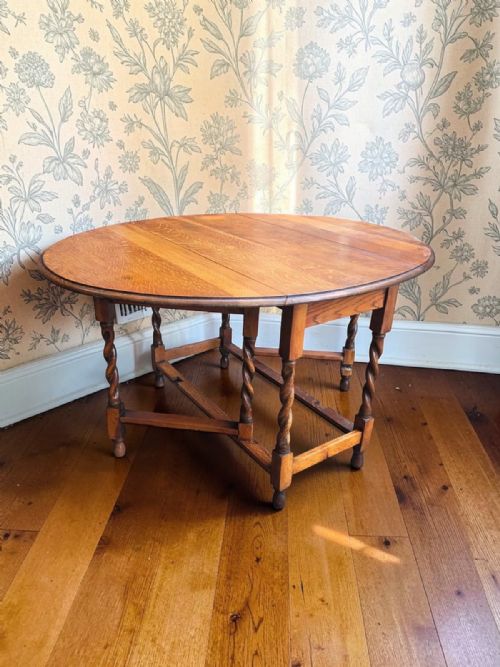
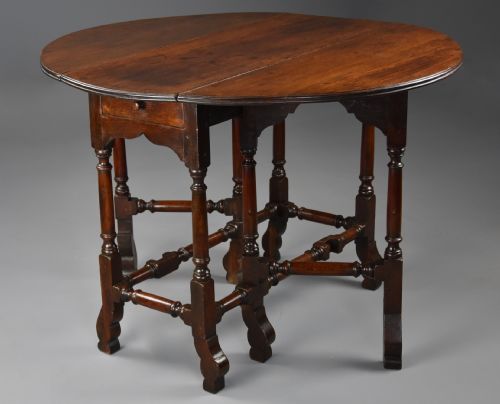
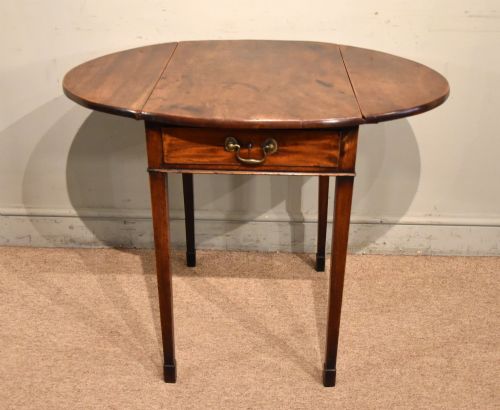
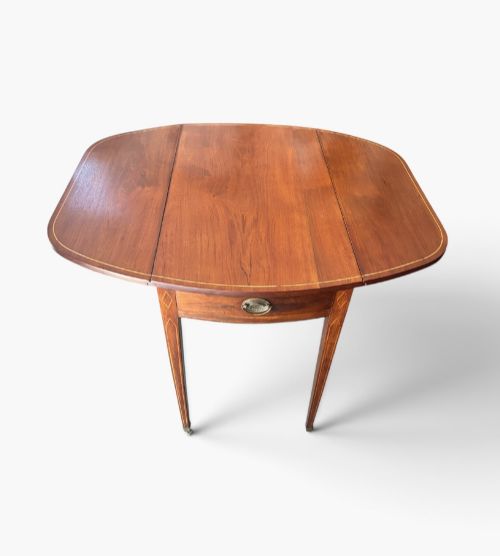


Oval Drop Leaf Side Table
An oval drop leaf side table offers practical folding surface space in timber ranging from seventeenth-century oak to Georgian mahogany.
Oval Drop Leaf Side Table
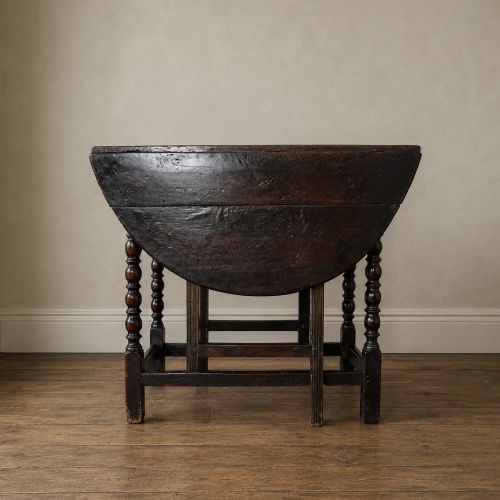
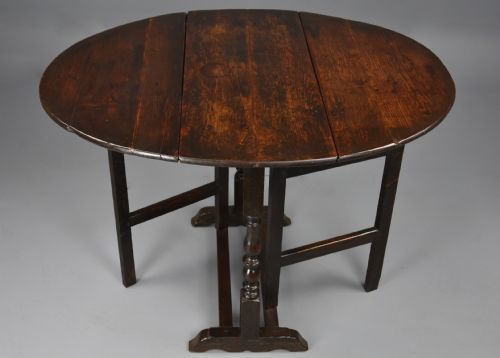
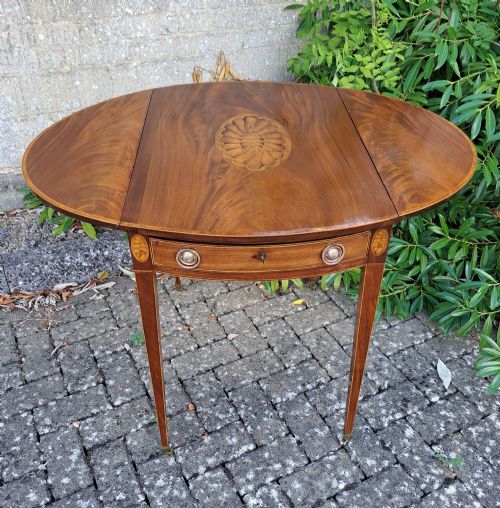
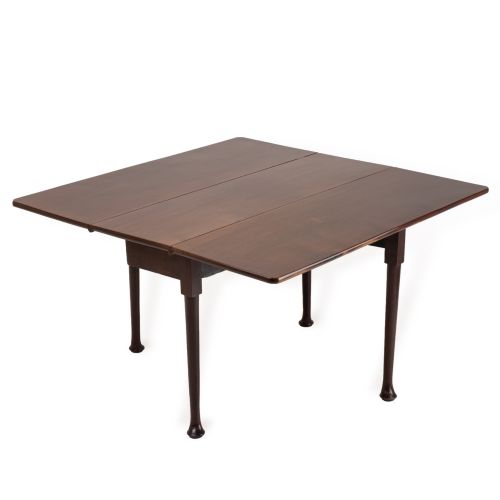
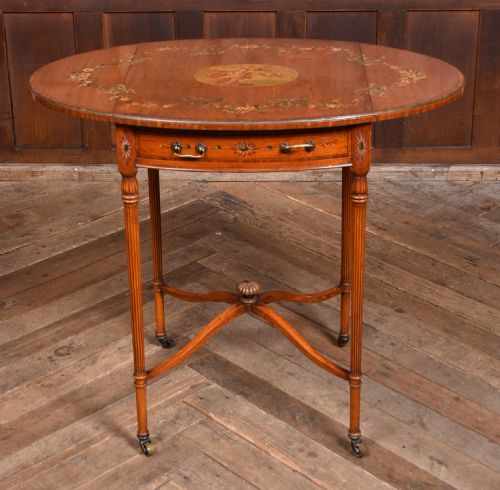
An oval drop leaf side table is a versatile surface featuring hinged flaps that fold down to save space or lift up when extra room is required. These pieces appear across multiple periods, including seventeenth-century oak gateleg designs, eighteenth-century mahogany and satinwood Pembroke tables, and Victorian walnut examples.
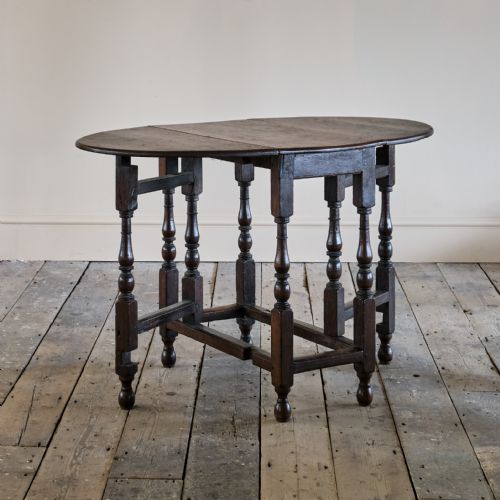
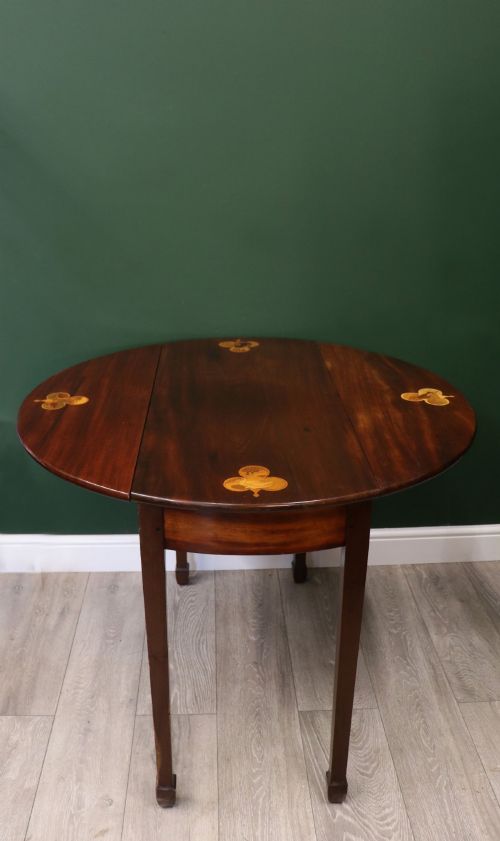
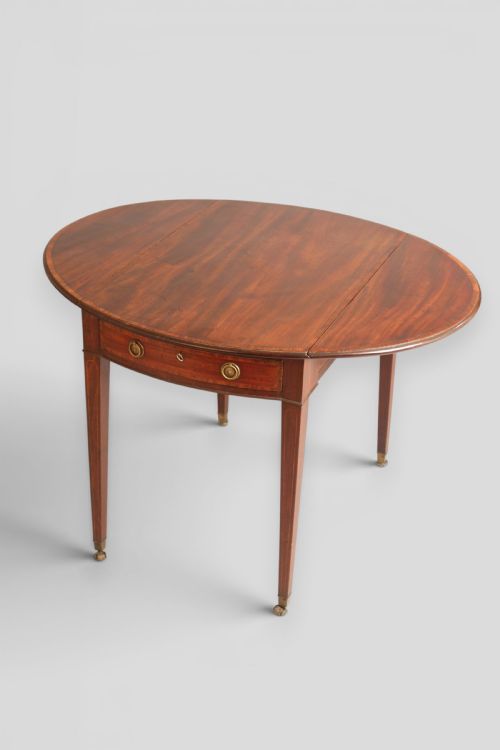
The version most frequently met on this page is the Georgian mahogany Pembroke table or the earlier oak gateleg table. These pieces function as occasional tables or small dining surfaces, resting on hinged legs or gate supports that swing out to hold the drop leaves.
The form spans centuries of British cabinet making, encompassing compact side tables alongside larger gateleg dining tables. Makers utilised timbers suited to each era, moving from solid oak in the seventeenth century to figured mahogany, satinwood, and burr walnut in the Georgian and Victorian periods.
How they were made
Cabinet makers constructed these tables primarily from solid hardwoods such as mahogany, oak, and walnut, frequently selecting figured veneers like burr walnut or satinwood for decorative surfaces. Secondary timbers provided sturdy internal framing for the folding leaves and drawer structures.
Construction relied on traditional joinery methods, incorporating hinged mechanisms for the drop leaves and pivoting leg gates to support the extended flaps. Inlays of boxwood and brass accents appeared on finer Georgian and Regency examples, while earlier pieces utilised turned barley twist legs and solid peg joining.
Oval Drop Leaf Side Table Retail Price Guide 2026
Typical asking prices for oval drop leaf side table among the pieces listed under this phrase on Sellingantiques today, from the lower quarter to the upper quarter. They describe what is for sale here now, not the wider market.
Listings feature oak tables from the seventeenth century alongside mahogany and satinwood examples from the Georgian and Victorian eras.
What varies in quality
The standard of timber selection largely determines the quality of an oval drop leaf side table, distinguishing plain domestic woods from finely figured mahogany, satinwood, or burr walnut veneers. Superior pieces display thoughtful grain matching across the top and drop leaves when fully extended.
The execution of the joinery and the stability of the folding mechanism dictate the structural integrity. Fine examples retain smooth movement in the gateleg or drop leaf supports, original brass or wooden hinges, and crisp inlay work without misalignment.
The Oval Drop Leaf Side Table Glossary
- Drop leaf
- A table with a fixed centre section and hinged flaps that fold down at the sides. These flaps are supported by hinged brackets or swinging legs when raised.
- Gateleg table
- A table featuring legs that swing out on a gate-like pivot to support the drop leaves. This design provides sturdy under-framing for larger folding surfaces.
- Pembroke table
- A small occasional table with two hinged drop leaves, typically featuring a single drawer beneath the top. The style gained popularity during the eighteenth century.
- Sutherland table
- A narrow table with exceptionally small drop leaves that fold down almost vertically. Victorian cabinet makers frequently produced these in burr walnut.
- Marquetry
- Decorative inlay work using various coloured woods to create pictorial designs on tabletops. This technique appears on Victorian and Georgian surfaces.
Oval Drop Leaf Side Table: Frequently Asked Questions
How do I identify a seventeenth-century oak table from a later revival piece?
Seventeenth-century oak tables display physical characteristics such as pegged mortise and tenon joints, hand-split timber grain, and deep patination accumulated over centuries of use. Tool marks left by pit saws and hand planes remain visible on unexposed surfaces.
Revival pieces made during the nineteenth or twentieth centuries often utilise machine-sawn timber, standardised modern screws, and artificial distressing methods. Examining the construction inside the drawer linings and underframe reveals the true age of the timber.
Can I use an antique drop leaf table every day?
These tables served as functional furniture for dining or writing in period homes and tolerate standard daily use when handled with care. Placing hot items directly onto antique polished timber can damage the finish, so coasters and mats are necessary.
Protecting the hinge mechanisms from excessive strain ensures the folding leaves operate smoothly. Regular waxing helps maintain the moisture balance in older timbers like mahogany and oak.
What woods were commonly used in Georgian Pembroke tables?
Georgian cabinet makers favoured mahogany as the primary structural and surface timber for Pembroke tables due to its stability and rich grain. Imported varieties provided a dark, durable surface that took a high polish.
Exotic timbers such as satinwood, kingwood, and boxwood appeared as veneers and stringing inlay work on high-status pieces. Oak and pine frequently served as secondary woods inside drawer boxes and internal framing.